Maximizing garage organization often means choosing a vertical bike rack system that frees floor space while safely storing multiple bikes. The following top picks are freestanding or wall-mounted solutions designed for garages, sheds, and apartments. Each option prioritizes stability, adaptability to different bike sizes, and ease of movement. Read on to compare features, installation needs, and how they handle various bike types so you can pick the best vertical rack for your space.
Summary of chosen products
| Product | Brand | Capacity | Mounting | |
|---|---|---|---|---|
| Ultrawall Freestanding Bike Rack | Ultrawall Store | Up to 4 bikes | Freestanding | Sturdy steel with 4 welded hooks |
| Vertical Bike Stand, Freestanding | Sttoraboks | Up to 2 bikes (typical use) | Freestanding | 360° lockable wheels, adjustable height |
| monTEK Freestanding Bike Storage Rack | monTEK Store | 5 bikes | Freestanding | Locking casters, 5 sliding hooks |
| monTEK Swivel Bike Wall Mount | monTEK Store | Up to 66 lbs per hanger | Wall-mounted | Upgraded 150° swivel, space saver |
| WALMANN Freestanding Bike Stand | WALMANN Store | Up to 4 bikes | Freestanding | Welded hooks, no wall mounting |
Ultrawall Freestanding Bike Rack

This freestanding unit is designed to store up to four bikes without attaching to walls or ceilings, making it highly flexible for renters or spaces with load-bearing constraints. Constructed from steel, it uses four welded hooks rated to hold up to 100 pounds each, providing robust, long-term storage. The vertical orientation helps keep bikes off the workshop floor, reducing clutter and making cleaning easier in tight garage layouts.
Vertical Bike Stand, Freestanding
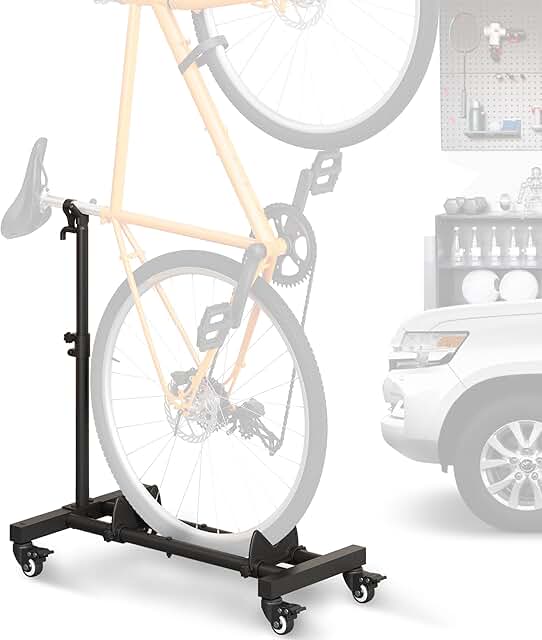
This freestanding rack emphasizes mobility with four 360° lockable wheels, allowing easy repositioning around the garage or home. It is compatible with bikes sized between 24″ and 29″, including some mountain and road bikes, and supports bikes up to 55 lb (25 kg). Height-adjustable lifting rods enable a tailored fit for different wheelbases, making it a versatile option for varied bike fleets. It requires no drilling, preserving wall integrity for renters or temporary setups.
monTEK Freestanding Bike Storage Rack for 5 Bikes

This system supports up to five bikes with an industry-leading hook ecosystem: five sliding PVC-coated hooks rated at 55 lbs each plus six adjustable storage hooks for helmets and gear. Four locking casters enable easy relocation, while the height range (49″ to 78.5″) and lateral adjustability of hooks make it suitable for various bike types, including e-bikes, road bikes, and kids’ bikes. A crossbar helps protect bikes and walls from scratches during storage and movement.
monTEK Swivel Bike Wall Mount

This wall-mounted rack uses heavy-duty steel to hold up to 66 pounds per hanger and features a 150-degree swivel, enabling flexible storage around parked cars or tight corners. The swivel design allows bikes to be stored flush against the wall while still providing easy access. It’s compatible with a wide range of bikes, including road, mountain, cruisers, and those with fenders, though it may not accommodate wheels with very large tires or rims.
WALMANN Freestanding Bike Stand

This freestanding option provides a four-bike capacity without wall mounting, ideal for garages with limited vertical space or painters’ sheds. It uses welded hooks on a horizontal bar to ensure secure, slip-resistant storage, with a per-hook rating that contributes to stable, floor-standing support. Its compact footprint helps keep the garage accessible while keeping bikes neatly organized off the floor.
Buying Guide: Key Purchase Considerations
When choosing a vertical bike rack for a garage, consider capacity, footprint, and how the design aligns with your space. Freestanding options offer flexibility for renters or spaces where wall mounting isn’t feasible, but they may require more floor space and can be heavier to move. Wall-mounted designs maximize floor space but depend on wall integrity and mounting hardware. For mixed-bike households with multiple riders, look for adjustable hooks, multiple tiers, and compatibility with a range of tire widths and wheelbases.
Capacity and expandability are essential. If you own several bikes, a freestanding system with 4–5 hooks or a modular system that can add more hooks over time is valuable. For wall-mounted racks, ensure the mounting studs and wall material can support the weight, especially with heavy bikes or e-bikes. Weight ratings per hook, overall stability, and protective finishes (rubberized coatings to prevent scratches) should be prioritized to protect wheels, rims, and frames.
Ease of use is another factor. Locking casters on freestanding units simplify repositioning, while adjustable heights and swivel angles on certain models enhance accessibility and space management. Some racks are better suited for specific bike sizes, such as 24″–29″ wheels or bikes with fenders. If you rent or anticipate changing spaces, a no-drill, freestanding model reduces wall damage and preserves future options.
Durability and weather resistance matter for indoor-outdoor use. Stainless or powder-coated steel components resist corrosion in humid environments such as garages with natural light. For households with helmets and gear, consider racks that include additional hooks or shelves to organize accessories in one vertical stand.
Finally, price and installation effort vary. Freestanding systems tend to be straightforward to assemble and move, but large configurations may require more planning for placement. Wall-mounted racks often require a drill and stud-finding, but can offer a cleaner, more space-efficient solution in a fixed location. Evaluate your garage layout, accessibility needs, and future storage plans to choose a model that balances performance with practical setup.