Discover top vertical and RV-friendly bike rack options designed to secure bicycles during road trips. This guide highlights five reliable picks, focusing on RV compatibility, space-saving design, and secure mounting. Each entry includes key features to compare performance, durability, and ease of use. Whether you’re hauling mountain bikes or fat-tire e-bikes, these racks offer secure transport with RV-friendly versatility.
| Product | Brand | Capacity | |
|---|---|---|---|
| Young 4-Bike Rack Hitch Mount Platform Style Carrier | Young Electric | 160 lbs total | Yes (RV behind) |
| Young Hitch Mount Bike Rack with Ramp | Young Electric | 200 lbs total | RV Ready |
| Stromberg Carlson CC-275 Bike Bunk | Stromberg Carlson | Up to 100 lbs | Fits A-frame trailers/RV |
| Sttoraboks Vertical Bike Stand | Sttoraboks | Up to 55 lbs per bike | Freestanding, garage use |
| Hollywood RV Rider Hitch Bike Rack | Hollywood Racks | Up to 160 lbs (2 x 80 lbs) | RV, fifth wheel, towable |
Young 4-Bike Rack Hitch Mount Platform Style Carrier

Designed for 2″ hitch receivers, this Young Electric rack carries up to 160 lbs total, with a per-bike limit of 40 lbs. It features soft padded hooks and a locking hitch pin to secure frames and prevent sway or paint damage. A rear safety reflector improves visibility in low light. The foldable design saves space when stored, and the tilt-back function provides trunk access without detaching the rack.
Key considerations: suitable for multiple bikes, dependable frame contact, and easy storage. It’s a solid option for RV rear-hitch mounting where trunk access and space are concerns.
Young Hitch Mount Bike Rack with Ramp

Built for two bikes with a combined 200 lb capacity, this rack uses reinforced steel and aluminum for strength. It employs a 2-arm fix, patent secure wheel cradles, and an anti-wobble structure to minimize movement during travel. It’s explicitly described as RV-friendly, ensuring compatibility and stable transportation for motorhomes and trailers. The tilt-down feature and foldable design support accessible trunk storage without detaching the rack.
Considerations include load distribution, frame compatibility with heavier e-bikes, and overall compatibility with your RV hitch setup.
Stromberg Carlson CC-275 Trailer Tongue Cargo Bike Bunk
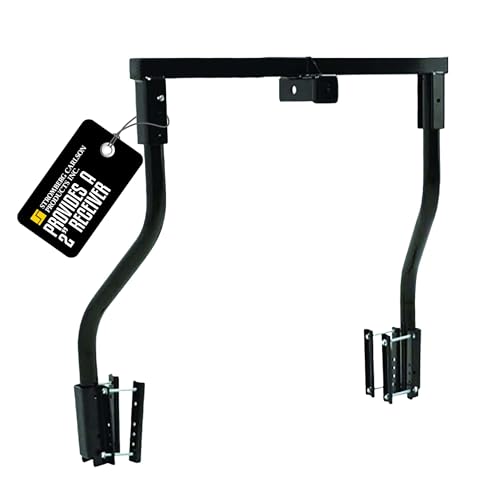
This trailer tongue bunker creates a raised 2″ receiver on A-frame trailers and supports up to 100 lbs, designed for RV compatibility. It provides adjustable mounting from 14″ to 55″ frame widths, accommodating a variety of trailer sizes. The all-steel construction emphasizes durability and stability for long trips, enabling RV-approved bike racks to be mounted securely for road travel.
Useful points: it expands RV mounting options on the trailer tongue, enabling safe bike transport without modifying the trailer structure.
Sttoraboks Vertical Bike Stand

This freestanding vertical rack uses four 360° lockable wheels for mobility and stability. It accommodates bikes from 24″ to 29″ wheels and supports up to 55 lbs per bike. Height-adjustable lifting rods provide flexible storage, and there is no drilling required—ideal for renters or spaces where wall mounting is impractical. It’s designed for garages, apartments, or storage rooms rather than in-vehicle use.
Key factors: load capacity per bike, wheel mobility, and compatibility with various bicycle sizes and types.
Hollywood RV Rider Hitch Bike Rack
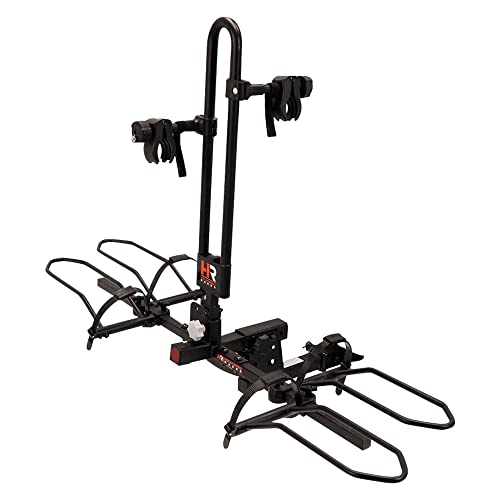
Engineered for RV use, this rack carries two e-bikes up to 80 lbs each, with a total capacity of 160 lbs. It includes wheel holders, a locking security cable, and frame grabbers to deter theft. A hitch tightener enhances overall security. The heavy-duty receiver tube supports durable operation for travel trailers, fifth wheels, or flat-towed configurations, making it a robust option for motorhomes.
Considerations involve security features, compatibility with large or fat-tire e-bikes, and ease of installation on RV hitch receivers.
Buying Guide: Key Purchase Considerations
- RV compatibility: Confirm that the rack is rated for RV-based use, including hitch type (2″ receivers are common) and whether the design supports trunk or bumper access without detaching.
- Capacity and bike type: Match the rack’s total weight capacity to your bikes’ weight, including potential fat tires or e-bikes. Consider per-bike limits, wheelbase compatibility, and tire width handling.
- Mounting method: Hitch-mounted racks are common for RVs; bumper adapters or trailer tongue mounts expand options but may require vehicle-specific fittings and installation steps.
- Security features: Look for locking hitch pins, frame clamps, wheel cradles, and optional security cables to prevent theft and reduce movement during travel.
- Storage and accessibility: Foldable tilts and tilt-back designs enable trunk or cargo access without removing the rack. Freestanding racks offer garage storage without vehicle integration but are not for in-vehicle use.
- Durability and materials: Aluminum and reinforced steel provide a balance of weight, strength, and corrosion resistance for road trips and varying climates.
- Installation ease: Quick-release tilts, adjustable frame contacts, and clear assembly instructions affect how easily you can deploy the rack for trips and set it up for return.
- Vehicle compatibility: Check the rack’s fit with your RV’s hitch receiver class, bumper dimensions, and any trailer tongue considerations when mounting to an A-frame or bumper.
- Maintenance: Regularly inspect locking pins, straps, wheel holders, and mounting hardware for wear and tighten components as needed before each trip.
When evaluating these options, prioritize RV-specific compatibility, overall weight distribution, and secure retention features. The right rack should protect bikes, minimize sway, and provide convenient access to your RV’s storage, all while fitting within your vehicle’s hitch and bumper setup for trips across the country.