When you transport two bicycles, a tray-style hitch rack offers stable mounting, quick loading, and versatile compatibility across SUVs, trucks, and cars. This guide highlights five highly rated tray hitch bike racks that balance strength, security, and practical design. Each product section below covers key features, load capacity, and user-focused benefits to help you compare at a glance.
| Product | Brand | Hitch Type | Bike Capacity | Key Benefit |
|---|---|---|---|---|
| MaxxHaul 50027 | MAXXHAUL | 2″ Class III/IV hitch | 2 bikes | Solid all-around platform with adjustable tire cradles |
| Hollywood Racks Destination 2 | Hollywood Racks | 2″ hitch | 2 bikes | Lightweight, easy operation, rotates and folds for versatility |
| Yakima Tray Hitch Bike Rack | Yakima | 2″ hitch | 2 bikes | Tilt feature and secure SKS locks for bikes and rack |
| BELL Right Up 350 | BELL | 2″ receivers | 3 bikes | Three-bike capacity with expanded tire compatibility |
| Trimax Road-MAX RMBR4 | Trimax | 2″ receiver | 4 bikes | Foldable arm design for gate access and compact storage |
MaxxHaul 50027 Platform Bike Rack

The MaxxHaul 50027 is a two-bike tray carrier designed for 2″ Class III and IV hitch receivers. It emphasizes durability with a robust platform that supports up to 75 lbs total (38 lbs per bike). The rack features adjustable tire cradles and foam-padded hooks to help secure frames and reduce contact wear. It is compatible with Class I–IV hitches, though not intended for RVs, campers, or trailers. The system keeps bikes stable with adjustable wheel trays and a simple load-and-go approach, making it a practical option for everyday car trips and weekend rides.
Hollywood Racks Destination 2 Hitch Bike Rack

The Destination 2 from Hollywood Racks is a lightweight, two-bike platform carrier designed for cars, SUVs, and trucks. It emphasizes ease of use with sliding padded frame holders that rotate 360 degrees and individual wheel trays for straightforward loading and unloading. A locking threaded hitch pin provides anti-sway protection during transit, contributing to secure transport of most kid’s bikes, hybrids, road bikes, and mountain bikes. It blends flexibility with security, making it a strong choice for frequent travelers seeking a versatile hitch-mounted rack.
Yakima Tray Hitch Bike Rack

The Yakima Tray Hitch Bike Rack is a 2-bike rear carrier designed to accommodate wheel sizes from 20″ to 27.5″ with tires up to 3″ wide (or 29″ tires up to 2.5″ wide). It supports wheelbases up to 48″ and is compatible with disc brakes, through axles, and full-suspension bikes. The tilting tray feature provides rear-of-vehicle access, while an integrated SKS lock system secures bikes to the rack and the rack to the vehicle. This setup offers a balanced mix of accessibility, security, and broad bike compatibility for many riders.
BELL Right Up 350 3-Bicycle Platform Hitch Rack
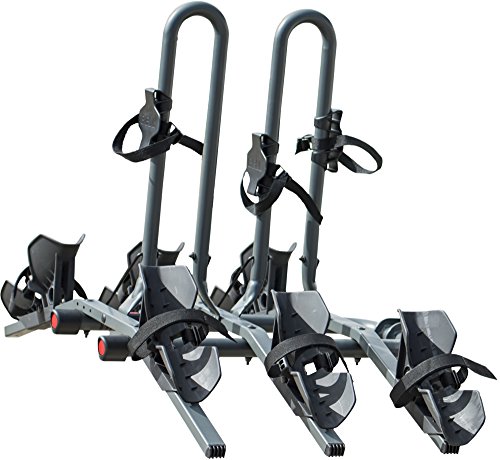
The Right Up 350 from BELL expands capacity by carrying up to three bikes on a single 2″ hitch receiver. Trays accommodate tires up to 3″ wide and fit both 1-1/4″ and 2″ receivers. This rack is designed for ease of use and stable transport, with features that support multiple bike configurations while maintaining straightforward installation and removal. It is a practical option for families or groups that frequently ride together and require flexible carrying capacity.
Trimax RMBR4 – Road-MAX Hitch Mount Tray
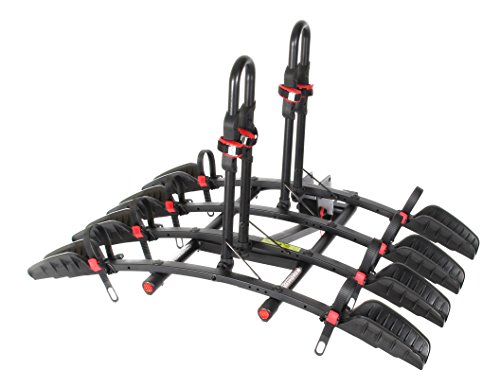
The Trimax Road-MAX RMBR4 is a 4-bike hitch-mount tray designed for SUVs, trucks, and vans. It features a foldable arm to allow gate access when not in use and a compact, lightweight design for easier storage. The adjustable padded arm supports bikes vertically, and the locking attachment system ensures a secure fit in any 2″ receiver. This rack is ideal for larger groups or families that need to haul multiple bicycles while keeping a low profile when not in use.
Young Hitch Mount Bike Rack with Ramp

This option from Young Electric combines high capacity with practical features, offering a 200 lb total capacity for two bikes and a ramp for easier loading. It emphasizes durability with reinforced steel and aluminum, plus anti-wobble construction. While it supports heavier bikes and fat tires, its RV-ready design adds versatility for motorhome travel and long road trips, making it suitable for adventurous riders who require dependable performance in varied environments.
Buying Guide: Key Considerations For Choosing A Tray Hitch Bike Rack
- Vehicle compatibility: Confirm your hitch class (1–4) and receiver size (2″). Ensure the rack is listed as compatible with your vehicle type (car, SUV, truck, RV) and does not conflict with spare tires or tailgates.
- Weight capacity: Check per-bike and total load limits. Two-bike racks vary from roughly 38–75 lbs per bike depending on model. Ensure your bikes’ weights align with the rack’s capacity plus any potential accessories.
- Bike fit and protection: Look for adjustable wheel cradles, padded frame hooks, and anti-sway features. Consider racks with adjustable spacing to prevent frame contact and damage during transit.
- Security: Consider integrated locks for bikes and for the rack to the vehicle. SKS or similar locking systems reduce the risk of theft while parked or en route.
- Accessibility and storage: Tilt-away or foldable designs improve rear hatch access when bikes are loaded. Foldable racks or arms facilitate trunk storage when not in use.
- Ease of use: Features like tool-free attachment, quick-loading wheel trays, and intuitive latching mechanisms reduce setup time and handling effort.
- Maintenance and durability: Materials (aluminum vs steel) affect weight and corrosion resistance. Foam padding and rust-resistant finishes extend rack life.
- Bike compatibility: Ensure the rack accommodates wheel sizes, tire widths, and frame styles (disc brakes, through axles, carbon frames) you typically ride.
- Safety standards: Look for racks with manufacturer-tested load ratings and reliable securing systems to minimize movement and vibration during travel.
- Budget considerations: Tray racks range in features and capacity. Weigh the trade-offs between extra bikes, added security, and frequent access needs.