Finding reliable third-hand tools and accessories can dramatically improve bike maintenance, especially when working on chains, pedals, and bottom brackets. This guide showcases five top picks designed to hold chains, assist with repairs, and provide extra leverage for tough jobs. Each product blends durability, practicality, and compatibility with common bike setups—helping riders and hobbyists tackle maintenance with greater ease.
| Product | Brand | Use | Why It Stands Out |
|---|---|---|---|
| 10PCS Bike Chain Hooks | PSLER | Chain repair and holding | High-quality 304 stainless steel; rust-resistant; multiple hooks for various chains |
| Sunlite 3rd Hand Chain Tool | Sunlite | Chain assembly/removal | Spring-loaded; holds ends for hands-free operation |
| BikeHand 22pcs Tool Set Kit | BIKE HAND | Comprehensive repair | Extensive tool assortment including chain, bottom bracket, and pedal tools |
| BikeHand Pedal Wrench Heavy Duty | BIKE HAND | Pedal installation/removal | Extra-long leverage; designed to fit 15mm pedals precisely |
| Pawfly 3 in 1 Bike Pedal Wrench | Pawfly | Pedals, crank pullers, bottom brackets | Versatile; 320mm length for maximum leverage |
The following sections present five highly relevant products. Each entry includes a concise overview, key features, and practical guidance on how these tools can support bike maintenance workflows. Use the links to view more details on Amazon and assess compatibility with your bike setup.
PSLER Bike Chain Hooks: Durable Chain Repair Helpers

The PSLER 10-piece set features 304 stainless steel chain hooks designed to hold bicycle chains during repairs. The hooks help stabilize chains while you work on sprockets or chain links, reducing the chance of derailment or dropped components. The stainless construction resists rust and wear, supporting repeated use on road and mountain bikes. These hooks are well-suited for shop work, home maintenance benches, or on-the-go repairs at the trailhead, offering a practical third-hand solution when gravity or limited hands complicate tasks.
Key points: rust-resistant material; easy-to-use chain stabilization; versatile for chain repair tasks across multiple speeds. The set’s small, compact form makes it easy to carry in a toolbox or saddle bag, ensuring you can marshal extra hands when needed. Whether you’re replacing a link, routing a new chain, or aligning a chain on a tight sprocket, these hooks help you stay organized and efficient during repair work.
Sunlite 3rd Hand Chain Tool

The Sunlite 3rd Hand Chain Tool is designed to assist with quick chain assembly and removal without needing extra hands. Its spring-loaded mechanism securely holds both chain ends, enabling precise alignment and smoother installation or disassembly. This tool complements other chain repair tasks by providing reliable stabilization, reducing the risk of slipping or misalignment during operation. It’s a practical addition to any rider’s toolkit for routine maintenance and on-the-road repairs.
Considerations: suitability for common derailleur systems, ease of cleaning, and whether the tool’s size fits your workbench or portable repair kit. For riders who frequently service chains, a 3rd hand tool like this can cut down repair time and minimize fidgeting while aligning links. It pairs well with chain hooks for a complete on-site repair solution, especially when replacing or adjusting a chain while the bike is supported on a stand or ground surface.
BIKE HAND 22-Piece Tool Set Kit

This BIKE HAND kit covers a broad spectrum of bike maintenance tasks with 22 tools designed for durability and versatility. Chain rivet extractors, dust caps, hex keys, screwdrivers, pedal wrenches, bottom bracket tools, and more are included. The selection is built to handle common repairs on mountain and road bikes, including derailleur work, crank servicing, and wheel-related tasks. The kit’s comprehensive scope makes it a practical choice for hobbyists and pros who want a single, portable solution for routine maintenance and occasional bike upgrades.
Highlights include compatibility with a wide range of components, robust construction to resist wear, and a setup that minimizes the need for additional purchases. For those building a personal repair toolkit or outfitting a small shop, this set provides a balanced mix of essential tools, enabling efficient, accurate work across many bike repair scenarios.
BikeHand Pedal Wrench Heavy Duty

The BikeHand Pedal Wrench is engineered for heavy-duty pedal removal and installation, offering an extra-long 13.8-inch handle for substantial leverage. This design helps riders tackle stubborn pedals without damaging crank arms. The tool is heat-treated for longevity and features precisely machined slots to match pedal spindles, reducing slip and burrs during operation. It is particularly useful when pedals are corroded or tightly fixed, providing a reliable approach to a common maintenance task.
Installation guidance includes verifying pedal thread directions (left vs. right) and ensuring correct alignment before applying force. The wrench’s ergonomic grip enhances control, making frequent adjustments easier on longer maintenance sessions. For serious cyclists or bike shops, this tool adds a dependable option for pedal work alongside other BIKE HAND tools for comprehensive service capabilities.
Pawfly 3-in-1 Pedal Wrench: 15/16/24 mm
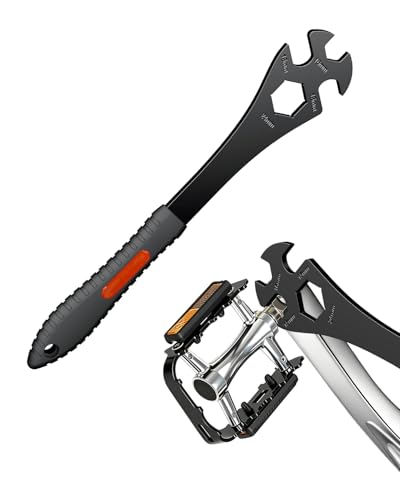
The Pawfly 3-in-1 pedal wrench offers 15/16/24 mm tool openings for pedals, crank pullers, and bottom bracket sockets. With a 320 mm extended length, it provides substantial leverage for easier removal and installation, especially on stubborn components. The wrench features clearly marked openings to simplify alignment, helping cyclists perform maintenance with reduced guesswork. A thicker rubber handle helps maintain grip during forceful turns, reducing hand fatigue during extended repair sessions.
Users should assess compatibility with their bike’s crank type and bottom bracket standard before purchase. This tool is designed to serve multiple maintenance roles, allowing riders to address pedal installation, crank pulling, and bottom bracket work with a single tool. Its versatility makes it a practical addition to a portable repair kit or a home workshop for riders who prefer multiple-use tools over specialized single-function devices.
Buying Guide: Key Purchase Considerations
- Intended use: Choose tools that match your typical maintenance tasks—chains and chain repair, pedal work, bottom brackets, and general assemblies.
- Material and durability: Stainless steel and high-carbon steel offer corrosion resistance and long-term wear resistance, important for frequent use.
- Leverage and leverage design: Longer handles or specialty grip designs improve torque without sacrificing control, especially on stubborn components.
- Compatibility: Ensure tool openings and interfaces match your bike’s components (pedals, chain widths, bottom brackets, etc.).
- Portability: For on-the-go repairs, select compact, multi-tool options or sets that fit into a small bag or saddle pouch.
- Kit breadth: Comprehensive tool sets save time by covering chain tools, rivet extractors, wrenches, and bottom bracket tools in one package.
- Ergonomics and comfort: Grips that reduce hand fatigue are valuable during long repair sessions or high-volume maintenance environments.
- Maintenance needs: If you frequently perform chain work, consider adding chain hooks and third-hand aids to stabilize parts during installation or removal.
In selecting tools, balance breadth with depth. A mid-range kit that includes essential wrenches, a chain-related tool, and a dedicated pedal wrench often delivers the best overall value for most riders, while specialized hooks or third-hand devices can streamline specific tasks like chain repairs or precise assembly. Consider your typical repair workflow, storage space, and how often you perform maintenance when choosing between single-purpose tools and multi-functional sets.