For rehab and light recuperative exercise, the right stationary bike can support low-impact cardio, joint-friendly movement, and gradual strength building. The following selects focus on stability, comfort, adjustable resistance, and quiet operation. Each option suits home use, with features designed to help users recover safely while staying motivated to move. Below, you’ll find concise product highlights and a buying guide to help you compare models suitable for rehabilitation, gentle endurance, and post-injury fitness progress.
| Product | Type | Why It Helps Rehab |
|---|---|---|
| Himaly Mini Exercise Bike | Under-desk/Arm & Leg Pedal Exerciser | Multi-level resistance; LCD tracking for time, calories, distance |
| Cursor Fitness Recumbent Bike | Recumbent | Low-impact seated ride; adjustable seat/back; 16 resistance levels |
| YOSUDA Under Desk Bike Pedal Exerciser | Under-desk/Desk Bike | Low-impact cardio; 16-level resistance; stability features |
| XVGVSV Recumbent Bike | Recumbent | Ergonomic comfort; 16-level resistance; high weight capacity |
| Pooboo Folding Exercise Bike | Folding/ Upright X-Bike | 4-in-1 design; compact storage; adjustable resistance |
Himaly Mini Exercise Bike

The Himaly Mini Exercise Bike is a compact, portable pedal exerciser designed for both arms and legs. With adjustable multi-level resistance, it supports various exercise intensities, making it suitable for rehab routines that require gradual progression. The included digital LCD displays time, count, calories, and distance, helping users monitor progress as they perform seated workouts at a desk or on a couch. Its dual-function capability supports upper and lower body training in a small footprint, ideal for recovery-focused routines in tight spaces.
Cursor Fitness Recumbent Bike

The Cursor Fitness Recumbent Bike emphasizes a gentle, supportive seated position. It features 16 levels of magnetic resistance, powered by a robust 11-pound flywheel, delivering smooth and quiet operation that’s well suited for rehab settings. The extra-cushion breathable saddle provides comfortable support during longer sessions. An adjustable seat, backrest, and pedal positions accommodate a wide range of users, including those undergoing recovery or starting a new fitness routine, while maintaining stability and reducing strain on joints.
YOSUDA Under Desk Bike Pedal Exerciser

The YOSUDA under-desk pedal exerciser offers 16 levels of magnetic resistance, enabling progression from light to more challenging cardio. Its 3-in-1 design supports full-body toning with resistance bands, making it a versatile option for rehab programs focused on arms, legs, and core. Dual anti-slip feet and a non-slip mat provide stable footing on various floor surfaces, helping prevent unwanted movement during gentle workouts and ensuring user safety in office or home environments.
XVGVSV Recumbent Bike (Quiet, 16 Levels)
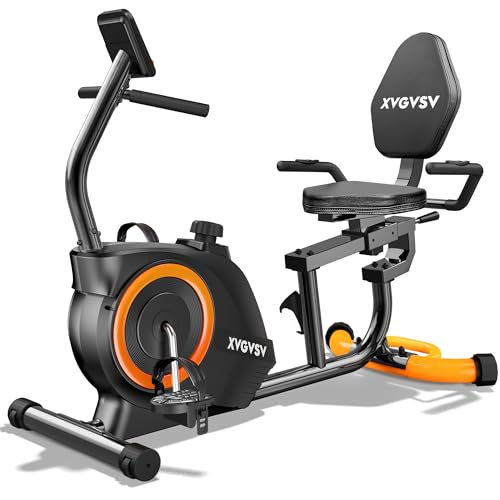
This XVGVSV recumbent bike focuses on ergonomic comfort with a plush padded seat and supportive backrest. It provides 16 resistance levels and a sturdy, quiet magnetic system. The design accommodates a wide range of users, including seniors, with a height-adjustable seating option and easy-to-use controls. Its weight capacity and smooth operation make it a solid choice for low-impact rehab sessions and gradual endurance building at home.
Pooboo Folding Exercise Bike

The Pooboo Folding Exercise Bike combines a folding upright posture with a 4-in-1 design to support a range of rehab needs. The 8-level magnetic resistance provides adjustable intensity for gentle to moderate workouts, while the folding construction and built-in arm resistance bands offer flexibility for upper-body engagement. A bottle holder adds convenience for hydration during longer rehab sessions, and the compact form supports storage in smaller living spaces.
Buying Guide for Rehab-Focused Stationary Bikes
Key considerations when choosing a rehab-friendly stationary bike include comfort, motion style, resistance range, and safety features. Recumbent bikes reduce spinal pressure and knee strain with their reclined seating and larger back support, making them a strong choice for post-injury recoveries or joints-sensitive users. Under-desk pedals provide low-impact cardio that can be performed while seated at a desk, which is helpful for moderate rehab goals and daily activity integration. Look for models with adjustable seats, backrests, and pedal positions to accommodate different heights and body types. Magnetic resistance tends to be smoother and quieter than belt or air resistance, which minimizes disruption in living spaces and reduces joint shock during early rehab stages. A quiet operation level is especially important for shared homes or apartments. Finally, tracking features such as a digital display help monitor time, distance, calories, and heart rate, supporting progression tracking and motivation while recovering.
Additionally, assess build quality and weight capacity for durability during rehab use. Folding or compact designs are advantageous for apartments or small spaces, whereas larger recumbent bikes may offer superior ergonomics and stability for longer sessions. Compare warranty terms and customer support, which can be crucial when equipment is used for medical or rehabilitation purposes. Consider whether you prefer a machine with resistance bands for full-body engagement or a simple pedal-only setup for focused leg workouts. By weighing these factors against your rehab goals and space constraints, you can select a bike that supports safe, gradual improvement and consistent activity.