Transforming a regular bicycle into a reliable indoor trainer is a practical way to keep riding when weather or daylight isn’t cooperating. The following reviews cover five top-rated trainers designed to convert bikes with 26″–29″ wheels (including 700C) into stable, indoor cycling setups. Each option offers adjustable resistance, quick-release mounting, and front-wheel support to simplify transitions between indoor and outdoor rides.
| Product | Brand | Wheel Range | Resistance Levels | Key Benefit |
|---|---|---|---|---|
| Sportneer Bike Trainer (B085RFMGDG) | Sportneer | 26–28″ / 700C | 6 levels | Wide compatibility with quick-release and front-wheel riser |
| CXWXC Bike Trainer (B0798J91JD) | CXWXC | 26″–29″ / 700C | 6 levels | Strong structure and high load capacity |
| VEVOR Bike Trainer (B0G1GYM31Y) | VEVOR | 26″–29″ / 700C | 6 levels | Quiet operation with durable aluminum components |
| CXWXC Bike Trainer (B0DCF57C6M) | CXWXC | 26″–29″ / 700C | 6 levels | Includes quick release and thru-axle adapter option |
| MOMINAHON Bicycle Turbo Trainer | MOMINAHON | 20″–22″ | Adjustable height | Compact, foldable design with solid weight capacity |
The following sections summarize practical features, setup, and performance considerations for each trainer, helping readers choose the best option for their indoor cycling goals.
Sportneer Magnetic Bike Trainer Review

The Sportneer Magnetic Bike Trainer is designed to fit most road and mountain bikes with 26–28″ wheels or 700C equivalents. It supports rear axles within a broad range and comes with a quick-release skewer for fast setup. If your bicycle uses a thru axle, Sportneer offers a compatible adapter variant to ensure a secure fit. Six magnetic resistance levels let riders simulate flat roads to steep climbs from a bar-mounted remote, providing controllable intensity without needing to leave the home. A front wheel riser block stabilizes the front of the bike, while the quick-release lever simplifies mounting and removal. This model emphasizes broad compatibility, straightforward installation, and an authentic ride sensation, suitable for endurance training and routine cardio sessions.
Key considerations:
- Pros: Easy setup, multiple resistance levels, front-wheel support, quick-release integration.
- Cons: Some users may want a quieter or more compact footprint depending on space.
- Best for: Riders seeking a versatile trainer with quick setup and accessible resistance changes.
CXWXC Indoor Bike Trainer (26–29" / 700C)
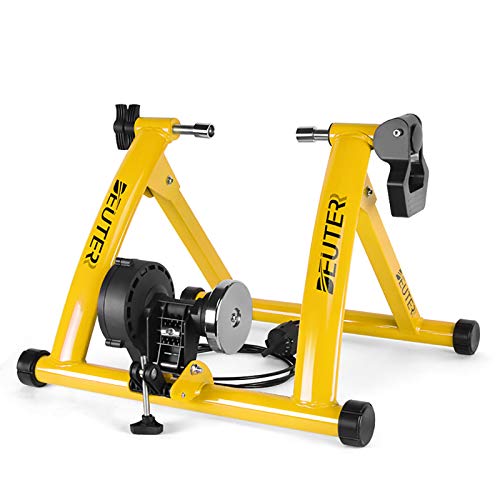
The CXWXC model targets riders needing robust stability and broad wheel compatibility. It supports 26″–29″ wheels, including 700C, and features a pyramid-like frame design to enhance rigidity and load-bearing capacity. The six-level magnetic resistance is adjusted from a handlebar-mounted device, enabling seamless progression from warm-up to intervals without changing riding position. The trainer is presented as a reliable home option for indoor cycling during inclement weather, offering solid stability and capacity to accommodate most standard bikes. It is well-suited for riders who value a sturdy frame and easy resistance adjustments at the bars.
Key considerations:
- Pros: Strong stability, wide wheel compatibility, convenient resistance control from the handlebars.
- Cons: May be bulkier than ultra-compact alternatives; assembly requires attention to alignment.
- Best for: Riders seeking dependable stability for extended indoor sessions.
VEVOR 6-Level Magnetic Bike Trainer
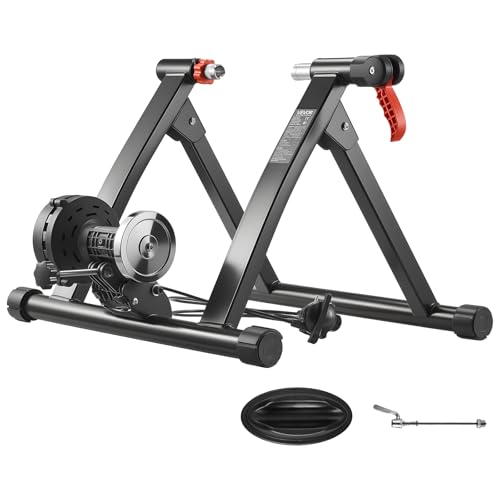
The VEVOR trainer emphasizes quiet operation through a heavy-duty aluminum alloy shaft and a low-noise motor, important for apartment living or shared spaces. Six magnetic resistance levels let riders simulate everything from easy spins to hill climbs, and the stand supports wheel diameters from 26″ to 29″ or 700C. Fit compatibility with most bikes is highlighted, allowing easy setup with minimal additional equipment. The design focuses on a balance between straightforward use, low noise, and a stable ride during indoor workouts.
Key considerations:
- Pros: Quiet operation, solid construction, good compatibility range.
- Cons: Some users may want more compact storage options.
- Best for: Quiet, all-purpose indoor training with a focus on rider comfort.
CXWXC Thru Axle Ready Bike Trainer

This newer CXWXC version includes a quick-release skewer plus a thru-axle adapter, broadening compatibility for higher-end road bikes and certain mountain bikes. It retains the core features: a pyramid-styled frame for stability, the 26″–29″ wheel range (and 700C), and six resistance levels to replicate real-road conditions. The unit is designed to transition smoothly from indoor to outdoor riding, with emphasis on secure mounting and ease of use. It is a solid choice for riders who want flexibility across wheel configurations and axle standards.
Key considerations:
- Pros: Thru-axle compatibility, stable frame, straightforward adjustment.
- Cons: May require proper alignment during setup for optimal performance.
- Best for: Riders with diverse bike setups needing axle versatility.
MOMINAHON Bicycle Turbo Trainer

This trainer offers a compact, foldable frame designed for 20″–22″ wheels, making it a fit for smaller bikes or youth riders looking to turn their bike into a stationary trainer. The assembly is described as straightforward, with a knob-style height adjuster to accommodate different wheel sizes. A notable weight capacity rating indicates solid support for typical bikes in this size range, and the foldable design supports easier storage after workouts. It is best for riders with smaller frames or households needing a space-saving option.
Key considerations:
- Pros: Space-saving, adjustable height for various small-wheel bikes, easy storage.
- Cons: Limited to smaller wheel sizes; not ideal for larger road or mountain bikes.
- Best for: Riders with smaller bikes or limited space seeking a simple indoor solution.
Buying Guide: Key Purchase Considerations
When selecting a stand-to-stationary bike trainer, consider how the trainer will fit into your riding goals, space, and bike type. Priorities often vary by rider, so below are the main perspectives to help guide a decision.
- Wheel compatibility: Most options support 26″–29″ wheels and 700C; verify your bike size and axle type (quick-release vs thru-axle) before purchasing.
- Resistance realism: Six-level magnetic resistance is common and offers a range from easy spins to climbs. If you want more intensity or alternate resistance mechanisms (fluid or direct-drive), compare options accordingly.
- Stability and frame design: A pyramid or robust frame design improves stability, especially when sprinting or standing on the pedals. Check load ratings if you ride heavier bikes or accessories.
- Noise level: Heavy-use apartments or shared spaces benefit from low-noise designs. Aluminum components and high-precision bearings contribute to quieter operation.
- Ease of mounting: Look for quick-release skewers and front-wheel risers to simplify installation and removal. A thru-axle adapter expands compatibility for newer bikes.
- Storage needs: Foldable frames help minimize space, particularly in small homes or apartments. Consider whether you prefer a compact package or a more permanent setup.
- Budget and maintenance: Price often correlates with materials, components, and durability. Maintenance considerations include lubrication access and wheel compatibility.
These trainers provide a spectrum of choices from broad compatibility and quick mounting to quiet operation and compact storage. Evaluating wheel size, axle compatibility, noise, and space will help determine which model most closely aligns with daily training routines and living environments.