For indoor cyclists, a reliable spin bike power meter or cadence sensor can transform workouts, helping you quantify effort, monitor progress, and train smarter. The following selections focus on compatibility with common apps and devices, ease of use on various bikes, and clear data readouts. Each product is chosen for relevance to the keyword “spin bike power meter,” balancing precision, versatility, and user-friendliness. The table below offers a quick snapshot of the featured items.
| Product | Brand |
|---|---|
| Magene Outdoor/Indoor Speed/Cadence Sensor | Magene Store |
| Wahoo RPM Cadence Sensor | Wahoo Fitness Store |
| CYCPLUS GPS Bike Computer | CYCPLUS Store |
| Bike Speedometer GPS Wireless Cycling Computer | Bikevee Store |
| CYCPLUS GPS Wireless Bike Computer (New Upgraded) | CYCPLUS Store |
Magene Sensor For Speed Or Cadence On Spin Bikes

The Magene Outdoor/Indoor Speed/Cadence Sensor is designed to work with cycling computers and training apps via Bluetooth or ANT+. It is compatible with common platforms such as Onelap, Wahoo Fitness, and Zwift. One sensor operates in either speed or cadence mode, so users may prefer two sensors to capture both data streams simultaneously. Note that Bluetooth connections typically allow one device at a time, while ANT+ can connect to multiple devices. This sensor requires removing the insulating sheet from the pre-installed battery before first use and re-installing to switch modes.
Key considerations include mode limitation and device connectivity. For riders who switch between power data and cadence data, having two sensors ensures continuous data capture without swapping hardware. The dual-mode limitation means you can test speed or cadence per sensor, not both at once. Its compact form factor and broad compatibility make it a practical option for spin bikes where power readings may be sought through compatible apps and bike computers.
Wahoo RPM Cycling Cadence Sensor

The Wahoo RPM Cadence Sensor provides precise cadence measurements and is compatible with a range of training apps, including Wahoo SYSTM, Zwift, and Peloton Digital via Bluetooth. It tracks revolutions per minute to help you optimize pedal stroke and efficiency. The device supports dual-band technology, integrating both ANT+ and Bluetooth Smart, enabling connections to smartphones, tablets, and bike computers simultaneously or individually depending on the app or device setup. This makes it a versatile choice for riders using multiple training platforms.
In practical use, riders can monitor cadence trends over sessions, set cadence targets, and gauge improvements in efficiency and endurance. The sensor’s Bluetooth capability makes it straightforward to pair with mobile devices, while ANT+ compatibility allows integration with many bike computers. This balance of cross-platform compatibility and straightforward data readout makes the RPM Cadence Sensor a strong option for indoor cyclists focusing on cadence training and analytics.
CYCPLUS GPS Bike Computer With Backlight
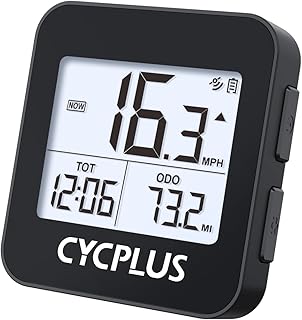
The CYCPLUS GPS Bike Computer is a wireless cycling computer offering automatic backlight, GPS-based data tracking, and robust battery life. It captures ride time, distance, altitude, and more, with a high-sensitivity GPS receiver for accurate position data. IPX6 waterproofing adds resilience against rain and splashes, while the included large-capacity battery supports extended sessions—essential for longer training rides or outdoor-to-indoor data syncing when used with compatible apps. Its user-friendly interface and comprehensive metrics make it a practical pick for riders seeking a reliable data hub on a spin bike or bike computer setup.
Features emphasize visibility, durability, and data depth. The automatic backlight improves readability in varied lighting, and the GPS-based data streams can integrate with third-party apps via Bluetooth. For indoor use, this device can serve as a standalone cadence and speed tracker or synchronize with apps like Zwift for a richer training experience. The combination of waterproofing and battery life supports consistent performance in diverse riding conditions.
Bike Speedometer GPS Wireless Cycling Computer

This Bike Speedometer GPS Wireless Cycling Computer emphasizes GPS tracking with a clear 2.4-inch LCD display. It offers auto start/stop, which records ride duration, distance, and speed automatically to minimize manual input. The device supports MPH and KM/H measurements and provides a broad view of ride data including maximum and average speeds. A long-lasting battery supports up to 28 hours of use, making it suitable for long training sessions or non-stop rides. The wireless design reduces handlebar clutter and simplifies installation on spin bikes and outdoor bikes alike.
From a data perspective, the GPS-driven readings enhance accuracy for distance and pace, while the auto-backlight ensures legibility in daylight and at night. Riders can rely on this device for consistent data capture across multiple riding environments, and its compatibility with standard cycling apps enables both performance tracking and training analysis in real-time or post-ride reviews.
CYCPLUS GPS Wireless Bike Computer (New Upgraded)

The upgraded CYCPLUS GPS Wireless Bike Computer combines Bluetooth and ANT+ support, enabling simultaneous data capture across multiple sensors such as speed, cadence, heart rate, power, altitude, and more. The 2.9-inch high-contrast LCD screen provides clear visibility, and the device offers automatic backlight for intuitive reading in sunlight or low-light conditions. The Swiss-sourced GPS component enhances positioning accuracy, and app synchronization allows data transfer to popular training platforms. This model’s emphasis on cross-compatibility makes it a strong choice for riders who track a wide range of metrics.
Key considerations include ease of pairing, data synchronization with apps, and the ability to handle multiple sensor streams simultaneously. For riders who frequently switch between indoor trainers and outdoor routes, the combination of ANT+ and Bluetooth connectivity helps ensure data consistency across sessions. This device is positioned for those who demand comprehensive metrics and reliable route tracking in a single unit.
Buying Guide
- Data goals: Decide whether you primarily need cadence, speed, power, or a combination. Some sensors focus on cadence or speed in one unit, while others provide multi-sensor compatibility via ANT+ and Bluetooth.
- Connectivity: Consider which platforms you use (Zwift, Peloton Digital, Wahoo App, etc.). If you use multiple devices, look for dual-band (ANT+/Bluetooth) sensors that can connect to several devices at once.
- Compatibility and setup: Check whether the sensor requires separate batteries or a pre-installed battery, and whether you need to manage modes (speed vs cadence) per device. Ensure compatibility with your spin bike, trainer, or bike computer mounts.
- Durability and waterproofing: For both indoor and outdoor use, IP ratings and build quality matter, especially if you ride in varying climates or sweat-heavy sessions.
- Battery life: For longer workouts, battery capacity and replacement ease influence reliability. Look for devices with long life per charge and easy battery access.
- Data depth: If you want advanced analytics, prioritize devices that sync with apps offering route tracking, power data, cadence trends, and elevation data.
- Installation ease: Some devices are quick to install on a crank or wheel, while others require mounting brackets or sensor placements in specific spots. Review installation guides and compatibility notes before purchase.
- Price and value: Compare the feature sets against price to determine which provides the best value for your training habits and ecosystem.
These options collectively address a range of needs—from simple cadence tracking for spin classes to comprehensive GPS-enabled data logging for hybrid indoor-outdoor training. When selecting a spin bike power meter or cadence sensor, prioritize the data you want, the devices you already use, and how easily you can integrate new hardware into your workouts.