Getting the most from an electric bike often means keeping the battery topped up during long rides or camping trips. A compact solar panel kit can provide practical, emergency, or periodic charging when you’re away from power. This article reviews five top-rated solar panel options suited for e-bikes and 12V bike systems, highlighting their capabilities, durability, and ease of use to help you choose the right fit for your rides.
| Product | Brand | Key Feature |
|---|---|---|
| SOLPERK 20W Kit | SOLPERK | Waterproof, MPPT controller, 12V battery compatibility |
| 400W Boost MPPT Controller Kit | SolarEnz | High-power boost with LCD display for multiple voltages |
| DOKIO 100W Foldable Kit | DOKIO | Portable, separate controller, long cable for flexible setup |
| Voltset 20W MPPT Charger | Voltset | Smart MPPT, 3-stage charging, universal 12V compatibility |
| FlexSolar 100W Portable Kit | FlexSolar | Multi-port outputs, PD/QC USB, highly portable |
These products span a range of use cases—from compact trickle charging for daily riders to larger, more capable kits for extended trips. When selecting a solar panel for an e-bike, consider power needs, mounting options, weather resistance, and whether an MPPT controller is included or needs to be purchased separately. The following sections explore each option in detail.
SOLPERK 20W Solar Panel Kit
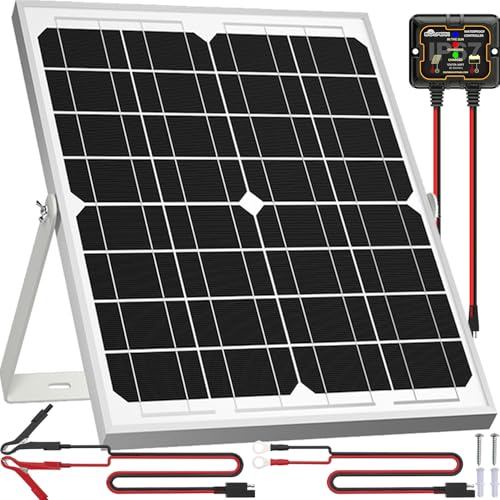
The SOLPERK kit pairs a 20W monocrystalline panel with an 8A smart MPPT controller, designed to charge 12V batteries such as LiFePO4, Lithium Ion, AGM, and more. Its high conversion rate (cell efficiency of 21%–30%) translates to meaningful charging even in overcast conditions. Built-in protection and indicators help monitor status, while a corrosion-resistant aluminum frame and low-iron tempered glass deliver durability. The system is designed to withstand harsh weather, including high wind and snow loads, making it suitable for boats, RVs, and on-road use. This kit emphasizes reliability and long-term performance for regular maintenance charging on the go.
400W Boost MPPT Solar Controller Kit
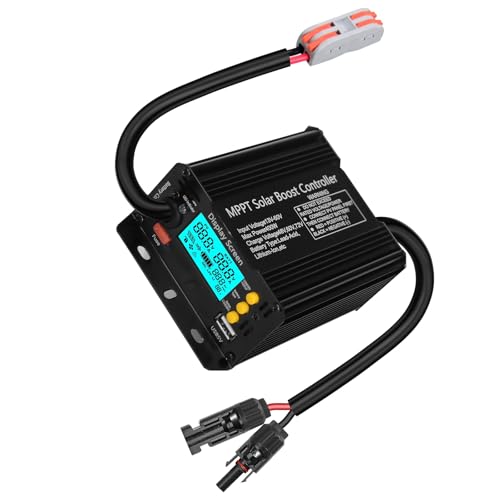
This option centers on a robust MPPT charge controller designed to boost solar input for higher-voltage battery systems, including 24V, 36V, 48V, up to 72V. It supports multiple battery chemistries such as Lead-Acid and LiFePO4 and is ideal for expanding a solar setup on e-bikes used with larger auxiliary power systems or garage-charging arrangements. The LCD display provides real-time charging data, and the controller is designed to protect against overcharging, short circuits, and reverse polarity. It’s a strong choice for riders who want to scale up their solar support for longer trips or more demanding electronics.
DOKIO 100W Portable Foldable Kit

The DOKIO 100W foldable panel is designed for travel and outdoor use. Weighing about 6 pounds, it folds to a compact size and includes a separate PWM controller for safe charging. A long 9.84-foot cable enables placing the panel in strong sunlight while keeping the controller near the bike’s power system or a backup power station. The standalone controller protects against reverse polarity, overcharge, and short-circuits, offering a safe path for 12V battery maintenance on the road. This kit is ideal for hikers, campers, or riders who want portable solar support without a heavy install.
Voltset 12V Solar Battery Charger

The Voltset solar battery charger emphasizes smart protection and efficient charging. It features an MPPT algorithm that claims high tracking efficiency and faster charging compared to traditional controllers. The device supports a wide range of 12V batteries, including LiFePO4 and GEL variants, and includes protections against overcharge, over-discharge, short circuits, and reverse polarity. The 3-stage charging algorithm (Bulk, Absorption, Float) optimizes performance for vehicles, trailers, boats, and RVs. It’s a practical all-around option for 12V maintenance and regular top-ups.
FlexSolar 100W Portable Kit

This FlexSolar setup presents a 100W panel with multiple outputs, including 18W USB-A, 60W PD3.0 USB-C, and a 100W DC port. A 4-in-1 charging cable expands compatibility with phones, power banks, and small power stations, making it a versatile companion for camping or emergency use. The panel uses ETFE lamination for durability and offers 23%+ solar conversion efficiency with a rugged, IP67-rated exterior. It’s well-suited to riders who need a compact power source capable of charging small devices or supplying power to a compact battery pack while on the road.
Buying Guide: Key Considerations for E-Bike Solar Setups
- Power needs and battery chemistry: Match panel wattage and MPPT controller capabilities to your bike’s battery chemistry (LiFePO4, Li-ion, AGM, etc.) and your typical daily draw. For lightweight e-bikes, 20–100W panels with 12V systems are common; larger e-bikes or camping setups may benefit from higher wattage or modular systems.
- MPPT versus PWM: MPPT controllers optimize charging efficiency, especially under variable sunlight, while PWM controllers are simpler and often less expensive. For bikes with limited space, an integrated MPPT controller can maximize available sun without requiring multiple panels.
- Portability and installation: Consider foldable or portable panels for frequent riders and campers, or rigid panels with mounting brackets for a more permanent setup. Weight and size influence how easily you carry panels on rides or store them on bikes.
- Durability and weather resistance: Look for IP ratings, robust frames, tempered glass, and UV resistance to ensure longevity in outdoor conditions. Panels designed for marine or off-road use typically offer stronger wind and water protection.
- Wiring, protection, and safety: Ensure the system includes proper diode protection, weatherproof connectors, and secure mounting. Overcharge, short-circuit, and reverse polarity protections reduce risk to batteries and electronics.
- Expansion and compatibility: If you plan to upgrade later, choose controllers and panels that support higher voltages (24V–72V) or modular connections. Check compatibility with your bike’s charging port and any existing solar kits.
- Maintenance and monitoring: Indicators, LCD screens, or companion apps help monitor charging status, battery health, and system performance. A reliable alarm-free setup reduces the risk of battery drain at night.
- Pricing and value: Compare the total package—panel quality, included controller, mounting hardware, and warranties. A higher upfront cost can pay off with better efficiency and longer lifespan in the long run.
In summary, for an e-bike, the most important factors are portability, reliable charging (prefer MPPT), weather durability, and battery compatibility. The five options above cover a spectrum from compact trickle-charging kits to more powerful, feature-rich systems, enabling riders to tailor solar support to their riding style and terrain.