Finding the right smart indoor bike trainer can elevate your at-home cycling routine. This guide highlights five top models, focusing on quiet operation, resistance realism, software compatibility, and ease of setup. Each option offers a unique balance of power accuracy and interactive training apps to suit different goals and bike setups.
Product Overview
| Product | Brand | Key Strength | Resistance Type |
|---|---|---|---|
| Saris H3 Plus Smart Indoor Bike Trainer | Saris | Quiet operation, 12-speed compatibility, precise power and cadence | Direct-drive, electromagnetic |
| ThinkRider X2Max Smart Bike Trainer | ThinkRider | Advanced tilt simulation, high power output, dual wireless protocols | Direct-drive, electromagnetic |
| Saris M2 Smart Indoor Bike Trainer | Saris | Zwift compatibility, USA-made, easy wheel-on setup | Electromagnetic |
| Tacx Flux S Smart Bike Trainer | Tacx | Quiet direct-drive performance, strong third-party app support | Direct-drive, electromagnetic |
| Saris Fluid2 Smart Equipped Indoor Bike Trainer | Saris | Quiet, bundled accessories, ready for virtual training | Direct-drive, fluid-like resistance with smart elements |
Saris H3 Plus Smart Indoor Bike Trainer

The Saris H3 Plus stands out for its exceptionally quiet operation, delivering about 59 decibels. This makes workouts less disruptive for household members and neighbors. It is designed to integrate smoothly with 12-speed drivetrains, broadening compatibility across common road bikes. Precision components monitor power, speed, and cadence with a narrow margin of error of ±2%, supporting consistent training data for performance tracking and progression. The direct-drive setup minimizes wheel slip and enhances realism during high-intensity sessions.
ThinkRider X2Max Smart Bike Trainer

The ThinkRider X2Max emphasizes a realistic indoor riding feel through intelligent tilt simulation up to 18%. It supports both BLE and ANT+ protocols and is compatible with popular cycling apps, including ZWIFT. It delivers strong power output—up to 2000W—with a power-meter accuracy of about ±2%, enabling precise training zones. The unit’s ability to simulate hill gradients in sync with virtual maps creates immersive workouts. Dual-mode wireless support ensures broad device compatibility and reliable connectivity during sessions.
Saris M2 Smart Indoor Bike Trainer

The Saris M2 focuses on a wheel-on setup, enabling a straightforward transition for riders who prefer not to disassemble their bike. It maintains a steady noise profile around 69 decibels when moving at higher speeds and offers ±5% resistance accuracy, suitable for structured workouts and fitness testing. The electromagnetic resistance system ensures smooth, repeatable effort, while the unit’s overall build quality aligns with American manufacturing standards. This trainer pairs well with Zwift and other supported apps, creating an accessible entry point for smart training.
Tacx Flux S Smart Bike Trainer
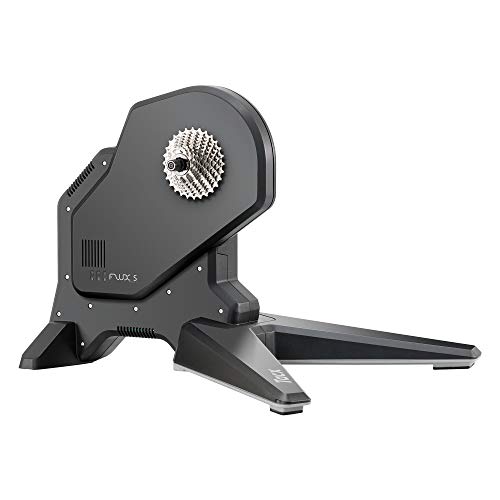
The Tacx Flux S is known for its near-silent operation and strong compatibility with popular training apps, including Zwift and TacX’s ecosystem. Its direct-drive design improves realism by reducing wheel slip and providing consistent resistance feedback. Users benefit from a robust power measurement framework that supports precise training zones and performance analytics. The trainer’s compact footprint and solid build make it a practical choice for dedicated home studios or apartment setups with limited space.
Saris Fluid2 Smart Equipped Indoor Bike Trainer

The Fluid2 Smart Equipped model pairs the renowned fluid resistance with smart features that integrate into virtual training rides. It includes a speed sensor and bundled accessories to support immediate use with virtual platforms. The fluid resistance provides a natural and quiet ride feel, complemented by consistent performance at a wide range of speeds. This trainer is well-suited for riders who value a smooth, progressive resistance curve and a reliable setup that works well with popular training apps.
Buying Guide: Key Purchase Considerations
- Resistance and realism: Direct-drive trainers generally offer quieter operation and more precise resistance profiles than wheel-on units. Look for power accuracy within ±2% to ±5% depending on price and model.
- Noise level: Quiet models (under 60-65 dB) are preferable for multi-person homes or apartment living. Consider your tolerance for ambient noise during intense intervals.
- Software compatibility: Ensure the trainer works with your preferred apps (Zwift, Rouvy, TacX, Onelap, etc.). BLE and ANT+ support expands device pairing options.
- Bike compatibility and setup: Confirm wheel size compatibility (26-29″ wheels, 700C), whether wheel-on or direct-drive suits your frame, and the ease of mounting.
- Power range and peak watts: A higher sustained power rating (e.g., 1000–2000W) enables true sprint training and advanced intervals, especially in built-for-performance models.
- Hardware stability and warranty: A solid frame, stable axle interface, and warranty coverage help protect your investment during frequent workouts.
- Extras and compatibility: Bundled accessories (speed sensors, training mats, towel, riser blocks) can add value, while app subscriptions may affect long-term costs.
- Portability and storage: Foldable or compact designs help if you have limited space. Assess the trainer’s weight and whether it fits your workout area.
- Maintenance needs: Fluid-based or electromagnetic systems require varying maintenance—factor in cleaning, lubrication, and part replacement timelines.
When evaluating options, align your choice with workout goals: structured interval training and app-driven rides benefit from compatibility with popular platforms, while a quiet, stable ride appeals to users living in shared spaces. For riders who want a quick setup without removing wheels, wheel-on models provide convenience, but direct-drive units typically deliver greater accuracy and realism for serious training progress.