Discover top-rated smart bike roller trainers that blend stability, quiet operation, and interactive software compatibility. This guide highlights five reliable options engineered for American riders who want realistic climbs, precise power data, and seamless integration with apps like Zwift. Read on to compare features, performance, and usability to find the right trainer for your indoor cycling routine.
| Product | Type | Key Feature |
|---|---|---|
| Garmin TacX Antares Indoor Retractable Bicycle Rollers | Rollers | Centered rollers for stability |
| ThinkRider X2Max Smart Bike Trainer | Wheel-on Smart Trainer | ANT+/BLE, 2000W power, 18% tilt |
| ThinkRider XXPRO Direct Drive Smart Trainer | Direct Drive | Self-powered, downhill simulation |
| Alpcour Bike Trainer Stand | Magnetic Trainer | Six resistance levels, quiet operation |
| Saris M2 Smart Indoor Trainer | Wheel-On | Electromagnetic resistance, Zwift compatible |
Garmin TacX Antares Indoor Rollers

The Garmin TacX Antares rollers are designed to keep wheels centered for stable, controlled indoor rides. These 62 cm rollers require no power and are maintenance-free, making them a reliable option for riders who value simplicity. They fit bikes with wheel diameters from 26” to 29”, enabling broad compatibility across road and mountain bikes. The tapered rollers help reduce drift, supporting a realistic riding feel without complex setup.
ThinkRider X2Max Smart Bike Trainer
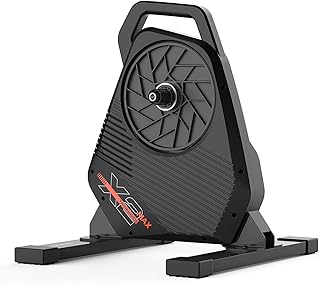
The ThinkRider X2Max combines a wheel-on trainer design with smart features and broad software compatibility. It supports BLE and ANT+ dual-mode protocols, working with popular cycling platforms like Zwift. The power output reaches up to 2000W with a power meter accuracy of ±2%, delivering precise and consistent data. Its intelligent tilt simulation of 18% enhances the realism when mapped to virtual courses via connected software.
ThinkRider XXPRO Direct Drive Smart Trainer
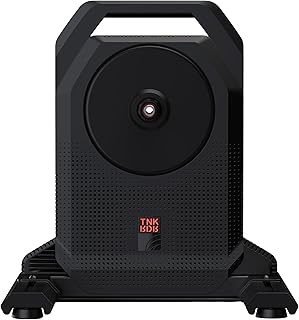
The XXPRO Direct Drive model uses motor-driven direct drive for a realistic indoor ride. It provides ±1% data accuracy and does not require separate calibration. A notable feature is its self-power generation capability, enabling operation without a constant power connection. It also offers downhill simulation, automatically adjusting to map slopes for a more immersive virtual ride experience.
Alpcour Bike Trainer Stand

The Alpcour trainer stand turns any mountain or road bike into a stable indoor trainer. Magnetic resistance with six fixed levels allows riders to simulate varied terrain, from flats to hills. The design emphasizes quiet operation and uses a broad base with a low stance to promote balance. A built-in wheel block and carry bag improve portability and storage, making it suitable for travel and small spaces.
Saris M2 Smart Indoor Trainer

The Saris M2 uses a wheel-on setup with electromagnetic resistance, aligning with Zwift and similar apps for interactive workouts. It delivers measured workouts with a stated accuracy of ±5% and a noise level of 69 decibels at 20 mph, presenting a balance of performance and tolerable noise. Its compact design suits riders seeking a quieter, integrated training experience without removing the rear wheel.
Buying Guide: Key Purchase Considerations
When selecting a smart bike roller trainer, consider compatibility with your bike size and preferred software, along with the realism of resistance and ride feel. Direct-drive models often deliver the most precise power data and quiet operation, but wheel-on options can be easier to set up and swap between bikes. Power range and accuracy influence training quality, especially for structured workouts. If you value interactive routes and virtual climbs, ensure your trainer is Zwift-compatible and supports ANT+ or BLE.
Other factors include noise level, portability, and maintenance. Magnetic and direct-drive systems differ in maintenance needs and wear on tires and belts. The ability to simulate hills or downhill sections adds to realism, particularly when mapped to virtual courses. Finally, assess price-to-performance, warranty, and the availability of replacement parts to extend the trainer’s lifespan.