Transporting bikes on the roof of your car or SUV requires reliable roof bars and a sturdy rack. This guide reviews five top roof bar setups and bike carriers commonly used in the United States, highlighting installation ease, load capacity, compatibility, and security features. Whether you drive a sedan or a pickup, these options cover a range of vehicle types and riding needs, helping you choose a roof-mounted system that safely carries one bike or multiple bikes on family trips, weekend rides, and long adventures.
| Product | Key Benefit | Best For |
|---|---|---|
| GATHERSKY Roof Bike Rack Mount Upright | Secure wheel grip with two arms | One-bike roof mounting on removable crossbars |
| Swagman UPRIGHT Roof Mount Bike Rack | Fast install, no front wheel removal | Versatile on various bars and quick trips |
| Yakima Rooftop Bike Rack Mount, FrontLoader | Durable, versatile for multiple bike types | Sedans and SUVs needing reliable security |
| VEVOR Roof Rack Cross Bars | Low wind noise and universal bare-roof fit | Bare-roof vehicles seeking quiet travel |
| TOOENJOY Rooftop Bike Rack | Dual rotatable load arms for wheel-first grip | Heavy-duty, durable single-bike setups |
GATHERSKY Roof Bike Rack Mount Upright

The GATHERSKY roof rack uses two pivoting upright arms to grip the bike by the wheels without touching the frame, preserving paint and finish. An integrated tightening knob allows fast adjustments, and a ratchet lock mode enables one-handed loading and unloading. It supports a single bike up to 44 pounds and fits most wheel sizes from 18 to 29 inches with tires up to 3.1 inches wide and wheelbase up to 48 inches, making it suitable for a broad range of standard road and mountain bikes.
Swagman UPRIGHT Roof Mount Bike Rack
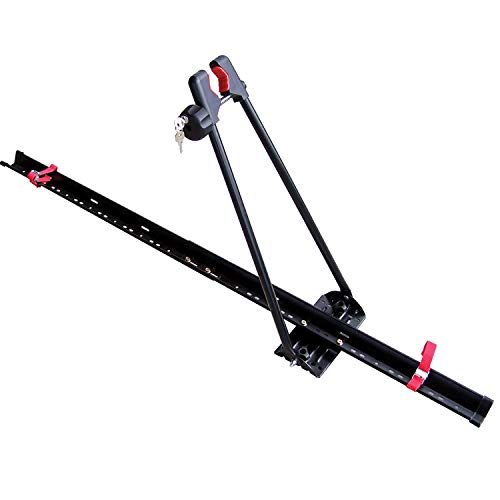
The Swagman UPRIGHT offers quick installation with no wheel removal required. It accommodates bikes with a wheelbase up to 54 inches and tires up to 3 inches wide. The rack fits square, round, and oval bars up to 3 inches, and can be used with multiple units on a single vehicle. The system supports up to 35 pounds per bike and features a sleek, durable plastic and steel construction with a lightweight profile of about 5 pounds.
Yakima Rooftop Bike Rack Mount, FrontLoader
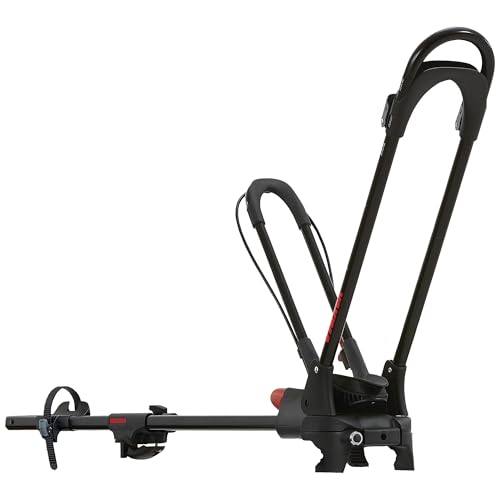
The Yakima FrontLoader is a versatile, sturdy option that works with a range of sedans and SUVs. It supports various bike types and uses a secure mounting system to minimize movement during travel. The carrier is designed for reliability on long trips and rugged roads, offering a balance of strength and ease of use for frequent travelers.
VEVOR Roof Rack Cross Bars

VEVOR cross bars are designed for bare roofs and flush rails, offering 165 pounds of load capacity. They fit a wide range of vehicles with specific inner rail spacings and adjustable hook ranges. The aluminum construction is aimed at reducing wind noise and providing a stable base for bikes, kayaks, or other gear, though proper securing straps are advised for each attachment.
TOOENJOY Rooftop Bike Rack

TOOENJOY emphasizes enhanced bike security with dual rotatable load arms that grip the wheels while avoiding contact with the frame. The dual ratchet locks provide secure front and rear wheel attachment with a one-hand release, simplifying loading and unloading. The build combines a sturdy black-coated metal frame with durable ABS components for longevity in varied weather.
Buying Guide
Key purchase considerations include bike compatibility, vehicle type, and security features.
- Bike compatibility: Confirm wheel size range, tire width, and wheelbase. Some racks support up to 44–54 inch wheelbases and tires up to 3 inches wide, while others accommodate larger bikes with different arm configurations.
- Vehicle fit: Determine whether you have bare roof rails, crossbars, or factory side rails. Some options require specific crossbar types or clamps and may not fit all vehicles.
- Security and ease of use: Look for racks with integrated locking mechanisms or ratchet systems that allow one-handed operation. Upright designs minimize frame contact to reduce paint wear.
- Load capacity: Consider the weight rating per bike and overall system capacity. Heavy-duty options suit downhill or multiple bikes, while lighter models suit casual use.
- Wind noise and aerodynamics: Aerodynamic cross bars and streamlined mount designs help reduce wind noise, especially on longer trips at highway speeds.
- Installation time and maintenance: Some racks install in minutes, while others require more assembly. Check for corrosion resistance and compatibility with weather conditions.
- Future-proofing: If you plan to add more bikes or gear, consider versatile cross bars that support multiple carriers on a single vehicle.
When choosing, match the rack system to your vehicle’s roof configuration and your typical cargo. For occasional bike transport, a lightweight upright rack with easy wheel-on mounting may suffice. For frequent trips or rugged use, a robust cross-bar system with high load capacity and secure locking becomes essential. Always follow manufacturer instructions for installation torque, weight limits, and safety checks before road use.