Triathlon training demands a road bike that blends light weight, precise shifting, and efficient aerodynamics. The following five models are among the most competitive options for riders seeking performance across cycling segments—from fast transitions to sustained climbs. Each bike offers a balance of stiffness, braking reliability, and comfort to support longer rides and race-day confidence.
| Product | Brand | Key Feature |
|---|---|---|
| WEIZE Road Bike | WEIZE | Light caliper brakes and high-carbon steel frame for urban endurance |
| SAVADECK Carbon Road Bike (SORA) | SAVADECK | Full carbon frame with 2×9 Shimano Sora for lightness and airflow |
| HH HILAND 700C Road Bike (White) | HH HILAND | 14-speed aluminum frame with dual caliper brakes |
| Tommaso Imola | Tommaso | Shimano Claris gearing for affordable performance |
| Tommaso Fascino | Tommaso | 3×7 gearing with endurance-ready aluminum frame |
WEIZE Road Bike Overview

The WEIZE Road Bike features a dual caliper brake system designed to reduce weight and simplify maintenance when compared with disc brakes. Its 700x28C wheels help minimize rolling resistance, making long-distance commuting and training rides smoother. The high-carbon steel frame balances performance and comfort, delivering stable handling on urban roads and light mixed terrain. This bike is positioned for riders who value straightforward reliability and day-to-day usability while building speed on paved surfaces.
SAVADECK Carbon Road Bike With SORA

This carbon fiber road bike weighs roughly 8.8 kg and uses a full carbon frame, fork, seat post, and wheelset for a high stiffness-to-weight ratio. The Shimano Sora 2×9 drivetrain provides smooth, reliable shifts across varied terrains, while hydraulic disc brakes deliver strong, controllable stopping power in all weather. The wind-tunnel-inspired design aims to minimize drag through aerodynamically contoured stays and fully internal cable routing, supporting confident handling at higher speeds.
HH Hiland 700C Aluminum Road Bike (White)

The HH Hiland model emphasizes a lightweight aluminum frame designed for daily commuting and performance riding. Dual caliper brakes provide sturdy, predictable stopping power, with a drivetrain offering 14 speeds for a broad gearing range. The combination targets riders who want a responsive bike for city streets and mixed road conditions without the complexity of disc brakes.
Tommaso Imola Sport Performance
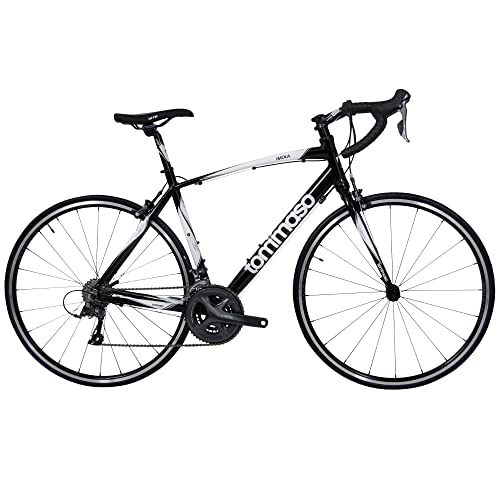
The Imola is an affordable-performance aluminum road bike designed to support riders advancing beyond entry-level cycling. It pairs a top-tier drivetrain with a robust frame and competent components to handle racing and city riding. Tommaso promotes a supportive community and warranty program, making it a practical choice for riders seeking long-term value and performance on mixed roads.
SAVADECK Carbon Road Bike With SORA (Second Model)

This SAVADECK model uses a lightweight T800 carbon frame with carbon fork and carbon wheelset. The 2×9 Shimano Sora drivetrain offers efficient shifting, while aerodynamic design and clean cable routing support better airflow and handling. It is aimed at riders who want a carbon-fiber build with reliable, affordable performance for road-focused training and racing.
Buying Guide: Key Purchase Considerations For Triathlon Road Bikes
- Frame material: Carbon frames offer stiffness and lightness for speed, but aluminum frames provide excellent value and durability. Consider your budget and weight goals when selecting a frame.
- Drivetrain: Wide gearing options improve performance on climbs and flats. Shimano Sora and Claris are common entry-to-mid-level groupsets; higher-end builds offer smoother shifts and lighter components.
- Braking system: Caliper brakes are lighter and easier to maintain but may offer less braking power in extreme conditions than hydraulic or disc brakes. For triathlon-style training in varied weather, consider hydraulic options if available.
- Wheel size and tires: 700c wheels with 28mm tires are standard for balanced road performance and comfort. Wider tires offer more comfort on rough pavement but can add rolling resistance.
- Fit and geometry: Proper saddle height, reach, and handlebar width influence aerodynamics and endurance. Consider professional fitting for optimal triathlon performance.
- Aerodynamics: Carbon frames and aero tubing can reduce drag, while internal routing and tapered head tubes improve handling. Balance aero gains with weight and comfort needs.
- Budget vs. goals: For first-time triathletes, a mid-range aluminum bike with reliable components can deliver great value. More serious racers may prioritize carbon frames and high-end groupsets for top performance.
- Upgrade potential: Check if the bike can accommodate future upgrades—wheels, brakes, and components—so you can enhance performance over time without replacing the frame.
- Maintenance and support: Availability of spare parts, warranty terms, and local service can influence long-term satisfaction and reliability on race day.