For users seeking low-impact, seated cardio that minimizes stress on joints and back, recumbent bikes offer a practical solution. The following picks prioritize accessibility, stability, and ease of use, helping disabled or mobility-challenged riders stay active from home. Each option emphasizes comfort, adjustable seating, and quiet operation to fit apartments, shared spaces, or early-morning routines.
| Product | Brand | Key Benefit |
|---|---|---|
| Mobo Cruiser Triton Pro Adult Recumbent Trike | Mobo | Low-impact, stable three-wheel ride |
| XVGVSV Recumbent Bike For Home Use (16-Level Resistance) | XVGVSV | Whisper-quiet, adjustable seating with broad resistance |
| MERACH Bluetooth Recumbent Exercise Bike (S08/S23) | MERACH | Smart app tracking, multi-position comfort |
| Niceday Recumbent Exercise Bike | Niceday | Therapy-friendly design with 16 resistance levels |
| UMAY Recumbent Exercise Bike | UMAY | Wide weight capacity, real-time data display |
Mobo Cruiser Triton Pro Recumbent Trike

The Mobo Cruiser Triton Pro is a three-wheel adaptive tricycle designed for teens to seniors. Its reclined seat provides cushioned support, reducing back and knee strain during rides. With a low center of gravity, it offers stability for users who require balance assistance. Dual-joystick steering enables simple hands-only control, ideal for users with limited grip or dexterity. Intended for outdoor use on flat or gently inclined surfaces, it also serves as a gentle cardio option for indoor spaces with room to maneuver.
XVGVSV Recumbent Bike With 16-Level Resistance
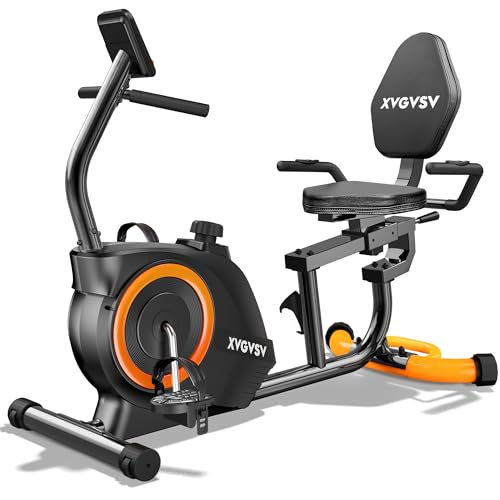
The XVGVSV Recumbent Exercise Bike for Home Use emphasizes a comfortable padded seat and ergonomic backrest with a simple lever-based adjustment system. It delivers 16 resistance levels via a quiet magnetic system and sturdy steel construction, supporting up to 400 pounds. Front transport wheels aid portability, making it easier to reposition the bike within living spaces. Its design suits users seeking a balance of stability, low noise, and scalable effort for rehabilitation or daily cardio.
MERACH Recumbent Bike With Bluetooth App

The MERACH Bluetooth-enabled recumbent bike integrates an app to track distance, time, calories, and heart rate. It features an adjustable, comfortable seat and backrest, plus an 8-level magnetic resistance system. A breathable mesh backrest helps cooling during longer sessions. The bike’s quiet operation and durable build make it a practical option for home use, especially for seniors or mobility-impaired users seeking data-driven workouts.
Niceday Recumbent Exercise Bike

The Niceday recumbent bike emphasizes long-term durability and therapy-friendly design, aiming to reduce back strain and joint pressure. It offers 16 levels of progressive resistance managed by a mechanical knob for precise control. With a focus on accessibility, this model suits users who need steady, low-impact cardio and gentle rehabilitation-friendly motion, making it a solid choice for households with multiple users or therapy goals.
UMAY Recumbent Exercise Bike

The UMAY recumbent bike offers a wide weight capacity and a real-time LCD data display, making it suitable for users across a broad range of fitness levels. Its design focuses on stability and smooth magnetic resistance, offering a quiet ride that supports routines from gentle therapy to moderate cardio. Adjustable seating and pedal positions enhance comfort for different body sizes and mobility needs, helpful for seniors or disabled users seeking consistent exercise compliance.
Buying Guide
Key purchase considerations for a recumbent bike suitable for disabled users include comfort, adjustability, stability, and ease of use.
- Seating and back support: Look for contoured, padded seats with adjustable height and backrest angles to reduce pressure on the tailbone and spine.
- Ingress and egress: Seek models with low step-through height and wide seating to accommodate transfers and mobility aids.
- Resistance type and range: Magnetic resistance tends to be quiet and low maintenance; ensure the range covers warm-up to challenging workouts and prescription-based activity levels.
- Stability and weight capacity: A broader base and higher user weight rating improve safety for users with balance issues.
- Accessibility features: Front transport wheels, simple one-handed controls, and clear LCD readouts support independent use.
- Connectivity and data: Apps or heart-rate tracking can motivate adherence but assess whether you want Bluetooth syncing or offline use.
- Space and noise: Consider room size and whether a whisper-quiet operation is essential for your living environment.
When evaluating options, balance comfort and accessibility with intended use. For disabled users focusing on rehabilitation, look for items with ergonomic seating, adjustable back support, and stable baselines. For general aging-in-place fitness, prioritize low-impact motion, reliable resistance, and easy-control interfaces. In shared homes, prioritize quiet operation and transportability to minimize disturbance.