Finding the right rear shock can dramatically improve traction, control, and ride comfort on rough American trails. This guide highlights top rear shocks suited for mountain bikes, downhill bikes, and e-bikes. Each option below features adjustable damping, air or coil systems, and compatibility with a range of eye-to-eye lengths and spring rates. Read on to compare key specs, install considerations, and how each shock performs on different terrains.
| Product | Brand | Eye-To-Eye Length | Spring Type | |
|---|---|---|---|---|
| MEROCA Adjustable Air Spring Coil Over Shock Absorber | MEROCA | 190–265 mm options | Air with 550 lbs coil option | Independent rebound, compression, preload, air pressure control |
| DNM AO-6 Mountain Bike Rear Shock | DNM | 100–190 mm range (varies by model) | Air | High air pressure up to 250 psi, lightweight aluminum body |
| Chooee Mountain Bike Rear Shock Absorber | Chooee | Various lengths up to 190 mm | Spring/ Hydraulic combination | Heavy-duty durability with higher weight options |
| CNCLOL Mountain Bike Rear Shock | CNC | 120–200 mm options | Hydraulic (oil pressure spring) | Soft, stable performance with affordable pricing |
| DNM BURNER-RCP 2S Rear Shock | DNM | Eye to Eye 220 mm x Travel 66 mm | Coil spring | AM/FR/DH oriented rear shock with hardened aluminum body |
Note: Each product has multiple mounting and travel configurations. Verify compatibility with your frame’s eye-to-eye length, mounting bushings, and travel before purchase. The table above provides a quick reference, but consult product specs and your bike’s manual for precise fitment.
MEROCA Adjustable Air Spring Rear Shock
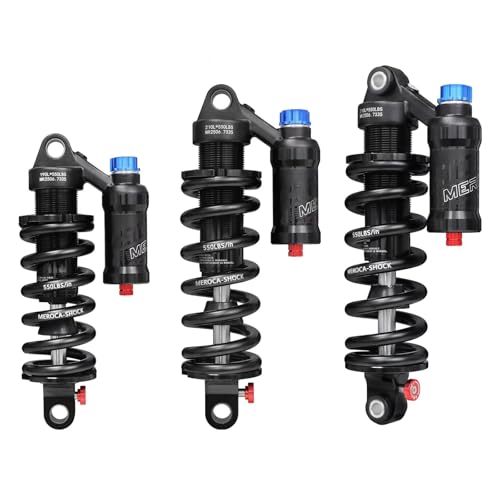
The MEROCA shock supports a quadruple adjustment system, allowing independent control of rebound, compression, preload, and air pressure (200–300 PSI). This configuration enables riders to tailor damping to the trail, improving handling on technical sections and downhill bursts. A heavy-duty 550 lbs spring is included for aggressive riding and big impacts, and the unit is designed for enduro, downhill, and e-mountain bikes. With a universal fit that accepts 12 mm mounting holes and eye-to-eye lengths of 190, 210, 230, 240, 250, or 265 mm, it offers plug-and-play installation if the length matches your frame.
Considerations: installation complexity varies with frame compatibility, and high spring rates can require precise sag settings. The air/spring combination helps balance stiffness and travel, but some riders may prefer a lighter spring for climbing efficiency. Ensure your shock’s eye-to-eye matches your bike’s mounting hardware.
DNM AO-6 Mountain Bike Rear Shock
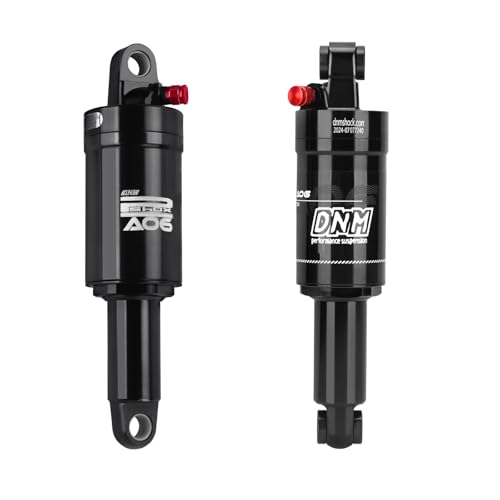
DNM AO-6 features a rugged aluminum alloy body with reliable wear resistance and a compact profile suitable for a variety of bikes, including folded bikes and scooters. It offers high air pressure adjustment up to 250 psi, enabling precise tuning for weight, terrain, and riding style. Available eye-to-eye options include 100x9mm, 125x20mm, 150x31mm, 165x41mm, and 190x51mm, with a sleeve size of 8×24 mm.
Considerations: while lightweight, the AO-6 relies on air pressure for damping. Riders may need occasional pressure checks to maintain consistent performance. Verify your frame’s compatibility with the chosen eye-to-eye length and the shock’s travel to avoid bottoming out on large drops.
Chooee Mountain Bike Rear Shock Absorber

Chooee’s rear shock uses a one-piece hydraulic design with a coil spring core, delivering enhanced shock absorption for improved comfort and control over rough terrain. The range includes varying weights (550 lbs, 750 lbs, and up to 1000 lbs) to match rider weight and riding style. The anodized aluminum surface adds wear resistance for long-term durability. Suitable for mountain bikes, DH, XC softtails, electrics, and scooters.
Considerations: heavier spring options provide better bottom-out resistance on aggressive drops but may increase pedal forces on climbs. Ensure compatibility with your bike’s eye-to-eye lengths and mounting hardware, and verify that your frame can accommodate the chosen spring rate.
CNCLOL Mountain Bike Rear Shock (Multiple Lengths)

The CNCLOL hydraulic rear shock uses an oil pressure spring system to deliver soft, stable damping with a long service life. Compatibility spans a wide range of eye-to-eye lengths: 120x15mm, 125x15mm, 150x25mm, 165x40mm, 185x45mm, 190x50mm, and 200x60mm, with load options of 550 lbs, 750 lbs, and 1000 lbs. It emphasizes affordability without compromising essential performance for MTB and e-bike platforms.
Considerations: hydraulic systems can require periodic maintenance and careful setup to maximize ride quality. Check bushings (8 mm x 24 mm) and ensure correct length for your frame to prevent binding or installation issues.
OUKENS Bicycle Rear Shock Absorber
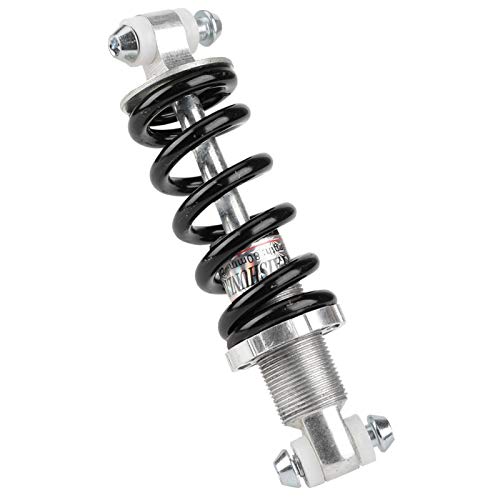
OUKENS offers a 1500-pound capability rear shock designed for strong impact absorption and durability. The unit uses a robust adjustable tension alloy coil spring and is compatible with mountain bikes and other similar frames. Its 150 mm length (approximately 5.9 inches) makes it a practical replacement for mid-travel setups, providing reliable performance on rough sections and jumps without excessive weight.
Considerations: higher spring rates improve bottom-out protection but can affect climbing efficiency. Verify compatibility with your frame’s eye-to-eye length, bushings, and mounting standards before purchase.
Buying Guide: Key Purchase Considerations For Rear Shocks
- Riding style and terrain: Downhill and enduro riders benefit from higher spring rates and more aggressive damping; cross-country riders may prefer lighter springs and more sensitive initial travel.
- Eye-to-eye length and mounting: Confirm the shock’s length and bushing size matches your frame’s mount points. Incorrect length can lead to improper suspension geometry or binding.
- Spring type and adjustability: Air shocks offer easy tuning with air volume and pressure; coil shocks provide linear feel and consistent small bump response. Consider models with rebound, compression, and preload controls for fine-tuning on various trails.
- Weight and durability: Aluminum bodies are common for strength-to-weight; look for corrosion resistance and robust seals for longevity in rugged trail conditions.
- Maintenance needs: Hydraulic systems may require periodic oil checks and bleed procedures; air shocks require valve maintenance and pressure checks. Plan routine checks after hard rides or seasons of heavy use.
- Installation considerations: Some shocks are “plug-and-play” if lengths match; others may require adapters or frame modifications. Ensure compatibility with existing components and tool compatibility for installation.
- Cost vs performance: Entry-level shocks provide solid performance at lower cost, while premium units offer more precise damping and durability for aggressive riding. Weigh total cost of ownership, including potential maintenance and upgrades.
When selecting a rear shock, prioritize compatibility with your bike’s frame, riding goals, and maintenance ability. The options listed here cover a range of damping systems, spring rates, and eye-to-eye configurations to support riders from casual trail explorers to aggressive riders seeking downhill performance. Always verify fitment with your specific bike model and consult manufacturer guidance when in doubt.