Choosing a power meter for a stationary bike helps you quantify effort, monitor progress, and tailor training plans with precision. This guide highlights top options that balance accuracy, durability, and ease of use for home cyclists. Each pick supports ANT+ and Bluetooth to connect with popular head units and training apps, ensuring you can track power data whether you ride indoors or take your setup on the road.
| Product | Brand | Type | Key Benefit |
|---|---|---|---|
| Magene P715 S Power Meter Pedals | Magene | Pedals | ±1% precision and long battery life |
| Magene PES P505/P515 Power Meter Crankset | Magene | Crankset | High accuracy with lightweight design |
| Favero Assioma Uno Pedals | Favero (Wearable4U) | Pedals | Left-side power data, easy swap between bikes |
| Favero Assioma Duo Pedals | Favero (Wearable4U) | Pedals | Left and right power data, versatile |
| Favero Assioma PRO MX-1 | Favero (Wearable4U) | Pedals | IP67 robustness, bundle with power bank |
Magene P715 S Power Meter Pedals

The Magene P715 S pedals provide precise power data with ±1% accuracy, making them suitable for disciplined indoor training. They offer up to 120 hours of battery life, minimizing downtime between charges. Installation is quick, enabling riders to get to workouts without complex setup. ANT+ and Bluetooth compatibility ensures seamless pairing with most trainers, head units, and apps. This pedal-based meter is ideal for cyclists who want accurate metrics without altering pedal feel.
Magene PES P505/P515 Power Meter Crankset

This Magene crankset delivers ±1% power accuracy through a combination of strain gauges and smart temperature compensation. At approximately 625g, the lightweight design uses 7075 aluminum and a triple hollow crank for stiffness and durability. A long-lasting battery supports up to about 330 hours of ride time, making it suitable for long training cycles. It is built to withstand heavy use and varied riding conditions, both indoors and outdoors.
Favero Assioma Uno Pedals
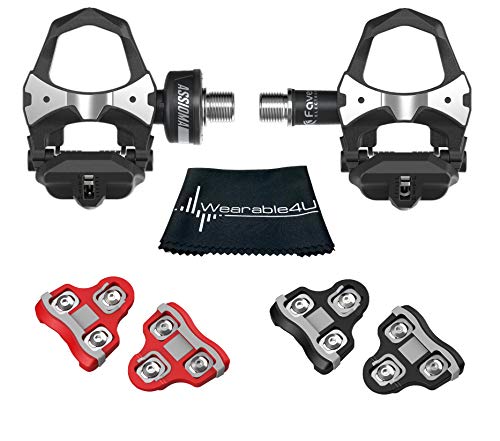
The Favero Assioma Uno Pedals provide true left-side power data, making it a cost-effective path to precise power measurement. These pedals are straightforward to install and can move between bikes quickly like standard pedals, without special tools. The bundle includes cleaning cloths and cleats, supporting easy maintenance. A compact sensor setup helps preserve pedal feel while delivering dependable data for indoor training sessions.
Favero Assioma Duo Pedals
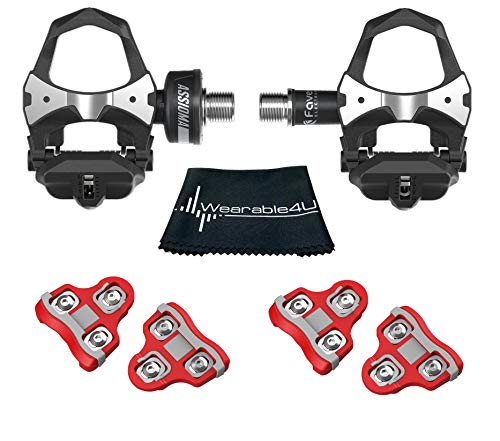
The Assioma Duo adds right-side power data to the left-side measurement, providing full 2-sided balance without sacrificing ease of use. Like the Uno, these pedals are easy to install and transfer between bikes. The bundle includes extra cleats and a cleaning cloth, supporting ongoing maintenance. The dual-sensor design yields more detailed power profiles for advanced training analysis and sprint testing.
Favero Assioma PRO MX-1 Power Meter Pedals

The Assioma PRO MX-1 bundle includes a left-power sensor pedal and a rechargeable power bank, designed for durability in varied weather and terrain. Its IP67-rated housing protects electronic components from dust and water intrusion, making it suitable for riders who train in diverse environments. The bundle setup supports broad compatibility with devices and apps via ANT+ and Bluetooth, enabling flexible integration with existing dashboards.
Buying Guide: Power Meter Considerations
When selecting a power meter for a stationary bike, consider measurement philosophy, compatibility, installation, and durability. Pedal-based meters (like Favero Assioma and Magene P715) preserve pedal feel and are easily transferable between bikes, but may require more attention to pedal compatibility with your crankset and cleat system. Crankset meters (Magene PES P505/P515) deliver robust data across the entire drivetrain, yet they lock you to a specific crank configuration.
Key considerations:
- Power data accuracy: Look for ±1% precision where stated. Environmental compensation (temperature, vibration) improves reliability in varied indoor setups.
- Battery life: Longer life reduces downtime; consider chargers and replacement expectations for your training volume.
- Installation and transfer: Pedal-based meters are typically the easiest to move, while crank-based meters may require more initial setup.
- Connectivity: Ensure compatibility with your preferred trainer, head unit, or app via ANT+ and Bluetooth.
- Durability: IP ratings and rugged housings matter for workouts that involve sweating or occasional moisture exposure.
- Data accessibility: Check whether the system provides left/right balance if you need symmetry analysis, and how data exports integrate with training platforms.
For home cyclists seeking a balance of ease, accuracy, and transferability, pedal-based meters from Favero (Assioma Uno or Duo) and Magene’s P715 offer strong options. If you require full drivetrain data on a dedicated crank, Magene’s PES P505/P515 delivers robust performance with a lightweight build. Consider your bike compatibility, training goals, and preferred data workflow when choosing.