Choosing a reliable bike seat for a newborn-friendly ride involves safety features, comfort, and easy mounting. This guide highlights five top options that support early riders, from rear-mounted carriers to front-facing seats designed for growing toddlers. Each product offers a balance of protection, padding, and adjustability to fit a range of bikes and comfort needs. Review the specs and pick the seat that best matches your biking style, whether you’re navigating city streets or weekend trails.
| Product | Brand | Capacity | Notable Feature |
|---|---|---|---|
| Schwinn Deluxe Child Bike Carrier | Schwinn | Up to 40 lb | 3-point harness with headrest |
| Burley Baby Seat Insert | Burley Design Store | Infant (as early as 1 month) | Soft hammock seat for warmth |
| Thule Yepp 2 Mini Front Seat | Thule | Varies by bike | Front-mounted with shock-absorbing foam |
| Topeak BabySeat II | Topeak Store | Up to 60 lb | Built-in suspension for a smooth ride |
| Kid’s Front Carrier Seat (2–4 years) | Ercabikker | Up to 55 lb | Armrest, backrest, and footrests |
Schwinn Deluxe Child Bike Carrier

The Schwinn Deluxe Child Bike Carrier supports one child aged 1+ with a maximum weight of 40 lb. It is designed for rear mounting and is suitable for family rides and weekend outings. A quick-release 3-point harness, a padded cross bar, and leg restraints secure the child while riding, prioritizing safety during speed and bumps. Custom padding backs the seat and cushions the rider, with adjustable footwells and a removable headrest for added support. The setup emphasizes comfort for longer rides and compatibility with many standard bicycles.
Burley Baby Seat Insert

The Burley Baby Seat Insert is designed for strolling with infants as early as 1 month. Its soft hammock seat keeps babies cozy, while breathable mesh sides help maintain airflow to prevent overheating. This insert is intended for insertion into compatible Burley carriers, providing a gentle, snug environment for newborns and young infants during low-speed outings and walks with the stroller attachment. The emphasis is on warmth and comfort during early days of bike-stroller integration.
Thule Yepp 2 Mini Front Seat

The Thule Yepp 2 Mini is a front-mounted child seat with a soft, shock-absorbing foam seat. It features adjustable footrests and footstraps to accommodate a growing child and ensure proper leg support. Available in frame, rack, and front configurations, this seat emphasizes a compact design and front access for closer interaction with the child. The five-point harness system is designed for quick adjustments and consistent safety during rides, particularly suitable for shorter routes and urban cycling.
Topeak BabySeat II With MTX 2.0 Rack

The Topeak BabySeat II features a wrap-around shell that forms a protective cocoon around the child, paired with an adjustable shoulder harness, footrests, and an integrated roll bar for head safety. A built-in suspension system absorbs road vibrations for a smoother ride, making it suitable for commutes or light trails. The seat mounts to a heavy-duty MTX 2.0 rack that allows fast, tool-free installation and removal, enabling quick bike conversions without sacrificing security.
Kid’s Bike Seat Front Carrier (2–4 Years)
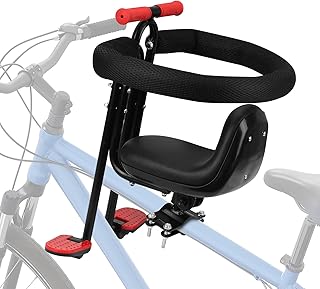
This front-facing carrier is designed for children aged 2 to 4 years and up to 55 lb. It emphasizes safety with padded seating and a backrest, plus armrests and footrests for added security. The materials include PU leather and sponge for comfort, supported by stainless steel and steel components to withstand daily use. Compatibility should be verified with your bike’s crossbar setup to ensure a secure fit before riding.
Buying Guide
- Mounting style: Rear vs front seats affect interaction with the child and handling. Front mounts enable supervision during rides but can affect steering; rear mounts tend to offer more stability and weight distribution.
- Weight capacity: Choose a seat that accommodates your child’s current weight and expected growth, plus any seat padding or harness adjustments that could affect load.
- Safety harness and restraints: Look for a secure 3–5 point harness, padded restraints, a sturdy headrest, and adjustable footrests to prevent leg injuries.
- Comfort features: Padding, breathable fabrics, and suspension or shock absorption reduce fatigue for both child and rider on longer trips.
- Ease of installation: Tool-free mounting and quick-release features simplify switching seats between bikes or removing the seat when not in use.
- Durability and materials: Durable shells, reinforced racks, and corrosion-resistant hardware extend product life with regular outdoor use.
- Bike compatibility: Verify crossbar diameter, frame mounting compatibility, and the specific bike’s profile to ensure a safe fit.
- Maintenance: Check for washable padding, removable headrests, and accessible straps for cleaning and inspection.
When selecting a newborn-appropriate bike seat, consider the rider’s bike type, typical riding conditions, and the child’s development stage. Front-facing seats provide engaging interaction for shorter rides, while rear-mounted seats often offer steadier handling for longer journeys. Prioritize models with secure harness systems, adjustable supports, and reliable mounting mechanisms to ensure safety across varying terrains.