Choosing the right multi bike storage rack can transform cluttered spaces into organized, accessible areas. This guide highlights versatile racks designed to hold multiple bicycles, balancing stability, durability, and ease of use. Whether you need freestanding units, wall-friendly options, or floor racks that accommodate a range of wheel sizes, these picks cover common garage and indoor storage needs. Below, five top options with distinct designs are explored, followed by a practical buying guide to help you compare features and determine the best fit for your space.
Summary Of Selected Products
| Product | Brand | Bikes Supported |
|---|---|---|
| CyclingDeal Bicycle Floor Parking Rack Stand – 6 Bikes | CyclingDeal | Up to 6 bikes |
| Ultrawall Freestanding Bike Rack | Ultrawall | Up to 4 bikes |
| Floor Bike Rack For 5 Bikes | Kingarage | Up to 5 bikes |
| CyclingDeal Adjustable 5 Bikes | CyclingDeal | Up to 5 bikes |
| Sttoraboks Vertical Bike Stand | Sttoraboks | Presumably multiple bikes via vertical stand (indoor freestanding) |
CyclingDeal Floor Parking Rack For 6 Bikes

The latest CyclingDeal floor rack designs emphasize stability and flexible positioning. The rack uses two holding plates with tire grooves to secure bikes, helping them stand vertically for space-efficient storage. An adjustable wheel holder length and rotating knobs enable customization to accommodate different bike sizes. The design prioritizes clearance around disc brakes, potentially reducing interference during parking. Built from quality steel and finished in powder-coated black, this unit is intended for indoor use and leverages a linked system that increases overall heft and solidity compared with single-bike stands. This approach makes it suitable for garages or larger storage rooms where six bicycles need orderly, accessible organization.
Key strengths include a modular feel, with bikes parked in alternating directions to maximize capacity. The design is intended to reduce wobble and distribute weight more evenly across the stand. While the setup may require careful loading, the value proposition centers on achieving six-bike storage in a single, compact footprint. If your space allows for thoughtful arrangement, this rack can become a central hub for keeping bikes upright, protected, and readily accessible.
Ideal use cases: garages with ample floor space, multi-bike households, or hobby spaces where bikes are frequently moved in and out during seasonal changes.
Ultrawall Freestanding Bike Rack (4 Bikes)

This freestanding option from Ultrawall provides a no-wall-mount solution, ideal for spaces where mounting is not practical. It accommodates up to four bikes and features four welded hooks with a robust steel build. The freestanding design helps optimize vertical storage in tight garages or spare rooms, and the ability to reposition the rack as needed adds flexibility for seasonal bikes, kids’ bikes, or changing layouts. With this approach, you gain stability through a broad base and a straightforward assembly that requires no drilling or permanent alteration to walls.
Users benefit from a simple, scalable approach to bike organization. The 4-bike capacity covers medium-sized families or households with multiple cycles, while the sturdy construction aims to reduce tipping or shifting. This option shines in spaces where you value mobility and the ability to rearrange or relocate storage as your setup evolves over time.
Best use scenarios: rental homes, rental garages, or any space where a non-permanent solution is preferred and mobility matters.
Kingarage Floor Bike Rack For 5 Bikes
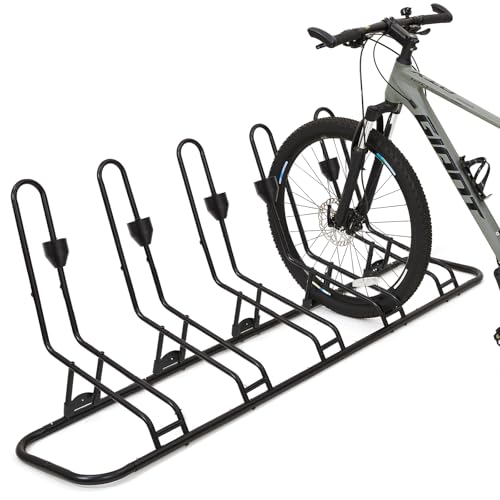
This 5-bike rack from Kingarage features a heavy-duty upgrade with 0.63-inch steel tubes for enhanced stability. It accommodates a broad tire range (12″–29″) and is designed to be used indoors or in a garage. The product is described as disc brake and derailleur friendly, with adjustable buckles to fit various bike types—from kids’ bikes to MTB and road bikes. A key design point is the ability to adjust the holders up or down to suit different frame geometries, while a wide base and sturdy construction provide reliable support for multiple bikes simultaneously.
Pros include high load-bearing capacity and compatibility with diverse bike configurations. The design helps protect discs and derailleurs by avoiding critical contact with hanging components, though users should verify wheel widths and frame shapes before loading. The 5-bike capacity makes this a practical option for households with a mix of adult and youth bikes, enabling organized storage without compromising safety.
CyclingDeal Floor Rack With Adjustable 5 Bikes

Another CyclingDeal model focuses on adjustable wheel holders and dual tire grooves to stabilize bikes. This rack is designed to accommodate a wide range of sizes—from kids’ 20-inch wheels to adult 29-inch MTBs and 700c road bikes. It features a lengthwise wheel holder that can be extended or shortened with rotating knobs, enabling precise alignment and stable storage. The system is designed to park bikes in alternating directions to optimize space, and its powder-coated steel frame promises long-lasting durability for indoor use in garages or workshops.
Points to note include compatibility with disc brake wheels and an emphasis on preventing spoke or rotor interference. The design aims to balance capacity (up to five bikes) with accessible loading and unloading, making it a practical option for multi-vehicle households or hobbyists who frequently reorganize gear and bikes.
Sttoraboks Vertical Bike Stand

The Sttoraboks vertical bike stand presents a freestanding solution designed to maximize vertical storage. The unit highlights adjustable height for the hanging mechanism and features four 360° lockable rolling wheels for mobility. This flexibility makes it suitable for garages with variable layouts or for renters who want to avoid wall mounting. The stand claims broad compatibility with bikes ranging from 24″ to 29″ wheels and supports bikes up to 55 pounds per unit. While it emphasizes ease of movement and stability, users should assess clearance and footprint in relation to doorways or workspaces when planning placement.
Pros include portability, adjustable height for different bike geometries, and a design that minimizes wall-damage. Considerations include the potential need for extra stabilization in high-traffic areas and ensuring that fenders, baskets, or stands on bikes do not interfere with the vertical support system.
Buying Guide: Key Purchase Considerations And Comparisons
- Capacity and space: Start by measuring your available floor or wall space and decide how many bikes you need to store. Freestanding racks offer relocation flexibility, while wall-mounted systems maximize vertical space but require wall compatibility and mounting effort.
- Bike compatibility: Check wheel size compatibility and maximum tire width. Some racks support a wide range (12″–29″), while others have tighter specifications. For discs and derailleurs, ensure the holder design avoids interference.
- Stability vs. mobility: Floor racks with heavy bases tend to be more stable, while freestanding models emphasize mobility. If you frequently rearrange your garage, consider rolling options with locking wheels.
- Material and durability: Steel frames with powder coating resist scratches and corrosion in indoor or outdoor-adjacent spaces. Evaluate the finish in relation to your climate and moisture exposure.
- Adjustability: Look for adjustable wheel holders or buckles to fit diverse bike geometries, especially for households with a mix of kids’ bikes, road bikes, and MTBs.
- Protection features: Anti-contact designs between racks and discs, rotors, or spokes help protect bike components. Some models explicitly avoid contact with braking systems.
- Installation and maintenance: Freestanding systems usually require minimal assembly, while wall-mounted options demand secure mounting. Consider maintenance, such as regular checks for wobble or loose bolts.
- Budget and value: Compare total capacity, build quality, and features against price to determine the best value per bike stored. A higher upfront cost may yield longer-term durability and easier daily use.
Selecting the right multi bike storage rack involves balancing capacity, space, and bike geometry. For larger households, a 5- to 6-bike solution with robust steel construction and adjustable holders can offer the best long-term utility. For renters or spaces where wall installation is not feasible, freestanding models provide flexibility and mobility without permanent alterations. Always verify compatibility with your specific bike profiles and check whether the design accommodates discs, derailleurs, or fenders to prevent interference during storage.