Exploring the right flat or SPD-compatible pedals can enhance control, grip, and efficiency on rugged trails. This guide reviews five well-regarded options that balance durability, grip, and ease of use for mountain biking enthusiasts seeking improved pedaling performance. Each product page includes key features to help compare materials, bearings, and platform design, so riders can choose pedals that fit their bike, riding style, and foot size.
style=”display:none”>Summary Table
| Product | Brand | Key Features | Type | Thread |
|---|---|---|---|---|
| Hapleby Premium Bike Pedals | Hapleby | Wide platform, 2 sealed bearings, aluminum body, Cr-Mo spindle | Flat | 9/16 in |
| ROCKBROS Bike Pedals | ROCKBROS | 101 mm wide, CNC aluminum, sealed bearings, anti-skid spikes | Flat | 9/16 in |
| GPMTER Bike Pedals | GPMTER | Anti-slip, aluminum alloy, sealed spindle, durable | Flat | 9/16 in |
| WUVOP Mountain MTB Pedals | WUVOP | DU-Bearing, nylon composite body, wide platform | Flat | 9/16 in |
| FitHeart Joy SPD Pedals | FitHeart Joy | Dual-sided with SPD clip and toe cage, alloy spindle | SPD/Toe Cage | 9/16 in |
Note: Prices are not listed in this guide. Availability may vary by retailer.
Hapleby Premium Bike Pedals

Hapleby offers a robust aluminum alloy pedal body with a high-strength Cr-Mo spindle and two sealed bearings designed for smooth rotation and long life. The wide platform enhances stability on climbs, helping to keep feet securely in place, even with larger shoe sizes. Rubber seals help deter dust ingress while maintaining a lightweight profile suitable for both mountain and road applications. The 9/16 inch threading ensures broad compatibility with most cranksets and MTB models.
ROCKBROS Flat Aluminum Pedals
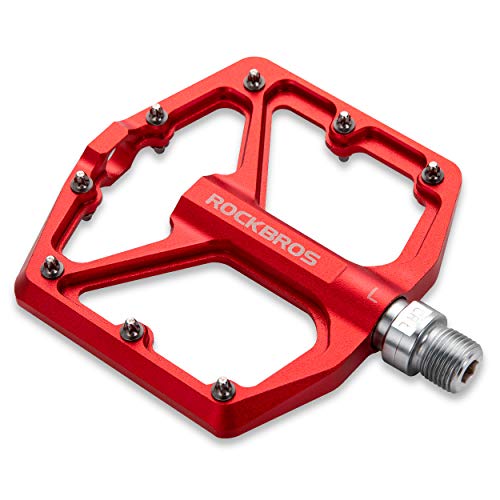
ROCKBROS pedals emphasize a wide 101 mm platform with a lightweight CNC-machined aluminum body and sealed bearings. They feature clearly marked left and right pedals to simplify installation and maintenance. The dual-side design improves grip and stability on varied terrain, while stainless anti-skid studs provide reliable traction without excessive pin risk. The overall construction supports rugged trail use and can handle diverse riding styles from cross-country to urban MTB commuting.
GPMTER Bike Pedals 9/16
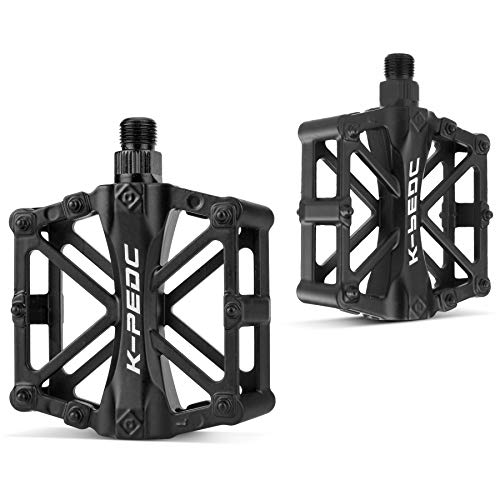
GPMTER pedals use an aluminum alloy body with a sealed spindle to resist water and dust entry, maintaining smoother operation in wet or muddy conditions. The platform is designed to deliver a balanced grip with integrated anti-slip features, making them suitable for all-around mountain biking and mixed-terrain use. The design warns that 9/16″ threads are common, while some bikes may use 1/2″ spindles, so users should verify crank compatibility before purchase.
WUVOP Mountain MTB Pedals

WUVOP pedals use a durable nylon composite body with a DU-bearing system, combining light weight with strong wear resistance. The wide platform supports feet across a larger surface area for even load distribution, which helps reduce fatigue on longer rides. Sealed bearings protect the spindle from moisture and dust, making these pedals a solid choice for riders who want dependable performance across trails and city routes alike.
FitHeart Joy SPD Pedals

FitHeart Joy pedals offer a dual-function design, combining SPD clip-in capability with a secure toe cage. This flexibility enables riders to switch between clipless efficiency and sneaker-friendly riding as needed. The aluminum spindle provides robust strength, while the dual-sealed bearings protect against moisture and debris. This setup supports indoor cycling platforms and outdoor MTB use, making it a versatile option for mixed training routines.
Buying Guide
Material and construction: Look for durable aluminum alloy bodies with sealed bearings or DU/Bearing systems. These features improve longevity, reduce maintenance, and resist corrosion from exposure to mud, water, and sweat.
Platform size and grip: A wider platform, typically around 100–110 mm, offers improved foot stability on rough terrain and longer rides. Anti-slip surfaces or metal pins can help keep the foot in place, but avoid overly aggressive pins that can cause injury in a fall.
Bearings and seals: Sealed bearings protect spindles from contamination, extending life in wet or dusty environments. Consider models with dual sealed bearings for smoother rotation under load.
Pedal compatibility: Most mountain bikes use a 9/16 inch spindle standard, but some cranksets accept 1/2 inch spindles. Always verify compatibility with your crank arms before purchasing. For clip-in options, SPD or dual-function pedals enable organizers to switch between platforms and cleats with minimal effort.
Weight considerations: Lighter pedals reduce rotational mass, aiding climbing efficiency. However, heavier duty pedals often offer better durability for aggressive trails or jump-heavy riding. Balance weight against expected terrain and riding style.
Maintenance and care: Regularly check bearing play, tighten any loose fittings, and clean mud from the platform after rides. Sealed bearing designs simplify upkeep and extend life.
Installation and replacement: Ensure proper left/right labeling when assembling pedals. Using a torque wrench to tighten to manufacturer specifications helps prevent thread stripping or pedal slippage.
Footwear and compatibility: Consider your shoe type (mountain, trail, or clipless) and how the pedal design aligns with your preferred footwear. Dual-function models offer flexibility for mixed training routines.