When choosing disk brakes for mountain bikes, riders look for reliable stopping power, consistent performance in varied conditions, and easy maintenance. This article highlights five well-rated options that cover hydraulic and mechanical systems, 160 mm rotors, and multiple mounting styles. Each product is presented with key features to help you compare compatibility with road, MTB, e-bike, or fat-bike setups.
| Product | brake type | Rotor size | Mounting style | Notes |
|---|---|---|---|---|
| TOBWOLF 1 Pair MTB Disc Brake Set | Hydraulic | 160 mm | Left Front / Right Rear (adjustable) | Aluminum alloy, upgraded pads |
| TOBWOLF Front & Rear Cable Disc Brake Kit | Cable mechanical | 160 mm | Post mount | Includes rotors and bolts |
| Bike Disc Brake Kit (2 x 160 mm Rotors) | Mechanical | 160 mm | Front/Rear calipers | Rotors, levers, cables, screws included |
| BUCKLOS Mountain Bike Disc Brake Kit | Mechanical | 160 mm | Universal | Includes two calipers, pads, and rotors |
| MT200 MTB Hydraulic Disc Brakes | Hydraulic | Not specified (compatible kits) | Front left / Rear right configuration | 2-piston, strong stopping power |
TOBWOLF Hydraulic Disc Brake Set (1 Pair)

The TOBWOLF hydraulic brake set uses a left-front/right-rear control arrangement, a common layout for MTB e-bikes and road-adjacent models. It features aluminum calipers and 160 mm rotors, designed to resist high temperatures and weather. The kit includes upgraded ceramic brake pads to improve stopping power and reduce disk wear. Assembly guidance is provided, and users can adjust alignment and clearance to minimize rubbing noise. A potential caveat is the side-swapping option; if you prefer opposite lever-to-wheel mapping, a slight cable reconfiguration may be necessary.
TOBWOLF Front & Rear Cable Disc Brake Kit

This mechanical disc brake kit provides a straightforward cable-actuated solution with pre-mounted rotors and hardware. It includes front and rear calipers with 160 mm rotors, plus necessary bolts and a full complement of fixing screws. The product notes emphasize compatibility with multiple bike types and provide measurements for proper fit. This setup is attractive for riders who want serviceability without hydraulic systems, though it may require more frequent brake pad adjustments under heavy use or wet conditions.
Bike Disc Brake Kit With Rotors And Levers
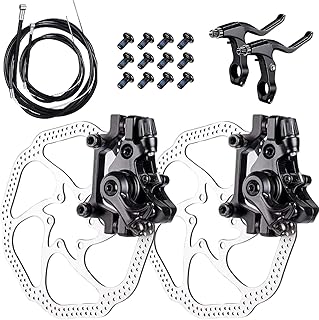
This all-in-one package pairs mechanical disc brakes with two 160 mm rotors, front and rear calipers, and a set of brake levers, cables, and screws. It touts compatibility with a variety of frame and rotor sizing, including options for 140–180 mm rotors on different models. The kit highlights quiet braking and reinforced base design, with XTR brake pad-like performance. This option suits riders who want a complete, ready-to-install system without needing to source individual parts.
BUCKLOS Mountain Bike Disc Brake Kit

The BUCKLOS kit emphasizes complete braking hardware with two aluminum calipers, rotors, and pads. It also includes mounting bolts, cables, and a regulator to adjust the brake gap. The design targets broad compatibility with 99% of MTB bikes, including e-bikes and folding bikes. It notes quiet braking due to a semi-metallic pad blend. The universal approach is a potential advantage for mixed fleet bikes or seasonal riders who frequently swap frames.
MT200 MTB Hydraulic Disc Brakes Set

The MT200 hydraulic set offers a two-piston arrangement with front-left and rear-right configuration. It emphasizes compatibility with most mountain bikes, e-bikes, fat bikes, and folding bikes, provided tubing length is sufficient. The hydraulic design delivers strong stopping power and predictable modulation, which is advantageous for steep descents or technical terrain. Riders should verify lever reach and hose length to ensure a proper fit on their specific frame and cockpit.
Buying Guide: Key Purchase Considerations
- Brake type: Hydraulic brakes generally offer stronger, more consistent stopping power and better modulation than mechanical brakes; they require more maintenance and potentially more initial cost. Mechanical brakes are simpler, cheaper to repair, and easier to service in the field.
- Rotor size: 160 mm rotors are common for trail and XC bikes. Larger rotors (e.g., 180 mm) provide more stopping power at the expense of weight and clearance; ensure your frame and fork can accommodate the rotor size chosen.
- Mounting style: Post-mount and IS-style mounts affect compatibility with calipers and frames. Left-front/right-rear lever mapping is standard for many sets but can be reversed in some regions; verify this with your bike’s setup.
- Pad material and wear: Ceramic or semi-metallic pads influence heat management, wear, and braking feel. Consider the riding conditions you face (wet, muddy, steep) when selecting pad type.
- Maintenance and bleeding: Hydraulic systems require occasional bleeding and alignment checks. Mechanical systems require cable tension adjustments and occasional rotor servicing. Look for included manuals or videos for setup guidance.
- Compatibility: Confirm compatibility with your bike’s rotor mounting (6-bolt vs centerlock), frame clearance, and brake lever reach. Review whether the kit includes all necessary hardware for installation.
- Weight and durability: Aluminum calipers and rotors improve corrosion resistance and weight balance. Consider your bike’s overall weight and the terrain you ride when weighing options.
- Warranty and support: Check product warranty terms and whether the seller provides manuals or direct support if you need installation help or troubleshooting.
These considerations help riders compare braking systems across the five options. For mountain biking in diverse environments—from dry singletrack to muddy descents—balancing braking power, modulation, and reliability is essential. The catalog above includes both hydraulic and mechanical configurations, with rotor sizes tailored to common MTB applications. Always verify fit on your exact frame, fork, and wheel size before purchasing.