Finding a mountain bike that safely supports heavier riders while delivering reliable performance can be challenging. The following selections emphasize sturdy frames, robust components, and reliable braking systems designed to handle higher weights and challenging terrains. Each option below includes key features to help heavier riders choose a bike that balances comfort, control, and durability on trails.
The table below summarizes five suitable options, highlighting frame type, wheel size, and notable strength points to look for when shopping for a 300 lb capacity or higher bike.
| Brand | Model | Wheel Size | Frame Material | |
|---|---|---|---|---|
| Mongoose | Dolomite Fat Tire Mountain Bike | 26″ | Steel | Heavy-duty knobby tires and mechanical brakes for varied terrain |
| Brightpeak | 26″ Mountain Bike | 26″ | High-carbon steel | Supports riders up to 330 lbs with dual disc brakes and front suspension |
| Max4out | 26 Inch Fat Tire Mountain Bike | 26″ | High-carbon steel | Front suspension and a 21-speed drivetrain for versatile terrain |
| Schwinn | Bonafide Mountain Bike | 29″ | Aluminum | 29″ wheels with 24-speed setup and reliable disc brakes |
| WEIZE | Hardtail Mountain Bike | 29″ | Aluminum | Suspension fork and 21-speed shifting for varied terrain |
Mongoose Dolomite Fat Tire Mountain Bike
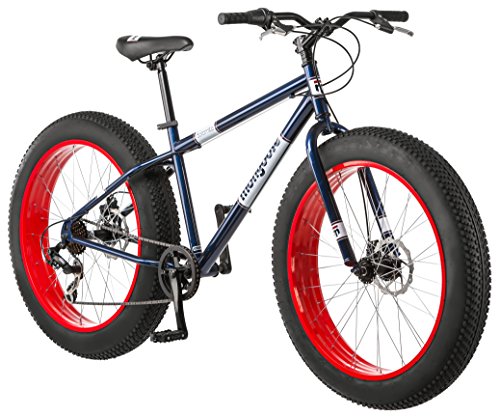
The Mongoose Dolomite is built around a steel frame and 26-inch wheels paired with 4-inch knobby tires, designed to maximize traction on loose surfaces and rough trails. It includes front and rear mechanical disc brakes for dependable stopping power and a threadless headset intended to improve steering precision. The bike is described as adjustable for riders of different heights, supporting a range from about 5’4″ to 6′ tall, and is configured with beach cruiser pedals to enhance comfort on longer rides. While weight capacity is not explicitly stated, the steel frame and wide tires suggest strong suitability for heavier riders who prioritize stability on uneven terrain.
WEIZE Mountain Bike, 26-27.5 Inch Dual Suspension

The WEIZE model features a durable steel dual suspension frame with both a front suspension fork and a rear coil shock designed to smooth out rough terrain. With 18 speeds and twist shifters, riders can fine-tune cadence across varying grades, while front and rear derailleurs support smooth gear changes. Braking comes from front and rear linear-pull brakes, enabling solid control on descents and technical sections. This combination is well-suited for heavier riders seeking comfort and stability on mixed surfaces, though specific weight capacity is not listed in the features provided.
Brightpeak 26″ Mountain Bike

Brightpeak offers a high-carbon steel frame with reinforced welding for durability while maintaining a lightweight feel. The bike supports riders up to 330 lbs and uses dual disc brakes for reliable stopping power. A front suspension fork enhances comfort and stability, and a quick-release adjustable seat with ergonomic handlebars helps riders find a comfortable position across a range of heights. The tires are designed for all-weather traction, making this option appealing for heavier riders who ride on diverse terrains and weather conditions.
KIAPALNO Mountain Bike 26 Inch

KIAPALNO targets entry-level riders with a balanced steel frame offering stability and safety on varied terrains. Knobby tires help absorb bumps, contributing to a smoother ride on rough surfaces. The 21-speed setup with twist shifters and a smooth rear derailleur supports finding the right cadence for climbing hills or cruising flat trails. While weight capacity isn’t explicitly stated, the steel frame and off-road-oriented tires indicate suitability for riders approaching 300 lbs, especially for casual to moderate trail use.
Max4out 26 Inch Fat Tire Mountain Bike

The Max4out Fat Tire Mountain Bike is built around a high-carbon steel frame with 26-inch wheels and 4-inch fat tires designed to maximize stability and traction on soft terrains like sand or mud. It features a front suspension and a 21-speed drivetrain, which offer enhanced control when tackling varied grades. The dual disc brakes provide strong stopping power, contributing to safer descents and confident braking at higher weights. The frame construction emphasizes durability, aiming to support riders who require a robust, heavier-duty mountain bike for mixed-terrain adventures.
Buying Guide: Key Purchase Considerations
- Weight capacity: For riders near or above 300 lbs, verify stated weight limits from the manufacturer. Bikes with steel or reinforced frames and wide tires typically offer better support and durability under heavier loads.
- Frame material: Steel frames tend to be strong and affordable but heavier; aluminum frames are lighter while still durable, with the trade-off of potential stiffness. High-carbon steel frames can balance weight and strength for off-road use.
- Suspension: Full-suspension bikes provide smoother rides on rough trails, which can reduce fatigue. Hardtail models with a front suspension can still offer good comfort on many terrains and are often lighter and easier to maintain.
- Braking system: Disc brakes (mechanical or hydraulic) generally outperform rim brakes in wet or muddy conditions. For heavier riders, reliable stopping power is essential on descents and technical sections.
- Wheel size and tires: 26″ wheels with wide knobby tires excel on rough surfaces; 29″ wheels roll over obstacles more easily and improve stability at higher speeds. Fat tires offer extra buoyancy on soft ground.
- Adjustability: Look for adjustable seat height and handlebar position to ensure proper fit and comfort, which is critical for riders of varying heights and weights.
- Maintenance: Heavier bikes can experience more wear on components. Prioritize models with accessible parts, straightforward drivetrain setups, and widely available replacement components.
- Intended terrain: Match the bike’s design to your typical riding conditions—rocky trails, muddy paths, or mixed urban trails—to maximize safety and enjoyment.
When evaluating options, consider a test ride if possible and verify warranty details on frame and drivetrain components. For riders near the higher end of typical weight ranges, prioritizing a reinforced steel frame, strong braking, and a comfortable seating position will contribute to longer, safer rides on challenging terrain.