The market for triathlon and time-trial bikes features models that push performance, aerodynamics, and lightweight strength to the limit. In this guide, five top-tier options are highlighted for riders seeking high-end capabilities—from carbon frame rigidity and advanced groupsets to hydraulic braking and aero efficiency. Each choice blends cutting-edge engineering with elite materials to deliver precision, speed, and comfort in competitive settings.
Summary of selected products:
- SAVADECK Carbon Road Bike with Shimano SORA R3000 18 Speed Derailleur System
- SAVADECK Carbon Fiber Road Bike with Shimano R7120 24S
- HILAND 700C Road Bike with 14-Speed Drivetrain
- SAVADECK Carbon Gravel Bike with GRX400
- Carbon Frame Triathlon Bike with Disc Brakes
SAVADECK Carbon Road Bike With Shimano SORA R3000

Built for speed and efficiency, this SAVADECK model uses a T800 carbon fiber frame, carbon fork, and carbon seat tube to achieve a claimed light weight around 8.9 kg (19.6 lb). The aerodynamics are enhanced by wind-tunnel-inspired stays, seat post, and a tapered head tube that improves torsional rigidity and handling. The Shimano SORA 2×9 gearing provides smooth shifts and reliable performance for training and race days alike. This bike blends lightweight design with clean internal cable routing for an uncluttered airflow profile.
SAVADECK Carbon Fiber Road Bike With Hydraulic Disc

This model advances performance with full carbon construction, including the frame, fork, seat post tube, and wheelset, weighing about 8.8 kg (19.4 lb). It pairs a Shimano R7120 2×12 gearing system with hydraulic disc brakes to deliver precise shifts and strong, consistent stopping power. The bike is designed to optimize aerodynamics and stability, making it a strong option for serious racers seeking a high-strength, lightweight build.
HILAND 700C Road Bike With 14-Speed Drivetrain
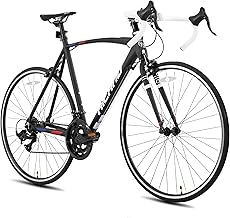
The HILAND model emphasizes a lightweight aluminum frame designed for riders who value speed and daily commuting versatility. Equipped with a 14-speed derailleur system, it provides a range of gears suitable for city streets and challenging routes. The dual caliper braking setup offers reliable stopping power and straightforward maintenance, delivering a balanced option for riders transitioning to longer or faster rides.
SAVADECK Carbon Gravel Bike With GRX400

This gravel-oriented SAVADECK offers a 10.4 kg (22.92 lb) carbon frame with internal routing and hydraulic disc brakes. The GRX400 groupset enables smooth, precise shifts across a 20-speed range, while the carbon frame and fork emphasize stiffness and efficiency on mixed terrains. The design supports confident handling on road and off-road conditions, appealing to riders who value versatility and performance in one package.
Carbon Frame Triathlon Bike With Disc Brakes

This carbon-frame triathlon oriented bike is designed to accommodate triathlon and time-trial assemblies with multiple size options (S, M, L). It features disc brake compatibility for strong, reliable braking in time-trial conditions, and an aerodynamic profile suited for race-day performance. The frame materials and geometry aim to optimize power transfer and rider position for maximal efficiency in TT settings.
Buying Guide: Key Purchase Considerations
- Frame material and weight: Higher-end triathlon and road bikes typically use carbon fiber (T700/T800) for stiffness-to-weight efficiency, translating to better acceleration and cockpit stability. Consider weight targets in relation to typical riding terrain and handling comfort.
- Groupset and gearing: Look for groupsets that match your riding discipline. Time trials and triathlons benefit from precise front and rear shifting, as well as mechanical or hydraulic braking options depending on course demands and weather conditions.
- Braking system: Hydraulic disc brakes offer consistent stopping power and modulation in varied conditions, while mechanical brakes can be cost-effective and easier to maintain for some riders. Aerodynamics and wheel choice can influence brake performance.
- Aero design: Wind-tunnel tested geometry, integrated cable routing, and aero frame profiles reduce drag. Consider cockpit ergonomics and the rider’s position to maximize efficiency across sustained efforts.
- Wheels and tires: Lightweight wheelsets and race tires improve rolling resistance and acceleration. Ensure compatibility with disc or rim brakes and frame clearance for tire width in gravel or mixed-surface riding.
- Fit and sizing: Proper fit is crucial for aerodynamics and comfort. Sizing options (S, M, L) and adjustable components (seat post, stem, handlebars) help tailor positioning for TT or triathlon events.
- Use-case and versatility: If you plan to race extensively, prioritize carbon frames, hydraulic brakes, and a drivetrain that supports aggressive aerodynamics. For mixed terrain or daily training, gravel-capable or endurance-oriented models may be preferable.
- Maintenance and service: Carbon frames require careful handling; ensure local service support and spare parts availability for derailleur, brake components, and wheel hubs to minimize downtime between events.
These options represent high-performance choices for riders pursuing speed, efficiency, and contest-ready setups in triathlon and time-trial disciplines. When selecting, weigh the balance between weight, stiffness, braking power, gearing range, and fit to ensure the bike meets specific course demands and rider preferences.