Choosing the right full-face helmet can protect you on aggressive descents and long climbs alike. This guide highlights five lightweight, protective options that balance safety, ventilation, and comfort for American riders. Each model is evaluated for weight, build quality, and ventilation, helping you decide which helmet suits your riding style and terrain.
| Product | Brand | Weight (approx.) | Key Feature |
|---|---|---|---|
| ILM Adult Mountain Bike Helmet | ILM Store | ≈ 700 g | Triple safety standards, EPP chin bar, great ventilation |
| iXS Trigger FF MIPS | IXS Store | ≈ 595 g | MIPS, integrated liner and chin bar |
| Fly Racing Rayce | Racing | ≈ 930 g | Downhill certified, TFV ventilation |
| Demon United Podium | DEMON UNITED Store | — | Removable liner, 13 vents |
| OutdoorMaster Full Face | OutdoorMaster Store | — | Durable EPS/ABS, adjustable fit |
Note: We focus on lightweight designs that maintain robust protection. All models meet or exceed relevant safety standards to support riders across cross-country, trail, and downhill disciplines.
ILM Full Face Mountain Bike Helmet

The ILM full-face helmet delivers enhanced protection with multiple safety standards, including ASTM-F1447, CPSC 16 CFR Part 1203, and CE EN1078. Its ABS shell with a black EPS interior plus EPP chin bar provides solid durability and face protection, particularly on rougher trails. Weighing about 700 grams, the design emphasizes airflow, with several vents to temper heat buildup during climbs and hot days.
iXS Trigger FF MIPS Full Face Helmet

The iXS Trigger FF MIPS offers a lightweight profile at approximately 595 g, prioritizing comfort for long rides. Its MIPS technology reduces rotational forces in certain impacts, while the all-in-one design integrates the EPS liner and chin bar for optimized strength, ventilation, and weight balance. This makes it suitable for riders who value both protection and a streamlined silhouette.
Fly Racing Rayce Full-Face Helmet

The Fly Racing Rayce is a full-face design certified for downhill use (ASTM F1952, CPSC 1203, CE EN1078). It balances protection with weight around 930 g, which supports extended sessions at bike parks or longer descents. Its TFV ventilation system enhances airflow, aiding heat management during hot conditions and aggressive riding.
Demon United Podium Fullface Helmet

The Podium emphasizes airflow with 13 vents and a breathable EPS liner that conforms to head shape for a secure fit. The outer shell is designed for durability while a removable, washable liner simplifies maintenance. Its modern graphics reflect racing lineage and practical ventilation for comfort on hot days.
OutdoorMaster Full Face Mountain Helmet
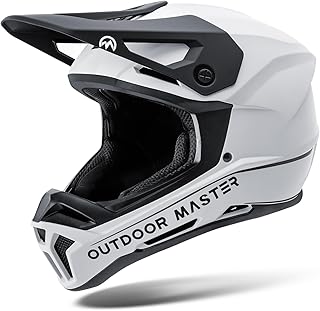
The OutdoorMaster model focuses on durable protection with high-density EPS foam and a tough ABS shell, balancing impact resistance with ventilation through multiple ports. An adjustable fit system and removable padding support a comfortable, customized fit for a range of head sizes, making it suitable for riders seeking adaptability on varied terrain.
Buying Guide: Key Purchase Considerations
- Protection Standards: Look for helmets that meet respected safety certifications (for example, ASTM F1952, CPSC 1203, CE EN1078). These indicate baseline protection for downhill and cross-country riding.
- Weight and Ventilation: Lighter helmets reduce neck fatigue on long rides, but must not compromise protection. A well-ventilated design helps maintain comfort in warm conditions.
- Fit and Retention: An adjustable fit system ensures a secure, snug feel across different head shapes. Removable padding can aid hygiene and customization.
- Chin Bar and Coverage: Full-face designs offer chin protection for aggressive terrain. Some models feature EPP components for added impact resistance in the chin area.
- Construction Materials: ABS shells paired with EPS liners are common; some helmets integrate MIPS or other rotational-impact technologies to mitigate certain impact dynamics.
- Ventilation Configuration: Consider the balance between intake and exhaust vents. Effective airflow reduces heat and improves rider comfort during climbs and warm descents.
- Maintenance: Removable liners simplify washing and odor control, contributing to longer-term comfort and hygiene.
- Intended Terrain: Downhill-specific helmets may emphasize higher impact protection and more extensive ventilation strategies, while trail-focused models favor a lighter, roomier feel.
- Value and Warranty: Compare build quality, warranty terms, and available sizes to ensure durable, long-term use across seasons.
In choosing the lightest option, consider your typical riding demands, climate, and comfort preferences. If you frequently ride steep downhill trails, a certified full-face with optimized ventilation and a secure fit is advantageous. For longer climbs or all-day sessions, prioritize a lighter weight and excellent airflow, along with a comfortable liner system. Regardless of choice, proper sizing and fit are essential to maximize protective benefits on every ride.