For parents seeking durable, high-performance bikes that can handle budding explorers, this guide highlights five heavy-duty options designed for kids ages roughly 4 to 14. Each model balances rugged construction, reliable braking, and capable geometry to support growing riders through a mix of street, trail, and backyard adventures. Below you’ll find succinct product sections with key features, followed by a practical buying guide to compare specs and safety considerations.
Summary of Selected Products:
- WEIZE Kids Mountain Bike, 20 inch – Dual suspension, 6 speeds, high-carbon steel frame
- Mongoose Legion L20 Kids Freestyle BMX Bike – Hi-Ten steel frame, 20-inch wheels, freestyle gearing
- WEIZE Kids Bikes, 16 Inch – Adjustable seat, training wheels, dual brakes, fenders
- Cubsala Freestyle BMX Bike, 18 Inch – Hi-Ten steel, 17.3″ top tube, 32T chainring
- Thctvous 20 inch Kids Bike with Fat Tires – 7-speed, double disc brakes, rugged mountain styling
WEIZE 20-Inch Dual Suspension Mountain Bike

The WEIZE 20-inch Kids Mountain Bike is built for mid- to upper-elementary riders who enjoy off-road trails and rougher terrain. It features a durable high-carbon steel frame with a lower standover height to ease mounting for younger riders. The dual full suspension helps absorb bumps on uneven surfaces, enhancing control and comfort on longer rides. A 6-speed drivetrain broadens gear options for hills and flats, supporting deliberate pacing as kids gain confidence. Front and rear V-brakes deliver straightforward stopping power, contributing to safer descents and controlled braking in varied conditions.
Key design notes include the ergonomic frame intended for riders roughly 42–55 inches tall, which aligns with typical ages 6–10. The 20 x 2.125″ tires provide puncture resistance and stability, helping new riders focus on riding rather than constantly adjusting grip. This model balances weight, durability, and ease of use, making it suitable for adventurous beginners who are ready to tackle light trails and urban obstacles alike.
BODIOO 16-Inch Kids Bike With Training Wheels

The BODIOO 16-inch kids bike focuses on early riders transitioning from training wheels to independent cycling. It emphasizes easy assembly, with 85% pre-assembled components and essential tools included, allowing parents to have the bike ready in about 20 minutes. It comes with stable training wheels, a quick-release seat for height changes, and a fully enclosed chain guard to prevent clothing entanglement. Handbrake and coaster brake systems provide dual braking options, supporting safe, progressive skill development as children learn to stop confidently.
Designed for ages around 4–6 and riders roughly 41–46 inches tall, the bike includes features like a detachable training wheel setup and reflectors for visibility. Its sturdy frame and protective fenders help keep clothing clean during rides in varied weather. While aimed at beginners, the bike’s design anticipates growth, with accommodating components to ease the learning curve and promote independent riding.
Mongoose Legion L20 Freestyle BMX Bike

The Mongoose Legion L20 is a 20-inch freestyle BMX bike designed for aspiring street and park riders. A Hi-Ten steel frame provides durability for routine tricks and casual rides, with a top tube around 20.25 inches to fit riders typically between 4’8” and 5’4”. The bike ships with a high-performance drivetrain including a 170mm one-piece forged crank, a 25T alloy chainring, and a solid American loose ball bottom bracket to withstand abuse from urban riding. Removable brake mounts add versatility for riders experimenting with different braking setups while learning tricks.
Suitable for kids transitioning from beginner to intermediate, this model emphasizes toughness, stability, and control. The L20 is built to endure urban surfaces, skate park elements, and playgrounds, helping riders build confidence as they explore more complex riding environments. Its weight and geometry are tuned to balance power, maneuverability, and ease of handling as skill levels improve.
WEIZE 16-Inch Kids Bike For Boys And Girls
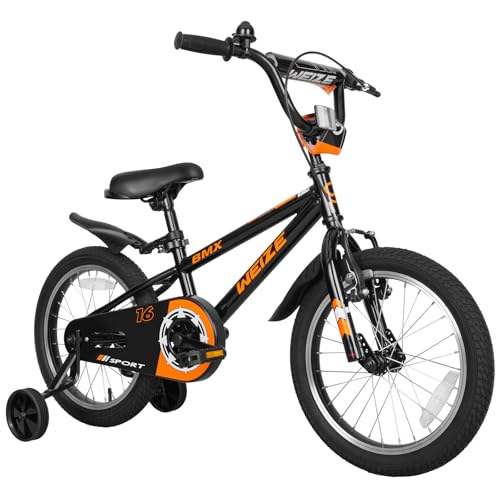
The WEIZE 16-inch kids bike is designed to grow with younger riders. It includes adjustable seating and a detachable training wheel setup for beginners who need more stability, plus front and rear fenders to keep dirt and mud from reaching clothing. The bike uses a high-carbon steel frame that’s capable of withstanding daily use and the occasional rough landing. A dual-brake system offers both hand and foot braking, giving kids multiple braking options depending on the riding context. Safety features like a fully enclosed chain guard reduce the risk of clothing snagging near the chain area.
Color options and an approachable stance make this model a practical choice for families seeking a long-lasting first or second bike. The adjustable components support different heights as kids grow, ensuring continued use without a need for frequent replacements. The combination of protection, stability, and straightforward operation is well-suited for beginners and early intermediate riders who are transitioning to more confident cycling.
Thctvous 20-Inch Fat Tire Kids Bike

The Thctvous 20-inch kids bike features fat tires for enhanced stability on varied terrains. It offers a 7-speed drivetrain to adapt to hills and flats, enabling riders to tackle different elevations without stalling. The design emphasizes safety with double disc brakes, including 160mm rotors on both front and rear wheels for strong stopping power and shorter braking distances. This model is suitable for ages approximately 8–12 and riders around 48–60 inches tall, expanding the range of environments a child can confidently ride in—from city streets to light trails and wintery surfaces.
With a lightweight yet sturdy carbon steel frame, textured tires, and a rugged aesthetic, the Thctvous bike appeals to riders who want more capable gear without moving up to a full-size adult bike. It balances performance with approachable ride dynamics, making it a practical option for ambitious kids who need more gear range and grip for off-road daylight adventures.
Buying Guide: Key Purchase Considerations And Comparisons
Bike selection for young riders hinges on durability, safety, and progression. Consider these factors when choosing a “heavy duty” kid bike:
- Frame material and geometry: Look for durable steel frames (Hi-Ten or high-carbon variants) with a lower standover height for younger riders. A sturdy frame helps absorb impact and supports confident handling on rough terrain.
- Suspension and ride feel: Dual suspension or front suspension can improve comfort on uneven surfaces, reducing fatigue and enabling longer rides. Balance this with weight considerations; heavier bikes may be harder to maneuver for beginners.
- Braking system: Dual-brake setups (hand and foot) or robust V-brakes improve control in varied conditions. Disc brakes offer strong stopping power but may add cost and weight.
- Wheel size and tires: 16–20 inch wheels suit a wide age range. Fat tires enhance stability on loose or soft surfaces but require more effort to pedal and steer. Tire quality affects puncture resistance and grip.
- Gear range and drivetrain: A small number of gears (5–7) is common for kids, with a simple shifting feel. More gears help with hills but may complicate maintenance for younger riders.
- Safety features: Fully enclosed chain guards, training wheels (when needed), reflectors, and mud guards contribute to safer daily use and learning progression.
- Adjustability and growth: Seats and handlebars that can be adjusted without major tools extend the bike’s usable life as children grow taller and stronger.
- Intended riding environment: City streets, light trails, park areas, or snow and sand all require different feature sets. Fat-tire bikes excel on diverse surfaces but may be heavier and slower on smooth pavement.
- Maintenance considerations: Steel frames and quality components simplify repairs and replacements. Check for easily serviceable parts and local availability of spares.
- Weight and portability: Lighter frames are easier for kids to manage independently, especially during mounting and dismounting or when lifting the bike for transport.
In summary, the best choice depends on your child’s age, height, riding goals, and your willingness to manage maintenance. For beginners, starting with a model that emphasizes safety features, easy braking, and tunable seating ensures smoother learning. For more adventurous kids, models with sturdier frames, broader gear ranges, and solid suspension offer longer-term value as skills develop. Compare the five options above on frame durability, braking performance, wheel size, and adjustability to identify the best fit for your child’s first “heavy” bike experience.