Finding reliable GPS navigation for bicycles can enhance routes, track performance, and improve safety. This guide highlights five leading bike computers with GPS navigation features, from color touchscreen displays to advanced routing and offline maps. Each option supports various connectivity, indoor training, and route planning capabilities to fit different riding styles and terrains. Use the quick reference below to compare core specs and then dive into detailed product overviews and a practical buying guide.
| Product | Brand | Key Feature | Best For |
|---|---|---|---|
| GEOID CC600 | GEOID Store | Color screen, GPX routing, automatic re-routing, WiFi/Bluetooth | Urban and mountain riders who want clear route updates |
| iGPSPORT BSC300T | iGPSPORT Store | 2.4″ touchscreen, offline map, multi-satellite | Road and off-road riders needing offline navigation |
| Garmin Edge 1050 | Garmin Store | Vivid color touchscreen, built-in speaker, advanced training | Power users seeking advanced training and guidance |
| iGPSPORT BSC200S | iGPSPORT Store | Route navigation, one-touch start, smart notifications | Casual to mid-tier riders who value simple setup |
| COOSPO CS600 | CooSpo Store | Color touchscreen, GPS/GLONASS, 36H battery life | All-day rides with reliable navigation |
The following sections provide detailed overviews of each product, highlighting navigation capabilities, screen quality, battery life, and connectivity. Each section sticks to factual information and documented features to support objective comparisons.
GEOID CC600 Color Screen Bike Computer

The GEOID CC600 uses a 2.4-inch color display with durable Asahi glass and a simple three-button layout for quick operation. The color navigation supports turn reminders and visual notifications at turns, helping riders stay on course. It also allows uploading external GPX files via a smartphone app and offers automatic re-routing if you stray from the planned route. This model emphasizes fast GPS positioning and seamless data synchronization through WiFi and Bluetooth, enabling quick firmware updates and ride data transfers.
Key implications for riders include improved visibility during navigation, proactive rerouting to avoid detours, and reliable data transmission during rides. The CC600’s design aims to balance a clear display with practical in-ride controls, making it suitable for commuters and adventurous cyclists who rely on real-time guidance.
iGPSPORT BSC300T Wireless Bike Computer

The BSC300T features a 2.4-inch touchscreen with six physical buttons for versatile control. It supports multiple riding modes, including road, mountain, and Ebike, and can display power levels, making it suitable for a wide range of cyclists. Its Global GPS Coverage combines several satellite systems to deliver fast positioning and accurate ride data, enhancing route reliability across diverse environments. This model appeals to riders who want a robust, all-terrain navigator with a touch-enabled interface.
Expect reliable off-road performance, intuitive navigation, and compatibility with various platforms. The BSC300T’s strengths lie in its flexible mode support and comprehensive satellite connectivity, helping riders maintain accurate tracking even in less-than-ideal signal conditions.
Garmin Edge 1050

The Garmin Edge 1050 is a premium cycling computer featuring a vivid color touchscreen, robust navigation, and advanced training capabilities. It combines navigation and performance tracking with cycling awareness and smart connectivity. Battery life adapts to use cases, offering up to 20 hours under demanding conditions and up to 60 hours in battery saver mode. The device can alert riders to road hazards reported by others and allows user edits when used with a compatible smartphone, contributing to safer and more informed rides.
Garmin’s ecosystem emphasizes training insights and community-sourced hazards, making the Edge 1050 a strong choice for competitive cyclists and enthusiasts who want in-depth analytics, route planning, and shareable data for group rides and training sessions.
iGPSPORT BSC200S GPS Bike Computer
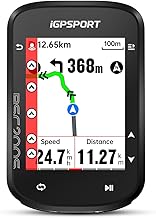
The BSC200S offers route navigation created via the official iGPSPORT app or imported from third-party platforms like Strava, Ride with GPS, or Komoot. Users can customize route navigation colors for clarity and use one-touch navigation to start a ride quickly. It also supports “Back to Start” navigation and riding record navigation. Smart notifications, including incoming calls and app alerts, help riders stay connected without pulling attention from the road.
Designed for ease of use, this model is well-suited for riders who value flexible route creation, straightforward operation, and reliable notifications during rides. The ability to import routes from popular platforms broadens its appeal to casual riders and enthusiasts who already use these services for planning.
COOSPO CS600 Color Touchscreen GPS Bike Computer

The CS600 features a 2.4-inch high-resolution color touchscreen with auto-backlight that adapts to ambient light. The touchscreen is highly responsive, enabling easy navigation and readable data visualization during rides. It uses precise GPS tracking with GLONASS to provide fast signal acquisition and accurate speed, distance, and route statistics. Built-in route navigation supports uploading routes and following breadcrumb trails, and the device offers clear on-screen mapping to reduce wrong turns. Battery life and Bluetooth/ANT+ compatibility add to its versatility for longer rides and multi-sensor setups.
Riders seeking a reliable, all-around GPS computer with strong visibility, precise tracking, and straightforward navigation will find the CS600 a practical option. Its battery endurance and compatibility with multiple satellite systems help maintain accurate navigation across varied terrains and conditions.
Buying Guide: Key Considerations For Choosing A Bike GPS Navigator
Purpose and use-case: Determine whether you primarily ride on roads, trails, or mixed terrain. If you race or train regularly, features like advanced training analytics, VO2 max estimates, and group ride support may be decisive. For casual rides, simpler navigation and route import via popular platforms might suffice.
Display and controls: A bright, high-contrast screen improves visibility in sunlight. Touchscreen models offer quick interaction, while those with physical buttons may be easier to operate wearing gloves. Consider screen size and readability of maps and metrics during motion.
Navigation features: Look for turn-by-turn directions, live rerouting, and offline maps or GPX support. Check if the device accepts external routes from apps you already use (Strava, Komoot, Ride with GPS) and whether color-coded routes or breadcrumb trails are available for clarity.
Satellite support: Multi-constellation GPS (GPS, GLONASS, Beidou, GALILEO, QZSS) generally improves acquisition speed and accuracy, especially in dense tree cover or urban canyons. Ensure compatibility with your preferred regions and tracking needs.
Connectivity and updates: WiFi and Bluetooth enable firmware updates, data sync, and quicker transfers. Consider whether the device supports cloud backups, mobile app integration, or wireless transfers to third-party platforms.
Battery life: Longer endurance matters for long rides or multi-day trips. Battery saver modes can extend use, but real-world life depends on screen brightness, GPS activity, and feature use.
Durability and water resistance: If you ride in diverse conditions, IP ratings (such as IPX7 for water resistance) and rugged construction ensure reliable operation in rain or sweat exposure.
Price and ecosystem: Compare device ecosystems, accessories, and typical support lifecycles. A higher upfront cost may be offset by longer product support, more accurate navigation, or richer training tools.
User experience: Ergonomics, button layout, and app compatibility influence long-term satisfaction. It’s useful to read real-world reviews focused on navigation reliability, map quality, and setup ease.