Riding on rugged trails or steep backcountry paths demands reliable GPS bike computers. The right device delivers precise location data, route guidance, long battery life, and durable construction to handle mud, rain, and rough terrain. Below, five top options combine accurate GPS positioning, robust displays, and useful riding analytics to help mountain bikers optimize their sessions and stay on course.
| Product | Brand | Key Strengths | Display | Battery Life |
|---|---|---|---|---|
| iGPSPORT BSC300T Wireless Bike Computer | iGPSPORT | 4-satellite coverage, offline navigation, off-course warnings | 2.4″ touchscreen | Long-lasting, wireless |
| Bikevee Bike Speedometer GPS | Bikevee | Auto start/stop, auto backlight, 28H battery life | 2.4″ LCD | Up to 28 hours |
| CYCPLUS GPS Bike Computer | CYCPLUS | Dynamic GPS positioning, automatic backlight, IPX6 | 2.4″ display | 56+ hours |
| GEOID CC600 Color Screen Bike Computer | GEOID | Color navigation, GPX uploads, automatic re-routing | 2.4″ color | Extended battery life |
| Navihood L4 Entry Level GPS Bike Computer | Navihood | Ultra-thin, IPX7 waterproof, accurate GPS | 2.3″ laminated | Long-lasting |
iGPSPORT BSC300T Wireless Bike Computer
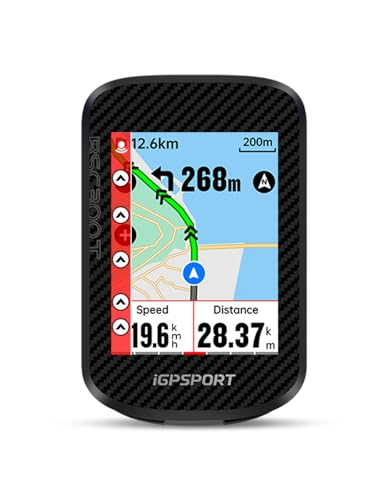
The iGPSPORT BSC300T combines a 2.4-inch touch screen with a six-button layout for flexible operation. It supports multiple modes suitable for road, mountain, and electric bikes, and it can display power data on compatible ebikes. Global GPS coverage includes GPS, Beidou, GLONASS, GALILEO, and QZSS, enabling faster positioning and accurate ride metrics even in challenging environments. The device provides off-course warnings, helping riders stay on track on rugged trails without pulling out a map constantly.
Bikevee GPS Wireless Cycling Computer

Bikevee offers a comprehensive GPS experience with a big 2.4-inch LCD display and a long-lasting battery life of up to 28 hours. It tracks essential ride data, including total distance, maximum and average speeds, and other statistics, while its auto start/stop and auto backlight features simplify operation during long sessions. The wireless design reduces handlebar clutter and keeps setup clean, making it a practical choice for riders who value reliability and straightforward data visualization on day trips and multiday adventures.
CYCPLUS GPS Bike Computer

The CYCPLUS GPS Bike Computer emphasizes dynamic GPS positioning for quick route tracking and high accuracy. Its automatic backlight uses FSTN technology for clear readability in bright sun or low light, and the device is IPX6 waterproof, ensuring durability in rain and mud. A notably large 1200 mAh battery supports more than 55 hours of usage in typical cycling scenarios, making it well-suited for long mountain biking trips where frequent charging isn’t convenient.
GEOID CC600 Color Screen Bike Computer

The GEOID CC600 introduces a vibrant 2.4-inch color screen with intuitive navigation and turn reminders. It also supports uploading external GPX files via a mobile app and offers automatic re-routing if you veer off course. WiFi and Bluetooth transmission streamline firmware updates and data synchronization, speeding up transfers and enabling quick access to your riding history and route data while you ride.
Navihood L4 Entry Level GPS Bike Computer

The Navihood L4 is designed as an ultra-thin, lightweight entry-level option with a laminated 2.3-inch display and IPX7 waterproofing. It emphasizes accurate GPS positioning through multiple satellite systems, including GPS and GLONASS, delivering cold starts within 30 seconds and warm starts in about 2 seconds. The slim profile and quick positioning make it a practical choice for riders who want basic, dependable navigation without a heavy device on the handlebars.
Buying Guide: Key Considerations For Choosing A Mountain Bike GPS
- GPS And satellite support: Look for multi-constellation compatibility (GPS, GLONASS, Galileo, Beidou) to improve positioning accuracy in wooded or rocky environments and to reduce signal dropouts on high-alpine trails.
- Display and controls: A readable, glare-resistant display (2.3–2.4 inches) with either touch input or physical buttons helps with navigation while wearing gloves. Backlight and font size affect readability in sun and shade.
- Navigation features: Essential options include turn-by-turn routing, GPX import, re-routing on off-track deviations, and breadcrumb trails. Some models also offer offline maps or base maps for remote regions.
- Battery life: Mountain rides can be long; choose devices with at least 20–30 hours of typical use, or swappable/replaceable batteries for extended outings. Fast charging can also be helpful on longer trips.
- Durability and water resistance: IP ratings (IPX4 to IPX7) determine weather resistance. A rugged case and secure mounting help during rough terrain and mud.
- Data metrics: Consider which metrics matter most—distance, speed, elevation, altitude, climb rate, VO2 max, and training insights—and ensure the device can display or sync those metrics with compatible sensors.
- Connectivity and ecosystem: Decide if you prefer devices that sync via Bluetooth or WiFi to a smartphone app, and whether you need compatibility with external sensors like power meters, heart rate monitors, or radar lighting.
- Ease of updates: Devices with simple firmware updates and maps management save time and reduce software glitches during trips.
- Price-to-feature ratio: For mountain biking, prioritize reliability, battery life, and navigation accuracy over premium features you may not use on rough terrain.
When selecting a GPS bike computer for mountain biking, consider how you ride—trail endurance, backcountry exploration, or daily commutes. The devices above offer a range of capabilities from rugged, long-lasting batteries to advanced navigation and live data metrics. Matching your riding style to the right combination of gps accuracy, screen readability, and battery life will help ensure consistent performance in diverse terrains and weather conditions.