Finding the right front tire bike rack can simplify how you store and access bicycles in tight spaces. This guide highlights five popular freestanding and front-tire-capable options that work well in garages, apartments, and offices. Each selection emphasizes easy loading, stability, and compatibility with most 20″–29″ tires. Read on to compare features, setup, and usage notes to choose the best fit for your space and bike collection.
| Product | Key Benefit | Ideal For |
|---|---|---|
| CHEPARK Bike Floor Stand | Lightweight, portable, easy roll-on loading | Small garages and apartments |
| Vertical Bike Stand by Sttoraboks | 360° wheels and adjustable height | Renters and versatile spaces |
| Bike Front Rack (Aluminium) | Front-mount, bag-friendly, touring-ready | Bikepacking and commuting |
| XINYI Bike Rack Floor | Wide tire compatibility, stable ground base | Indoor and outdoor spots |
| UNITEDPOWER Bike Floor Stand | Three gear width options, no lifting | Families and multi-bike setups |
CHEPARK Bike Floor Stand

The CHEPARK freestanding bike stand is designed to store a wide range of bikes without lifting. It supports front or rear wheels and uses a wheel tray system to slide bikes on and off, reducing the risk of rim or spoke damage. Its lightweight build makes it easy to move between rooms or garages, while the adjustable slider positions enable a snug fit for 20″–29″ wheels. This model is ideal for apartments, home garages, and office bike parking, offering a simple, accessible solution for everyday bike storage.
Features cited include a user-friendly freestanding design, vertical bike support, and compatibility with road, cyclocross, mountain, and hybrid bikes up to 2.4-inch tires. It avoids heavy e-bikes and emphasizes easy access for daily use. Users appreciate the lack of lifting required to load bikes, which helps reduce strain in small spaces. The rack prioritizes rim protection and straightforward operation for busy households.
Considerations: While versatile, heavier e-bikes may not be recommended, and the unit’s footprint should be measured against your garage or entryway. If you regularly park multiple bikes, you may want to pair this with additional racks or a broader storage plan to maximize space efficiency.
Vertical Bike Stand by Sttoraboks
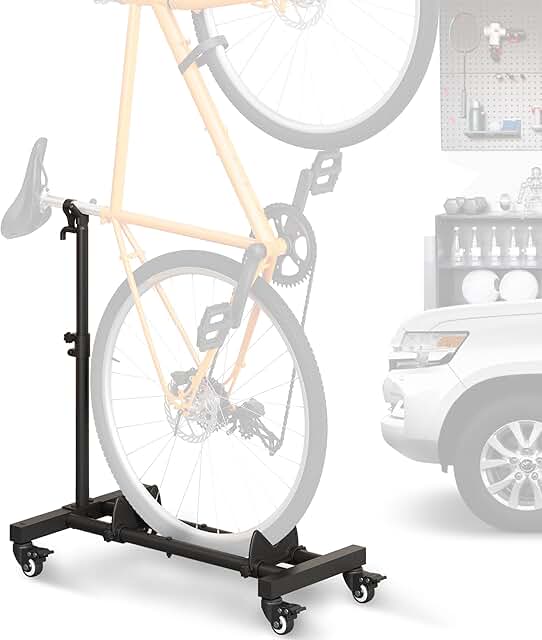
This freestanding vertical rack uses four 360° lockable wheels to move the stand between rooms, garages, or patios. The wheels are lockable to prevent unwanted movement, and the overall design emphasizes stability to prevent tipping. It accommodates a broad tire width range, including 24″–29″ wheels, making it suitable for mountain, road, and some kids’ bikes up to 25 kg (55 lb).
Height and rod adjustments are designed to fit bikes up to 29″ with a maximum tire width of 4″, which excludes bikes with fenders, baskets, or added hardware. No drilling is needed, and quick assembly is possible with the included manual. This makes it a practical renter-friendly option and a tidy solution for those prioritizing a mess-free garage or storage area.
Usage notes: The stand’s vertical design keeps floor space open and delivers easy bike access. Users should verify compatibility with their bike’s wheelbase and any accessories that extend beyond standard tires. The lack of wall mounting means this is best for flexible layouts and periods of rearrangement.
Bike Front Rack with Struts

This front-mounted rack is designed for a classic, stylish look with a fixed basket that sits on the fork crown. Its 3D bend design makes it compatible with mountain, gravel, and touring bikes. The rack’s front-morking dimensions allow for carrying extras such as a sleeping mat or lightweight gear, enabling versatile bikepacking and bag-aided rides. It attaches to front forks with two-piece legs that extend to fit forks ranging from 11 inches to 15.35 inches, providing mounting flexibility for 26″–29″ or 700c wheels.
Advantages include bag compatibility and easy packing for day trips, along with a lightweight yet sturdy construction that preserves steering and handling. Installation does not require special tools for many forks, though users should confirm fork clearance and eyelet compatibility. The design supports a tidy front-end setup without heavy mounting hardware.
Limitations: This rack focuses on front-cargo functionality, so users seeking rear-loading or full-frame mounting may prefer alternative options. Ensure the front fork clearance is adequate for installed bags and accessories when riding on rough terrain.
XINYI Bike Rack Floor

The XINYI floor stand combines a broad ground contact base with a simple footprint that supports bikes robustly. Suitable for indoor or outdoor use, its design accommodates wheel sizes from 22″–28″ with tires up to about 2.2 inches wide. The stand is versatile enough for mountain, road, and city bikes, including occasional adult or kids’ models. It emphasizes stability and reduces the risk of tipping due to accidental contact or wind exposure in semi-outdoor spaces.
Installation is straightforward, requiring no drilling or wall mounting. It’s well-suited for garages, basements, or parking areas where a freestanding solution is preferred. The trade-off with this model is that wheel width limits might exclude some wider modern tires or bikes with unusual frames, so check your bike’s dimensions before purchasing.
UNITEDPOWER Bike Floor Stand

The UNITEDPOWER floor stand offers a simple, multi-function approach: it holds either the front or rear wheel without clamps, brackets, or lifting. Tire width options include three gears to accommodate 16″–24″ kids bikes and 26″–29″ mountain bikes, up to a maximum tire width of 3.35″. The “quick push-in system” is designed for ease of use, and the deeper holder provides stability to prevent tipping. This model shines for households with children or multiple bikes, enabling quick parking and straightforward access for riders of different ages.
Considerations: While accessible and adaptable, the stand’s max tire width and wheel sizes may exclude some oversized or rugged multi-wheel setups. It’s best for standard commuting bikes and families seeking a hassle-free storing solution without mounting or heavy equipment.
Buying Guide: Key Purchase Considerations
- Bike compatibility: Check wheel diameters (20″–29″), tire widths, and whether the rack supports front-only or front-and-rear loading. Some models exclude fenders or baskets.
- Space and footprint: Measure floor area to ensure the rack fits in entryways, garages, or apartment spaces. Freestanding designs should have a stable base to prevent tipping.
- Mobility and stability: Rolling wheels with lockable casters offer flexibility. Freestanding stands should remain stable when bikes are loaded or bumped.
- Installation and maintenance: Consider whether you prefer no-drill, tool-free setups or more permanent, wall-mounted solutions. Look for easy assembly and straightforward maintenance.
- Multi-bike capacity: If you own several bikes, evaluate whether you need single-rack storage per bike or a system that supports multiple bikes efficiently.
- Durability and materials: Aluminum and steel constructions offer durability and corrosion resistance for indoor or outdoor use. Check weight limits and surface finishes to resist rust.
- Future-proofing: If you anticipate upgraded bikes or heavier e-bikes, verify weight capacity and compatibility with wider tires before purchasing.
Across these options, potential buyers should balance ease of use, space efficiency, and bike compatibility. Freestanding racks provide flexibility for renters and changing layouts, while front-rack solutions emphasize cargo-ready functionality for tours and daily commutes. Consider the typical bikes in your household, the layout of your storage area, and how often you rearrange bikes when choosing the best front tire bike rack for your needs.