When tackling snow, sand, or rough terrain, a capable front suspension fork can dramatically improve control and comfort on fat tire bikes. This guide highlights five strong options from BUCKLOS and ZTZ, emphasizing travel, weight, compatibility, and simple adjustments to help riders choose the right front fork for their fat bike setup.
Summary of selected products:
- BUCKLOS Fat Tire MTB Suspension Fork, 26″ x 4.0″, 100 mm Travel, 135 mm spacing
- BUCKLOS Fat Tire E-Bike Air Suspension Fork, 20″ x 4.0″, 180 mm Travel, 135 mm spacing
- BUCKLOS Fat Tire E-Bike Air Suspension Fork, 20″ x 4.0″, 180 mm Travel, 135 mm spacing (slightly different model)
- BUCKLOS Fat Bike Tire Air Suspension Fork, 26″ x 4.0″, 120 mm Travel, 135 mm spacing
- ZTZ Fat Tyre MTB Suspension Fork, 26″ x 4.0″, 100 mm Travel, 135 mm spacing
BUCKLOS 26-Inch Fat Tire Suspension Fork, 100 mm Travel

The BUCKLOS 26″ x 4.0″ fat tire suspension fork is designed for rugged mountain bikes and snow-ready rigs. Highlights include 100 mm travel, a 28.6 mm threadless straight steerer, and a 135 mm dropout spacing with 9 mm quick release. It supports disc brakes and weighs around 3091 g, combining durability with stable handling in soft terrain. Manual ABS adjustment lets riders tune air suspension softness and stiffness to match trail conditions, while a removable BUCKLOS sticker offers a customizable look without residue.
BUCKLOS 20″ Fat Tire E-Bike Air Fork, 180 mm Travel

Designed for smaller wheels, this BUCKLOS fork fits most 20″ fat bikes and e-bikes with 135 mm spacing and a 9 mm QR. The 180 mm travel provides substantial cushion for snowy dunes or beach sand, improving ride comfort and control. The fork is notably lightweight for an air-sprung model, reducing overall bike mass by about 1.8 pounds compared with an oil-spring alternative. Prospective buyers should verify crown lockout compatibility, disc brake fit, and model parameters before ordering to ensure a proper match with their frame.
BUCKLOS 20″ Fat Tire E-Bike Air Fork, 180 mm Travel

This BUCKLOS model also targets 20″ fat bikes and e-bikes, featuring a 180 mm travel and 135 mm spacing. While weight is kept relatively light, riders are advised to confirm fit with their crown lockout, QR dimensions, and disc brake alignment. The 180 mm travel enhances impact absorption on soft surfaces like snow and sand, enabling smoother motos and more confident steering in challenging conditions. As with the other BUCKLOS forks, manual ABS adjustment aids quick on-trail tuning.
BUCKLOS 26″ x 4.0″ Fat Tire Air Suspension Fork, 120 mm Travel
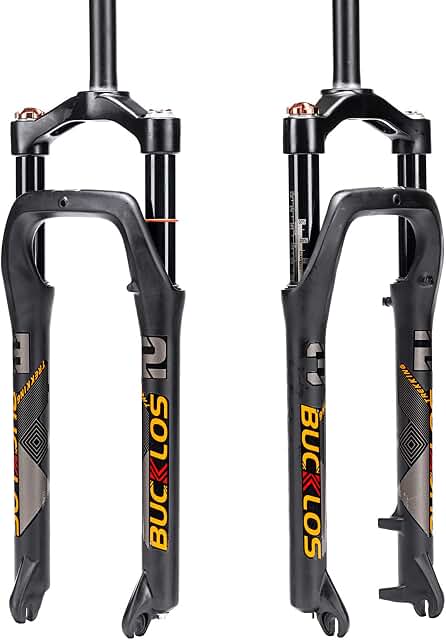
This 26″ fat-tire front fork offers 120 mm travel with 9 mm x 135 mm QR and a 28.6 mm threadless steerer. It’s built from magnesium-aluminum alloy to reduce overall bike weight to about 2296 g, enhancing agility on mixed terrain. Manual ABS allows on-the-fly adjustments to suspension stiffness, which is useful for riders switching between snow, beach, and rocky trails. The fork’s 30 mm crown race and 32 mm tube diameter contribute to a sturdy, long-lasting setup while maintaining a lean profile.
ZTZ 26 x 4.0 Fat Tyre Suspension Fork, 100 mm Travel
The ZTZ fat tire suspension fork emphasizes a balance of weight and performance. With a 100 mm travel, 135 mm spacing, and 9 mm quick release, it supports disc brakes and features a 28.6 mm threadless tapered steerer and crown lockout for added terrain adaptability. The fork weighs about 3000 g, combining strength with durability. A removable “ZTZ” sticker lets riders personalize the look without leaving adhesive residue, while ABS manual adjustment helps tailor stiffness to riding conditions for snow, beach, or XC trails.
Buying Guide
Key elements to consider when selecting a fat-tire front suspension fork:
- Wheel compatibility: Confirm the fork is designed for your wheel size (20″ or 26″ fat tires) and that 135 mm spacing with a 9 mm QR is compatible with your frame’s dropout hardware.
- Travel and riding style: More travel (e.g., 180 mm) improves impact absorption on deep snow or soft sand but adds weight. Shorter travel suits smoother trails and lighter builds.
- Steerer and crown dimensions: Check the threadless steerers (28.6 mm or similar) and crown race size (30 mm) to ensure a proper seal with your head tube and headset.
- Weight versus durability: Aluminum-magnesium blends reduce weight, but riders should weigh trade-offs against stiffness and longevity on rocky or beach terrain.
- Lockout functionality: Front fork lockouts help climb efficiency and wheel control on hardpacked sections. Verify crown lockout compatibility with your lever setup.
- Brake compatibility: Ensure the fork supports disc brakes and matches rotor standards present on your bike. Different models may use 160 mm or 180 mm rotors, so verify clearance.
- Adjustability and tuning: ABS air-spring adjustments let riders fine-tune stiffness, softness, and sag. Consider if you prefer manual tuning on the trail or a more straightforward system.
- Weight distribution and feel: Lighter forks reduce overall bike weight and improve acceleration, but heavier options may offer steadier riding in soft surfaces or rough sand.
- Cosmetic and brand considerations: Some forks include removable decals. This can help personalize appearance without adhesive residue after removal.
Performance perspectives vary by rider needs. For cold-weather riders navigating snow, a stiffer setup with ample travel helps maintain control on soft drift. Beach riders may favor lighter, more agile forks with robust ABS tuning to handle shifting sand and occasional obstacles. Trail riders seeking adaptability across mixed terrains often benefit from lockout options and versatile travel ranges. Finally, compatibility sanity checks—drivetrain, brakes, steerer diameter, and dropout spacing—remain essential to avoid mismatch and ensure a safe, reliable upgrade.