When choosing a fat bike suspension fork, compatibility, travel, weight, and braking support matter most. The following five front forks are highlighted for 4.0-inch fat tires, varying travel, and reliable performance on snow, sand, and rugged trails. This guide compares key specs and how they relate to real-world riding needs.
| Product | Brand | Travel | Wheel Size | Axle | Weight (approx.) |
|---|---|---|---|---|---|
| BUCKLOS 20 Inch 4.0 Fat Tire Fork | BUCKLOS | 180 mm | 20 inch | 9 mm QR 135 mm | 2645 g |
| RUJIXU 20 Inch Fat Fork | RUJIXU | 140 mm | 20 inch | 9 mm QR 135 mm | — |
| CDHPOWER 26″ Fat Suspension Fork | CDHPOWER | 130 mm | 26 inch | 135 mm | 3060 g |
| BUCKLOS 26 Inch Fat Tire Fork | BUCKLOS | 180 mm | 26 inch | 9 mm QR 135 mm | 3960 g |
| Exceedhub 20 Inch Fat Tire Fork | Exceedhub | 180 mm | 20 inch | 9 mm QR 135 mm | ~5.8 lbs (approx. 2630 g) |
BUCKLOS 20 Inch Fat Tire Fork Review

Designed for 20-inch fat bikes, this BUCKLOS model emphasizes lightness and travel in a compact package. It features 180 mm of travel and is advertised as lighter than oil-spring equivalents, which can help reduce overall bike weight by about 1.8 pounds. The fork is compatible with 9 mm QR axles and 135 mm spacing, and it supports disc brakes. Riders should verify crown lockout and correct model parameters prior to purchase to ensure a perfect fit for snow, beach, or mixed-terrain e-bikes.
RUJIXU 20 Inch Fat Fork Review
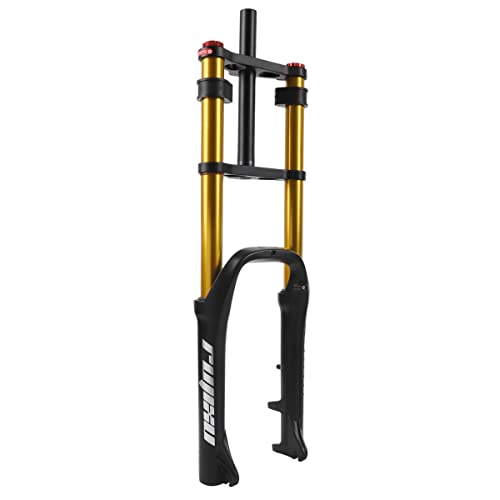
RUJIXU’s 20-inch fat fork combines air suspension with damping adjustment for different terrains. Its 140 mm travel offers a balanced ride for snow and beach surfaces, with a 135 mm dropout and 9×135 mm QR compatibility. The front fork uses a double shoulder disc brake design and adjustable crown lockout, enabling riders to fine-tune stiffness and control in various riding conditions. Ensure compatibility with your headset and frame before purchase.
CDHPOWER 26-Inch Fat Suspension Fork Review

CDHPOWER offers a 26-inch fat tire front fork suitable for 4.0″ tires with a 130 mm travel range. It features a threadless 1-1/8″ headset, a 135 mm dropout, and dual locking modes (manual and remote). The fork’s weight is about 3060 g, a consideration for riders seeking a robust yet manageable front end. It supports disc brakes and is compatible with 26×4.0 tires, aligning with riders who want added control on rough or uneven surfaces.
BUCKLOS 26 Inch Fat Tire Fork Review

This 26-inch BUCKLOS fork pushes travel to 180 mm and uses a 135 mm dropout with a 9 mm QR axle. It advertises a light weight of about 3960 g and notes a 180 mm travel for confident handling on snow and beach terrains. The fork supports crown lockout and is designed for fat bikes with 26×4.0 tires, making it a strong option for riders who need substantial bump absorption without sacrificing control.
Exceedhub 20 Inch Fat Tire Fork Review

Exceedhub presents a 20-inch fat bike front fork with 180 mm travel and a 9×135 mm QR arrangement. The design emphasizes lightweight components, with magnesium-aluminum alloy legs and an air system that reduces weight by about 1.8 pounds versus oil-spring forks. It includes a star nut and hydraulic disc brake compatibility, making it suitable for aggressive snowy or sandy routes that demand sustained control on rough terrain.
Buying Guide
Key considerations when selecting a fat bike suspension fork:
- Travel and terrain: More travel (e.g., 180 mm) improves control on deep snow, loose sand, or rocky sections, but adds weight. For casual winter rides, 130–140 mm may be sufficient.
- Wheel size compatibility: Ensure the fork matches your fat bike’s wheel diameter (20″ or 26″). Confirm axle spacing (135 mm) and QR compatibility (9 mm) to prevent fit issues.
- Headset and crown: Verify headset type (threadless vs. crowned) and crown lockout functionality. Incompatible crown designs can limit performance or require additional adapters.
- Weight considerations: Lighter forks ease acceleration and climbing, but may sacrifice some stiffness. Heavier models tend to be more rugged for aggressive trails.
- Braking system: Ensure compatibility with your disc brake setup (post-m mount or IS) and confirm brake rotor clearance with the fork’s brake mounts.
- Lockout and dampers: Manual lockout can save energy on flat sections, while damping adjustments help tailor suspension feel to rider weight and terrain.
- Compatibility notes: Some forks require specific spacings, head tubes, or brake mount styles. Always double-check your bike’s parameters (crown height, steer tube length, dropout spacing) before purchase.
- Material and durability: Magnesium-aluminum alloy constructions balance weight and durability, while all-aluminum designs prioritize stiffness for aggressive riding.
Riders should compare the five options above against their riding goals. For snow and beach use, consider travel range and weight, as well as whether frequent suspension tuning is desired. For casual cruising on mixed terrain, a lighter 130–140 mm fork with straightforward lockout may offer the best daily usability without excess weight.