The market’s best exercise bike power meters help cyclists of all levels measure real-time power output, track progress, and optimize training. This guide highlights five reliable options with solid performance, durability, and easy installation. Explore pedal-based and crank-based meters to find the right balance of accuracy, weight, and compatibility for your bike setup.
| Product | Brand | Type | Key Benefit |
|---|---|---|---|
| Favero Assioma UNO Pedals | Wearable4U | Pedal-Based | Left-sensor data for precise leg power |
| Magene PES P505/P515 Crankset | Magene | Crank-Based | High accuracy, lightweight, long battery life |
| Magene P715 Dual-Sensing Pedals | Magene | Pedal-Based | Independent left/right power with dual-sensing |
| LOOK Keo Blade Power Pedals | LOOK | Pedal-Based | Lightweight, high-precision power data |
| Magene PES P505/P515 (Alternate Listing) | Magene | Crank-Based | Similar precision with different SKU |
Choosing the right meter depends on how you prefer to measure power, your bike setup, and how often you swap between bikes. Pedal-based meters are quick to install and transfer, while crank-based meters can offer robust measurements with broader compatibility. Battery life, data apps, and sensor technology also influence long-term training effectiveness. This guide compares five credible options to help you select a meter that aligns with your training goals and budget, without relying on price alone.
Favero Assioma UNO Pedal Power Meter by Favero (Wearable4U Bundle)
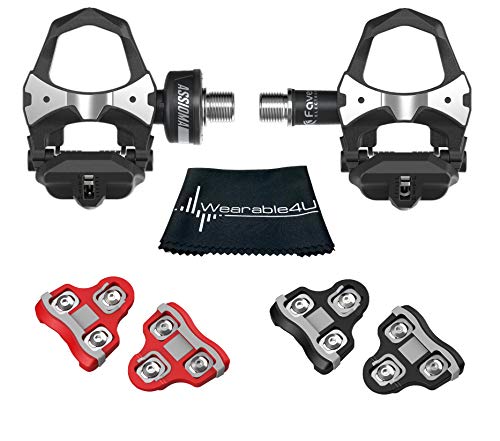
- IN THE BOX: 1 x Favero Assioma UNO Power-meter Cycling Pedals (MPN 00772-01), 1 Pair of Favero Red Float Cleats (Six Degree), 1 Pair of Favero Black Float Cleats (Zero Degree), 1 x Wearable4U Cleaning Cloth.
- True Left Power Data: Sensor in the left pedal measures leg power for accurate, real-time metrics.
- Easy installation and quick transfer between bikes without special tools.
Magene PES P505/P515 Crankset Power Meter (±1%)

- Unmatched Precision: ±1% power accuracy with strain gauges, acceleration sensors, and temperature compensation.
- Lightweight and Durable: 625g total weight with 7075 aluminum, built for stiffness and longevity.
- Long-Lasting Battery: Up to 330 hours of ride time; suitable for extended training.
Magene PES P505/P515 Crankset Power Meter (Alternate Listing)
- Same high-accuracy power data with a different SKU and listing.
- Optimized for road cycling with a robust crank design.
- Compatibility through ANT+/Bluetooth connectivity for data apps.
Magene P715 Dual-Sensing Side Power Meter Pedals
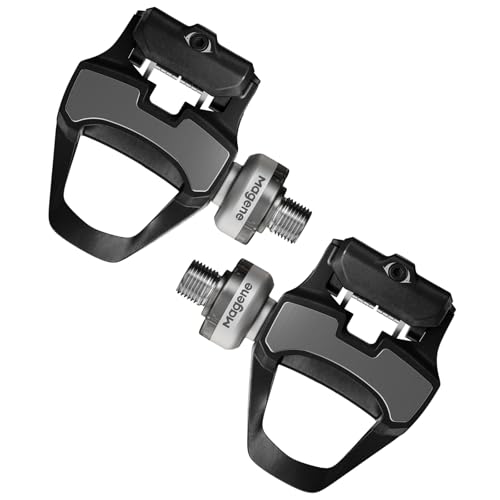
- Dual-Sensing Side Power: Independently measures left and right leg power with ±1% accuracy.
- SPD-SL Compatibility: Easy integration with existing cleat systems without replacements.
- Battery Life: Up to 120 hours of operation with a reliable, modern battery design.
LOOK Cycle Power Meter Pedals Keo Blade Power

- Power Beyond Limits: High-performance pedals for precise training analysis.
- Single or Dual Sensor Options: Track pedalling data with road-ready Keo Blade platform.
- Lightweight and Durable: Designed for performance and longevity on varied terrain.
Magene PES P505/P515 Crankset – Alternate Listing
- High-precision power data with a different SKU variant for choice flexibility.
- Stiff, lightweight crank design for consistent power transfer.
- Robust battery and waterproofing suitable for diverse weather conditions.
Buying Guide: Key Purchase Considerations
- Measurement method: Pedal-based meters (e.g., Favero Assioma, Magene P715, LOOK Keo Blade) offer easy transfer between bikes; crank-based meters (Magene PES P505/P515) can provide broader single-bike integration and durability.
- Power data accuracy: Look for meters with ±1% accuracy and temperature compensation to ensure consistent readings across conditions.
- Compatibility: Verify crankset or pedal compatibility with your bike’s drivetrain, SPD-SL compatibility, and cleat types to avoid extra purchases.
- Weight and drivetrain impact: Lighter meters reduce rotational mass; consider how mounting affects pedal feel and cadence responsiveness.
- Battery life and charging: Consider ride duration and whether a meter’s battery life matches training plans; check charging times and battery replacement options.
- Connectivity and apps: Prefer meters offering ANT+/Bluetooth for app integration, analysis, and seamless data export to training platforms.
- Installation and transfer: Pedal-based meters are often easiest to move between bikes; crank-based meters require more setup but may be more stable on one bike.
- Warranty and support: Check manufacturer support quality and warranty terms for long-term reliability.