People managing Parkinson’s often benefit from low-impact, seated cardio that supports steady movement and balance. This guide highlights five recumbent bikes with features designed for comfort, stability, and gentle resistance—ideal for at‑home workouts, rehab sessions, and daily activity. Each option offers adjustable seats, quiet operation, and accessible monitoring to help maintain mobility and routine.
Summary of chosen products:
| Product | Brand | Key Benefit |
|---|---|---|
| Recumbent Exercise Bike for Home Use | XVGVSV | 15-16 level magnetic resistance, 400 lb capacity, comfy design |
| Niceday Recumbent Exercise Bike | Niceday | 16 levels, strong build, optional app compatibility |
| Recumbent Exercise Bike with 2-in-1 Design | XVGVSV | Recumbent + elliptical motion, 400 lb capacity, quiet |
| Sunny Health & Fitness SF-RBE4886SMART | Sunny Health & Fitness | Electromagnetic resistance, connected app, multiple workouts |
| MERACH Recumbent Bike With Bluetooth | MERACH | Bluetooth app tracking, 8-level resistance, heart rate |
Best Quiet Recumbent Bike For Home Use
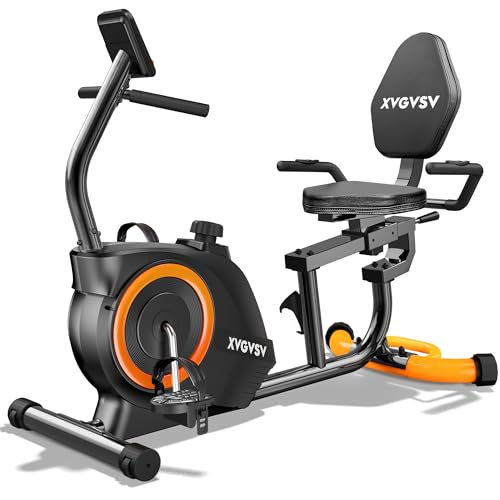
XVGVSV’s Recumbent Exercise Bike combines a plush seat and backrest with a lever-adjustable seat that fits a range of heights. This design prioritizes comfort for longer sessions, making it suitable for therapeutic routines or daily mobility work. The bike’s 400‑lb weight capacity and commercial-grade frame deliver stability, while a whisper-quiet magnetic resistance keeps workouts unobtrusive in living spaces or shared homes. Assembly is streamlined, with most parts pre-assembled to reduce setup time and allow quick onboarding for users new to home cardio equipment.
The 16-level resistance range supports varied intensity—from gentle warmups to moderate cardio—helping coordinate smoother, low-impact movements. Pulse sensors provide real-time feedback, aiding pace control and safe exertion. For Parkinson’s users, the low-impact motion helps minimize joint strain and can be adjusted to accommodate fatigue or tremor variations. Overall, this bike emphasizes comfort, stability, and quiet operation—key factors for consistent at-home exercise.
Best Recumbent Bike For Therapy And Home Use

The Niceday Recumbent Bike is built for long-term durability and clinical-style support. Its 16 resistance levels enable progressive training as users build endurance. The design reduces axial load on the spine, which can be advantageous for individuals managing back discomfort. The accompanying LCD monitor provides essential metrics like time, distance, and calories, while a heart-rate handle helps track exertion. The mechanical knob ensures precise resistance changes, contributing to a predictable workout progression—an attribute valued in therapeutic settings and at-home rehabilitation routines.
Ideal for physical therapy, this bike prioritizes joint-friendly motion with a stable base and quiet operation. The adjustable seat accommodates various leg lengths and user heights, supporting multiple family members or caregivers who may assist with workouts. By enabling gentle mobility work and cardio in a seated position, it offers a practical approach for Parkinson’s patients seeking consistency without overstimulation or fatigue.
Best 2‑in‑1 Recumbent And Elliptical Bike

This XVGVSV unit merges recumbent cycling with elliptical motion, enabling users to switch between two movement patterns in a single machine. The design preserves a low-impact approach while allowing varied muscle engagement—helpful for people who want to reduce repetitive strain and stimulate balance training. The seat and backrest are cushioned for comfort, with adjustable height to fit different leg lengths. The equipment’s 400‑lb capacity and quiet magnetic resistance support steady workouts in small spaces, including living rooms or home gyms where noise sensitivity matters.
The 2‑in‑1 layout expands training options without requiring multiple machines, which can be beneficial for Parkinson’s patients who need incremental activity. The ergonomic build minimizes discomfort during longer sessions, and the overall hardware quality supports reliable, repeated use. For caregivers, this design simplifies supervising routine cardio while maintaining safety and stability in a home environment.
Best Connected Elliptical Recumbent Trainer

The Sunny Health & Fitness SF-RBE4886SMART offers electromagnetic resistance with 16 levels and a suite of workouts accessed via the SunnyFit app. The app brings guided routines, progress tracking, and virtual tours to the training experience, which can be motivating for users who benefit from structured sessions. Heart rate monitoring and a responsive LCD display round out the core features, enabling users to track pace, distance, and exertion. This model’s blend of smartphone connectivity and robust resistance curves makes it a strong option for home cardio that can adapt as goals shift or fatigue levels change.
With a comfortable seat and a sturdy frame, this trainer remains quiet during operation—an important consideration for shared living spaces or early-morning routines. The ability to program workouts and save user profiles is particularly useful for households with multiple users or caregivers coordinating schedules. For Parkinson’s patients, consistent sessions with clear metrics help establish a predictable exercise habit that supports balance, gait, and mobility maintenance.
Best Bluetooth-Enabled Recumbent Bike For Seniors

The MERACH S08/S23 models offer Bluetooth connectivity and a dedicated app for real-time stats, workout history, and goal tracking. An adjustable padded seat and backrest contribute to long-session comfort, while the 8-level magnetic resistance provides a wide ramp for progression. The heart rate handle enables on-the-spot monitoring to ensure exercise intensity remains within safe limits. The built-in LCD display disseminates essential data, supporting users who prefer to rely on visual cues rather than smartphone screens for feedback.
Bluetooth integration can help users maintain motivation by syncing workouts with mobile devices, making it easier to share progress with caregivers or physical therapists. The ergonomic frame and simple adjustments support safe use for seniors and those in recovery or aging-related mobility programs. This model balances connectivity, comfort, and safety in a compact footprint suitable for apartment-style homes or small living spaces.
Buying Guide: Key Purchase Considerations
When choosing a recumbent bike for Parkinson’s or other mobility needs, consider these factors:
- Seat comfort and adjustability: Look for plush padding and easy-to-use height/tilt adjustments to accommodate different body sizes and fatigue levels. A backrest can help support posture during longer sessions.
- Resistance and motion type: Magnetic resistance provides smooth, quiet operation. If possible, choose models with multiple motion modes (recumbent, elliptical) to vary workouts without additional equipment.
- Weight capacity and stability: A higher weight limit and a solid frame reduce vibration and wobble, contributing to safer workouts in the home environment.
- Noise level: Quiet machines minimize disruption to other household members, a crucial factor for early-morning routines or shared living spaces.
- Monitoring and feedback: Built-in LCDs, heart rate sensors, and app connectivity help track exertion, pace, and progress, which can be motivating and important for safety checks during sessions.
- Ease of setup and portability: Quick assembly, transport wheels, and a manageable footprint help encourage consistent use and easier relocation within the home.
- App compatibility and data tracking: Bluetooth or app-enabled devices can provide long-term motivation and allow therapists or caregivers to monitor adherence to prescribed routines.
Depth of features varies by model. For Parkinson’s management, prioritize comfort, stability, and predictable resistance curves, with an emphasis on low-impact motion and clear feedback. A bike that supports gradual progression, offers a quiet experience, and provides easy seat adjustments will be more approachable for users who may experience tremor fluctuations, fatigue, or balance concerns.