Finding the right charging solutions and accessories helps keep your electric bike ready to go. This guide highlights five top chargers and related gear that fit common 48V and 36V battery systems, with emphasis on safety, compatibility, and practical use. Each option offers UL or equivalent certifications and features that protect the battery and extend life. Read on to compare connectors, output, and safety protections for a reliable setup.
| Product | Brand | Voltage / Output | Key Benefit |
|---|---|---|---|
| Brokeir 54.6V 2A Fast Charger | Brokeir | 54.6V / 2A | Wide compatibility, safety protections |
| QKIIP 54.6V 2A 7-Port Charger | QKIIP | 54.6V / 2A | Multiple connectors for versatility |
| EVAPLUS UL 54.6V 1.5A | EVAPLUS | 54.6V / 1.5A | Smart protections and fast charging |
| Hyleton 54.6V 2A Fast Charger | hyleton | 54.6V / 2A | UL certified, universal plugs included |
| Jucuwe 42V 2A DC Adapter | Jucuwe | 42V / 2A | Compatibility with 36V systems and common plugs |
Brokeir 54.6V Fast Charger For 48V Ebikes

The Brokeir charger is designed for 48V lithium batteries and outputs 54.6V at 2A for rapid charging. It lists compatibility with several 48V ebike batteries and uses a CC-CV charging profile to maximize battery life. Safety features include overvoltage, overcurrent, short-circuit, and temperature protections, plus a fuse. It notes that lead-acid batteries are not supported and a wide input range (100-240V) helps with international use. The model supports multiple plug types through universal connectors, increasing flexibility for different ebike setups.
QKIIP 54.6V 2A 7-Port Ebike Charger

QKIIP offers a 54.6V 2A charger with seven different connectors to fit a broad range of 48V lithium batteries. The listing emphasizes not using with lead-acid packs and highlights a comprehensive safety package, including over-voltage, over-load, over-current, and short-circuit protections, plus a fire-resistant housing. The included multiple plugs facilitate compatibility with different ebikes, aiding travelers or households with more than one bike model. It is essential to verify the battery port before charging to ensure a proper fit.
EVAPLUS UL 54.6V 1.5A Fast Charger

Designed for 48V lithium batteries, the EVAPLUS charger provides a 54.6V output at 1.5A with smart protections for overvoltage, overcurrent, and short circuits. It advertises a rapid charging capability, potentially reducing downtime between rides. The package includes common DC connectors (5.5×2.5mm or 2.1mm) and emphasizes ensuring connector compatibility before purchase. This model can be a good fit for riders seeking a compact, safety-focused charger with straightforward operation.
Hyleton UL Certified 54.6V 2A Charger

The Hyleton charger is UL certified and designed for 48V battery systems with a 54.6V, 2A output. It emphasizes universal plug compatibility, including DC adapters with 5.5×2.5mm and 2.1mm configurations, plus additional plug formats like 8mm and 12mm variants for broad compatibility. Safety features cover overvoltage, overcurrent, and temperature protections, and the unit uses a flame-retardant casing. This model is positioned for riders who value certified safety and broad compatibility across popular 48V ebikes and scooters.
Jucuwe 42V 2A DC Adapter For 36V Ebikes
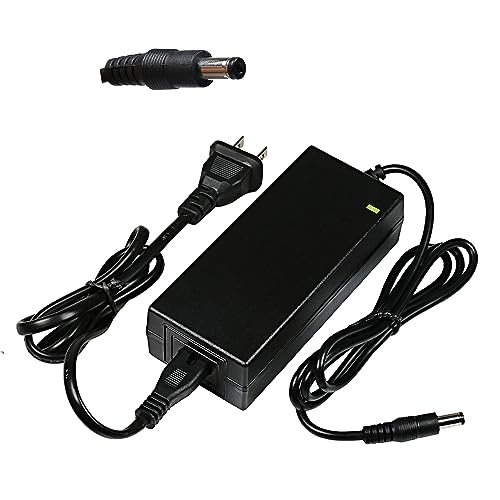
The Jucuwe DC adapter is a 42V 2A universal charger intended for 36V electric bike lithium packs. It features a 5.5×2.1/2.5mm plug diameter and 100-240V input. The product notes a two-color indicator—red during charging and green when full—helping users monitor progress. It is suitable for riders with compatible 36V systems and seeks to provide a flexible option when standard chargers are not available. Always verify the battery’s voltage and connector size before use to prevent compatibility issues.
54.6V 2A Fast Charger for 48V Ebike Batteries (Alternative Model)

This charger is another 54.6V 2A option designed for 48V lithium battery packs. It reiterates universal 7-connector compatibility and emphasizes safety features such as over-voltage and over-temperature protection, along with a fire-resistant enclosure. It is presented as a reliable choice for riders who need a robust, scalable charging solution for multiple 48V ebike batteries or ebikes from different brands.
Buying Guide: Key Purchase Considerations For Electric Bike Chargers
Choosing the right charger depends on battery chemistry, voltage, and connector compatibility. A few critical considerations help ensure safe, efficient charging and battery longevity.
- Voltage and amperage: Match the charger output to your battery’s nominal voltage (commonly 48V for many ebikes) and recommended charging current. Higher amperage can shorten charge time but must align with the battery’s rated charging rate.
- Connector compatibility: Check plug size and pattern (5.5×2.1mm, 2.1mm, 2.5mm, XLR variants) and number of available connectors. Multipro connector options reduce the need for adapters and support multiple bikes.
- Safety features: Look for overvoltage, overcurrent, short-circuit, and temperature protection. UL or equivalent certification signals adherence to safety standards.
- Battery type: Ensure the charger is designed for lithium-based packs (Li-ion/Li-polymer) and not for lead-acid batteries unless explicitly stated.
- Portability and build: Consider a compact, flame-retardant case and durable connectors for travel or storage. Detachable racks and integrated cable management can improve usability.
- Firmware and charging profile: Some chargers employ CC-CV charging with smart cutoffs to extend battery life. Avoid chargers that permanently bypass protective features.
- Compatibility across bikes: If you own multiple ebikes, a charger with several connectors or universal compatibility reduces the need for multiple units.
- Maintenance and warranties: Review warranty terms and any required calibration or service intervals. Proper storage and ventilation reduce overheating risk.
For riders frequently switching between bikes or traveling, selecting a charger with a broad connector ecosystem, certified safety, and clear indicators helps maintain battery health while supporting convenient charging schedules. Always consult your battery manufacturer’s charging guidelines before using third-party chargers to prevent voiding warranties or compromising safety.