Snowy trails and icy roads demand machines built to grip and glide, not simply roll. This guide surveys five high-powered fat-tire electric bikes designed to perform in snow, slush, and cold conditions, helping American riders choose a capable winter-forward e-bike. From powerful dual-motor setups to long-range batteries and robust suspension, these models prioritize traction, safety, and reliability on snowy terrain.
| Product | Brand | Key Strength | Approximate Range (in ideal conditions) |
|---|---|---|---|
| Ridstar Q20 Electric Bike | Ridstar | High power, long range, all-terrain | Up to 75 miles with pedal assist |
| XVYOOYVX 6000W Dual Motors Bike | XVYOOYVX | Massive power, 24″ fat tires | 35-105 miles depending on mode |
| ZHXEBGY 6000W Dual Motor | ZHXEBGY | UL-certified battery, long range | Up to 100 miles with pedal assist |
| KVGOOGKV 8000W Peak Dual Motor | KVGOOGKV | Extreme torque, full suspension | 45-105 miles depending on mode |
| CTVVXXC 6000W Peak Dual Motor | CTVVXXC | High torque, 24″ fat tires | Up to 100 miles with assists |
Choosing an e-bike for snow involves considering power, range, traction, and weather-rated components. The models below have been selected for their ability to handle snow and slush while delivering a stable, controllable ride. Each section below highlights a different bike’s strengths, practical features, and what to expect in winter conditions.
Ridstar Q20 Electric Bike For Snow
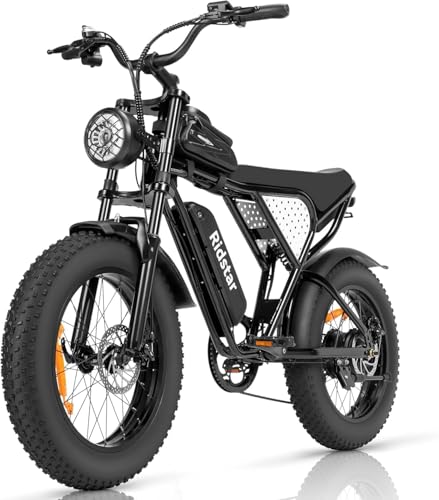
The Ridstar Q20 targets riders seeking an all-terrain electric motorcycle feel with a fat-tire setup and a long-range bias. Its 1500W brushless hub motor supports climbing gradients up to 30 degrees, while a 7-speed gearing system accommodates varied snow conditions. The detachable battery and UL-certified components help ensure a reliable cold-weather ride, with a claimed 75 miles in pedal-assist mode. A night-ready headlight adds visibility for early morning or late-evening rides on slick surfaces. The bike emphasizes a distinctive design and safety-minded features for winter use.
Key considerations for snow riding include motor torque, braking performance, and weather seals. This model’s hub motor design delivers strong low-end torque, aiding traction on packed snow. The 15.6Ah upgraded battery provides manageable charging times, and the IP54 rating helps protect against moisture and dust. Riders should note that heavy snow, ice, or steep grades may influence range and acceleration, making pedal assist a practical option in challenging conditions.
XVYOOYVX 6000W Peak Dual Motor E-Bike

This model packs a high-powered dual-motor setup with a peak output of 6000W, delivering rapid acceleration and strong hill-climbing ability. Its 24″ x 4.0 fat tires provide traction on snow and soft surfaces, while a substantial 1856Wh battery supports extended range. With a range estimate of 35-105 miles based on riding mode and terrain, this bike aims to balance performance and endurance for winter commutes or adventurous snow routes. The full-suspension chassis helps cushion impacts from uneven winter trails, while hydraulic components contribute to stable braking in slippery conditions.
When evaluating for snow riding, consider the trade-off between weight and maneuverability. A high-torque dual-motor system can overtax tires on very icy surfaces if rider technique isn’t adjusted. The bike’s safety features and weather-sealed battery charging are important for winter storage and outdoor use. If you ride in varying snow depths or plowing conditions, the suspension and weight distribution will influence comfort and control during long sessions.
ZHXEBGY 6000W Peak Dual Motor E-Bike

The ZHXEBGY option emphasizes a long-range design with a 52V 34Ah (1768Wh) battery and UL certifications, supporting up to 100 miles of range with pedal assist. Its 6000W dual motors deliver solid torque for snow environments, and the bike includes protective features like a real-time battery gauge and six-to-ten hour charging. Dual hydraulic disc brakes and full suspension help maintain control on uneven terrains and winter roads, reducing perceived bumpiness on snow-packed trails.
From a winter rider’s perspective, battery management in cold conditions is crucial. This model’s removable battery and thermal management help maintain performance, while the robust suspension and brake setup support safety on slick surfaces. Riders should plan charging opportunities in cooler environments and consider a battery warmer if riding in sub-freezing temperatures for extended periods.
KVGOOGKV 8000W Peak Dual Motor Ebike

The KVGOOGKV model stands out with an 8000W peak dual-motor system and full suspension, delivering blistering acceleration and the ability to tackle steep 45° inclines. Its 1856Wh battery offers a broad range estimate of 45-105 miles, depending on mode and terrain. The bike’s 24×4.0 fat tires provide confidence in snow,砂 ice, and mixed winter surfaces, while the intelligent BMS helps manage charging safety across conditions. This option targets riders seeking extreme performance for snow riding or off-road winter adventures.
Riders should weigh the benefits of extreme power against potential handling challenges on icy surfaces. Practically, this e-bike is well-suited for seasoned riders who encounter varied winter terrains and require rapid response and robust stability. Hot-swappable batteries and advanced charging schemes can reduce downtime between sessions, preserving the momentum needed for long winter explorations.
CTVVXXC 6000W Peak Dual Motor Snow E-Bike
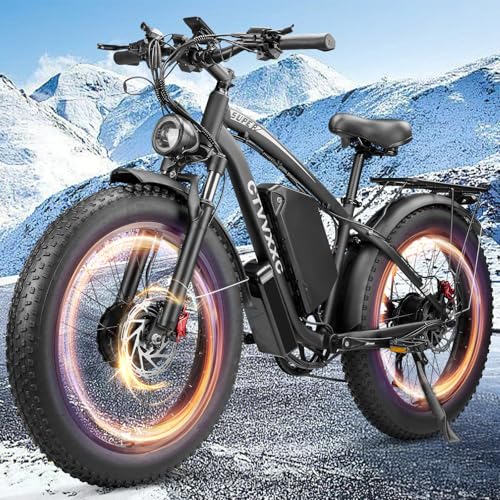
The CTVVXXC model emphasizes dual 3000W peak motors and a high-torque setup aimed at snow and off-road riding. A 52V 34Ah battery supports up to 100 miles with pedal assist, while 24×4.0 fat tires improve traction in snow and rough terrain. The bike’s dual suspension and hydraulic brakes provide braking confidence and comfort on uneven winter surfaces, enabling riders to handle descending slopes and icy descents with more control.
In winter environments, throttle behavior and torque delivery can dramatically influence stability. The CTVVXXC’s torque-focused design helps with steep climbs but requires careful throttle modulation on icy patches. Its weather-ready battery and suspension configuration align with extended winter sessions, making it a viable option for both daily commutes in snow and weekend mountain runs.
Buying Guide: Key Purchase Considerations For Snow E-Bikes
- Power and torque: Snow riding benefits from strong torque and reliable acceleration. Dual-motor systems deliver higher torque, but riders should pair power with appropriate tires and confidence in braking.
- Traction: Fat tires (around 4 inches wide or more) improve flotation on snow and ice. Tread patterns and tire compounds affect grip in cold conditions; check tire specs for snow performance.
- Range and battery: Cold weather reduces range. Look for larger-capacity batteries and removable designs that facilitate charging in warmer environments. Consider thermal management features for consistent performance.
- Suspension and braking: Full or front-rear suspension helps absorb bumps and frost heave. Hydraulic disc brakes provide strong, predictable stopping power on slick surfaces.
- Weather sealing and durability: IP ratings (like IP54/IP65) indicate weather resistance. UL certifications for batteries and components offer additional reliability for winter use.
- Charging and storage: Check charging times, supported charging formats, and whether the battery is easily removable. Winter storage may require shelter from extreme cold.
- Weight and maneuverability: Heavier e-bikes can be harder to handle on icy terrain. Ensure you’re comfortable with the bike’s weight and balance in winter conditions.
- Riding technique: Smooth throttle control and deliberate braking are essential on snow and ice to avoid loss of traction.
- Riding environment: Snow depth, consistency, and whether you’re on packed trails or soft powder affect how you use power and traction.
- Maintenance: Cold weather can impact chain lubrication, brake performance, and battery life. Regular inspection helps maintain safety and performance.
Across these options, riders gain access to powerful motors, extended ranges, and capable suspensions that translate to better winter performance. Each bike targets different priorities—from extreme speed to balanced endurance—allowing buyers to align a choice with their snow-riding goals, local conditions, and riding style.