Choosing the right disc brakes for mountain biking hinges on braking power, consistency, and ease of maintenance. The following selections focus on hydraulic and mechanical systems commonly used on mountain bikes, including front/rear compatibility, rotor sizes, and pad materials. Each option is suitable for trail riding, all-mountain adventures, and everyday rides, with emphasis on reliable performance across varied weather and terrain.
Summary of chosen products:
| Product | Type | Rotor Size | Notable Feature |
|---|---|---|---|
| TOBWOLF 1 Pair MTB Disc Brake Set | Hydraulic | 160 mm | Ceramic pads and aluminum calipers |
| TOBWOLF Upgrade Four-Piston MTB Disc Brake Set | Hydraulic | 160 mm | Four-piston, enhanced heat management |
| Fat-Cattie Bike Disc Brake Kit | Mechanical | 160 mm | Complete kit with calipers, rotors, levers |
| RUJOI Bike Disc Brake Kit | Mechanical | 160 mm | Full aluminum calipers and tool-free pad adjuster |
| Zmgdrm MT200 MTB Hydraulic Disc Brakes Set | Hydraulic | Front 800 mm / Rear 1550 mm lines | Dual-piston, strong stopping power |
TOBWOLF 1 Pair MTB Disc Brake Set

Type: Hydraulic disc brake kit designed for Mountain Bikes and E-Bikes, includes 160 mm rotors and aluminum oil-pressure calipers. The system follows a Left Front / Right Rear operation convention, but configurations can be swapped to match rider preference. Upgraded ceramic brake pads aim to reduce rotor wear and improve heat resistance. Installation guidance emphasizes rotor alignment, proper bleed to maintain performance, and clearance adjustments for smooth braking. The kit is constructed from high-grade aluminum alloy to minimize squeaks and maintain performance in variable weather.
Fat-Cattie Bike Disc Brake Kit

Type: Mechanical disc brake system with two 160 mm rotors, front and rear calipers, and a complete set of levers and fixings. It ships with XTR pads and reinforced base design for strength and durability. The kit emphasizes quiet braking and high-temperature resistance, suitable for riders who prefer simple maintenance without bleeding or hydraulic systems. It supports common rotor sizes and includes mounting hardware to fit a wide range of 99% of MTB bikes.
TOBWOLF 1 Pair MTB Front & Rear Cable Disc Brake
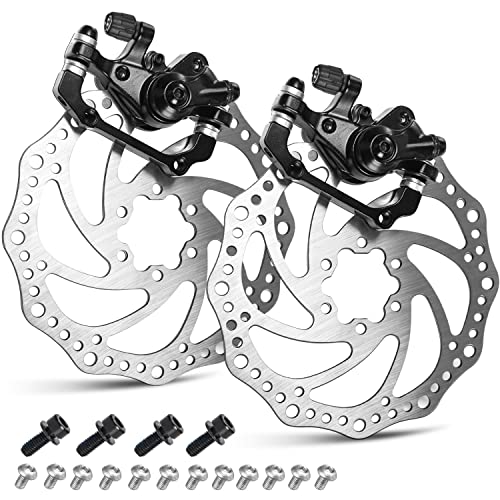
Type: Mechanical disc brake system with 160 mm rotors, included cables, and 6-bolt rotors. It provides a front/rear pairing with 74 mm front and 51 mm rear mounting options and titanium bolts for reduced weight. The system is designed for easy serviceability and broad compatibility with mountain, road, folding, and BMX bikes, prioritizing straightforward installation and consistent stopping power across typical trail conditions.
TOBWOLF Upgrade Four-Piston MTB Disc Brake Set

Type: Hydraulic four-piston disc brake set with 160 mm rotors and ceramic pads. The design uses a bilateral piston arrangement to prevent rotor warping and provides strong, linear braking. The system mentions a left front/right rear control convention but notes that cables can be swapped to fit rider preference. It emphasizes heat management and a consistent braking feel during long descents, making it suitable for aggressive trail riding and enduro-style uses.
RUJOI Bike Disc Brake Kit
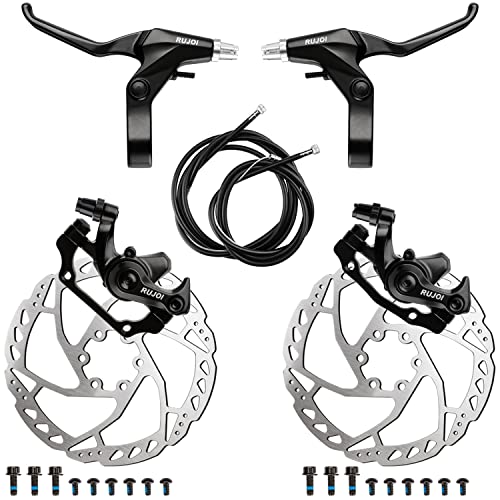
Type: Complete mechanical disc brake kit featuring front and rear aluminum calipers, 160 mm rotors, and full lever and hardware set. The kit includes tool-free pad adjusters for quick maintenance and lever compatibility with standard 22 mm handlebars. It is designed for easy assembly and immediate usability, offering a practical upgrade path for riders seeking reliable mechanical braking without hydraulic components.
Zmgdrm MT200 MTB Hydraulic Disc Brakes Set

Type: Hydraulic dual-piston disc brakes with 800 mm front line and 1550 mm rear line lengths specified for MT200 setups. The set emphasizes strong stopping power suitable for mountain bikes, electric bikes, fat bikes, and foldables. It highlights compatibility with a range of frame configurations and stresses the benefit of hydraulic leverage for easier stopping with reduced manual effort, making it a solid option for riders seeking high braking confidence on varied terrains.
Buying Guide
- Brake Type: Hydraulic systems offer stronger, smoother stopping power and self-adjusting pad wear, but require occasional bleeding and maintenance. Mechanical systems are simpler and cheaper to repair, with easy installation and fewer maintenance steps, but may require more effort to achieve the same stopping power, especially on steep descents.
- Rotor Size and Compatibility: Common sizes are 160 mm for many mountain bikes. Check frame clearance, fork caliper compatibility, and rotor mounting standards (6-bolt vs centerlock) before purchasing.
- Caliper Design: Four-piston setups provide more clamping force and balanced braking across the rotor, beneficial on long descents. Two-piston calipers are lighter and adequate for general trail riding, but may heat quicker under heavy use.
- Pads and Material: Ceramic or semi-metal pads resist heat and wear differently. Ceramic pads often run cooler and quieter but may be pricier; ensure pad availability for your chosen brand and model.
- Maintenance and Bleeding: Hydraulic kits require occasional brake fluid maintenance and proper air removal. Mechanical kits are generally easier to adjust and service without tools beyond basic hardware.
- Compatibility: Ensure lever reach, lever pull, and handlebar diameter match your bike setup. Check mounting standards (post mount vs IS mount) and rotor compatibility with your wheels and hubs.
- Weight vs. Performance: Hydraulic systems tend to be heavier but deliver consistent braking across varied conditions; mechanical systems are lighter and simpler but may lag in extreme heat or prolonged descents.
- Installation Quality: Proper rotor alignment and caliper positioning are critical for optimal braking. Consider professional installation if unsure.