Finding the right rear tire for a dirt bike can dramatically affect traction, handling, and durability on varied terrains. This guide highlights five top rear-tire options that balance grip, wear resistance, and compatibility with popular dirt-bike setups. Use the linked product sections to compare tread patterns, sizes, and intended terrain to pick the best match for your riding style and local trails.
| Product | Tire Size (Rear) | ||
|---|---|---|---|
| Tusk EMEX T-35 Soft/Intermediate Set (Front 80/100×21 & Rear 120/80×19) | 120/80×19 | Soft to intermediate | Aggressive tread; durable |
| 80/100-19 Rear Tire for Sur Ron, Segway, Talaria | 80/100-19 | Electric dirt bikes; mixed terrain | Higher traction; verify rim size |
| Tusk EMEX T-35 Soft/Intermediate Set (Front 60/100×14 & Rear 80/100×12) | 80/100×12 | Trail riding; smaller bikes | Compact rear for lighter bikes |
| Tusk EMEX T-35 Front/Rear Set (Front 80/100×21 & Rear 110/100×18) | 110/100×18 | Soft to intermediate; trail | Balanced front/rear for off-road |
| Pirelli Scorpion MX Extra X Front/Rear (Two Pack) | Rear 110/90-19 | Mid-soft to mid-hard | Carbon-black knobs; durable carcass |
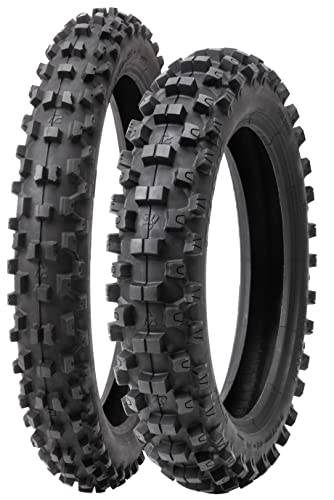
Tusk EMEX T-35 Soft/Intermediate Rear Tire Set – 120/80×19
The Tusk EMEX T-35 rear tire is designed for soft to intermediate terrain, pairing with a matching front tire to deliver cohesive handling. Its aggressive tread provides stable traction on loose dirt, sand, loam, and hard-packed trails. A durable rubber compound helps resist wear during long off-road sessions, making it suitable for riders who log frequent trail miles. This tire set is ideal for riders seeking reliable grip and predictable steering without frequent replacements.
80/100-19 Rear Tire for Sur Ron, Segway, Talaria – Arrow of Traction

This rear tire is tailored for electric dirt bikes like Sur Ron, Segway, and Talaria. It features a tough sidewall to allow lower air pressures for enhanced off-road grip and to absorb uneven terrain. Riders should consider rim compatibility and the potential need for a rim lock to prevent tire slippage on the rim. Note that some stock bikes may experience changes in low-end power due to the tire’s diameter; matching gearing may be necessary for optimized performance.
Tusk EMEX T-35 Soft/Intermediate Rear Tire Set – 80/100×21 & 110/100×18
This EMEX T-35 rear tire is paired with an 80/100×21 front for balanced handling on soft to intermediate terrain. The larger rear tire size (110/100×18) enhances footprint and traction on softer surfaces while maintaining lateral stability during cornering. The deep tread pattern delivers reliable bite on loose surfaces and hard-packed trails alike, while the durable rubber compound supports extended off-road use and repeated throttle inputs in rugged environments.
Pirelli Scorpion MX Extra X Rear 110/90-19 (Two Pack)

Pirelli’s Scorpion MX Extra X rear tire combines a multi-ply carcass with puncture resistance and flexible construction to absorb impacts from jumps and uneven terrain. The 110/90-19 rear size is versatile for mid-soft to mid-hard courses, with a focus on reliability and endurance. The two-pack option offers symmetry when replacing both tires, ensuring uniform performance across the axle. The reinforced knobs support consistent braking and acceleration in varied conditions.
Buying Guide
When choosing a rear dirt bike tire, several factors influence performance and durability. Terrain and riding style are primary: soft and loamy trails favor deeper, spaced knobs for grip, while hard-packed or mid-hard surfaces require stiffer blocks and reinforced side knobs for stability. Tire size should match the wheel and bike weight; mismatches can reduce grip or cause clearance issues. Tube-type versus tubeless setups affect installation and puncture resistance; tube-type tires can be more forgiving on rough trails but may be heavier. Consider rim width, air-pressure range, and the potential need for rim locks on bikes with aggressive traction. Finally, assess tread pattern: deeper, aggressive lugs improve off-road bite, while more streamlined patterns reduce rolling resistance on firmer surfaces.
- Terrain compatibility: match tread depth and pattern to your typical riding ground.
- Rim and wheel compatibility: confirm rear tire size and model fit for your bike.
- Durability vs. grip: balance a robust rubber compound with an effective tread design.
- Maintenance: ensure you have correct tools and know how to install tube-type tires and sealants if needed.
- Cost vs. replacement intervals: longer wear life can reduce total ownership costs.