Protecting cyclists with reliable video evidence is increasingly important for safety and accountability on busy roads. The following hand-picked dash cams are designed for bikes and motorcycles, offering features like wide angles, night vision, water resistance, and easy mounting. Each option provides clear front-or-rear coverage, with some models combining both for complete ride documentation. Below you’ll find five strong choices, spanning dual-channel systems, bike-specific designs, and app-controlled devices to fit different riding styles and environments.
Summary of selected products:
| Product | Brand | Key Benefit | Resolution | Special Feature |
|---|---|---|---|---|
| TERUNSOUl 4K+4K Dash Cam Front and Rear | TERUNSOUl | Dual-channel 4K recording | Front 4K, Rear 4K | Built-in GPS, 128GB included, 512GB max |
| LKT Bike Camera with Tail Light | LKT | Headlight and rear camera in one | 2K HDR | IP66, 7-hour battery, app control |
| ROVE R2-4K DUAL Dash Cam | ROVE | High-quality dual-channel | Front 4K, Rear 1080p | 5G WiFi, STARVIS sensor |
| REDTIGER Dash Cam Front Rear | REDTIGER | Dual-channel 4K/2.5K | Front 4K, Rear 1080p | Wi‑Fi, GPS, night vision |
| VSYSTO WiFi Motorcycle Dash Cam | VSYSTO | Dual 1080p with night vision | 1080p + 1080p | IP67 waterproof, app WiFi |
TERUNSOUl 4K+4K Dash Cam Front and Rear
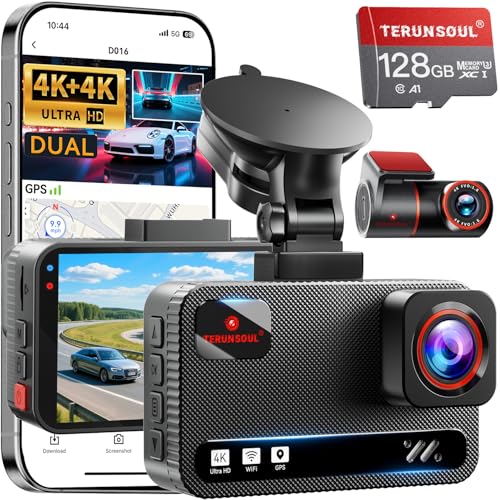
The Terunsoul dual-channel dash cam records in 3840×2160P for both front and rear cameras, providing ultra-high-definition evidence for traffic incidents on crowded streets and highways. The front lens offers a 170° ultra-wide angle to capture more of the roadway, including multiple adjacent lanes. A pre-installed 128GB memory card supports loop recording, while G-sensor locking protects crucial footage from overwriting. The system supports microSD cards up to 512GB. Night performance benefits from an F1.5 front and F1.8 rear aperture, coupled with enhanced WDR for better low-light detail.
LKT Bike Camera with Tail Light

The LKT bike camera combines a 2K HDR dash cam with a rear taillight, delivering dual-channel recording that enhances nighttime visibility. The taillight offers six flash modes to boost conspicuity while riding. A 3350mAh battery provides up to seven hours of continuous recording, making it suitable for long rides. The camera includes a Sony Starlight sensor with HDR for improved low-light footage, and the device is rated IP66 for weather resistance, helping it withstand rain, dust, and minor shocks.
ROVE R2-4K DUAL Dash Cam

ROVE’s R2-4K DUAL dash cam records front 4K at 30fps and rear 1080p at 30fps, delivering detailed footage with a wide 150° front view and 140° rear view. It employs a Sony STARVIS 2 sensor for strong image quality and enhanced night performance via an F1.5 front and F1.8 rear aperture. The device supports ultra-fast 5G WiFi, with real-time app access and OTA firmware updates through the ROVE app, enabling quick sharing and review of clips.
REDTIGER Dash Cam Front Rear
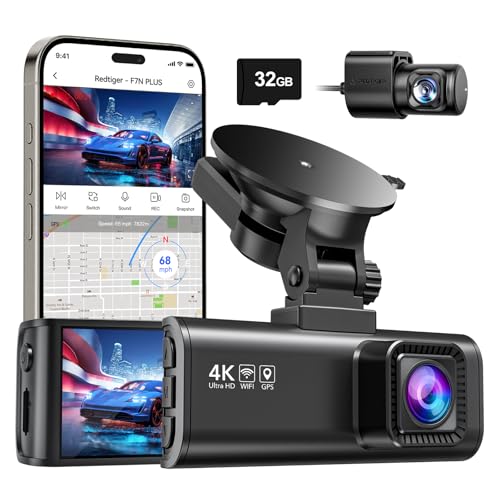
RedTiger’s dual-camera system records Ultra HD 4K front and 1080p rear footage, designed to capture key details such as road signs and license plates. A large F1.5 aperture, six-layer lens, and HDR/WDR processing help maintain image clarity under low light. Built-in Wi‑Fi enables convenient control via the RedTiger Cam app, including video viewing, playback, and easy sharing. GPS support tracks location and speed data for added context on incidents.
VSYSTO WiFi Motorcycle Dash Cam
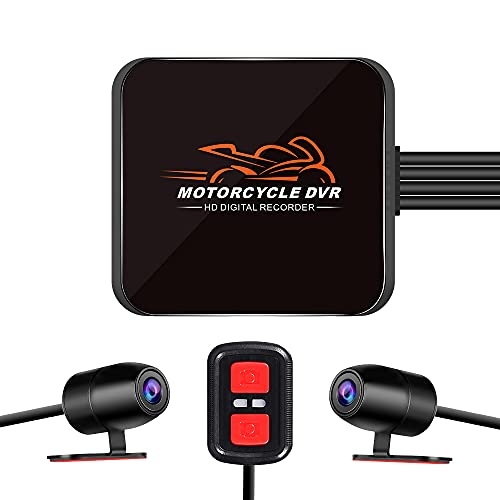
VSYSTO offers a dual 1080p motorcycle dash cam with a 130° front view and night-vision capability. The cameras are IP67 waterproof for all-weather use and come with a dedicated app and WiFi to transfer video to a mobile device. The system provides loop recording and ease of use for riders seeking straightforward, reliable evidence capture without complex setup.
Buying Guide
Key purchase considerations for a bike dash cam include: video quality and coverage, mounting compatibility, and reliability in varied lighting and weather conditions. Dual-channel systems provide front-and-rear coverage, which is often essential for cycling incidents. Consider sensor quality (e.g., Sony STARVIS), aperture size (lower f-number = more light), and whether the camera supports high dynamic range (HDR) or WDR for challenging lighting. A built-in GPS adds location data and speed, valuable for incident context. Weather resistance (IP ratings) and battery life are critical for longer rides away from power sources. Storage capacity, loop recording, and emergency locking ensure important footage isn’t overwritten. App access, sharing options, and OTA updates improve usability and future-proofing. Compare how each device handles night recording, peak brightness in sun glare, and the ease of mounting on handlebars, helmets, or seat posts. Lastly, evaluate whether you want a bike-specific taillight integrated option or a standalone dash cam to pair with your helmet or action camera setup.