For riders who want essential ride metrics without breaking the bank, affordable bike computers offer solid functionality like speed, distance, time, and backlight viewing. This guide highlights five budget-friendly options, comparing features such as wake-up behavior, GPS capabilities, backlighting, and weather resistance. Whether you’re a casual commuter or a weekend cyclist, these picks balance price and practicality to help you track performance without premium costs.
Summary of chosen products:
- SY Store Wireless Speedometer & Odometer: auto wake, backlight, waterproof
- Hilceriy Wired Trainer-Style Cycle Computer: multi-function, IPX6 rating, easy backlight
- CATEYE Velo 7 Wired Bike Computer: entry-level, auto-stop, reliable wired sensor
- CYCPLUS GPS Bike Computer: GPS tracking, automatic backlight, long battery
- Bikevee GPS Wireless Bike Computer: long battery life, auto start/stop, 2.4″ display
SY Store Wireless Speedometer And Odometer

The SY Store wireless cycle computer provides essential ride data with a compact, waterproof design. Features include auto wake-up from vibration, a bright LCD display, and an IPX-rated resilience suitable for light rain or splash exposure. It measures speed, distance, and riding time, making it a practical option for riders who want straightforward stats without extra bells and whistles.
Key attributes include: auto wake-up upon motion, day and night backlight that activates with button presses during late hours, and a lightweight, water-resistant build. The device emphasizes durability and simplicity—ideal for entry-level cyclists who need dependable metrics on a budget.
Hilceriy Bike Computer And Odometer

This wired device emphasizes multi-function tracking with speed averages, maximum speed, and distance, plus a new function for calories, temperature, and more. It features a robust backlight that can be manually toggled for visibility in tunnels or low-light conditions. The IPX6 rating suggests adequate protection against heavy rain, making it a sensible pick for riders who value reliability in varying weather without GPS features.
Benefits include a dependable wired sensor for accurate speed data and a backlight that enhances readability in dim environments. Its value lies in straightforward metrics and a durable form factor designed for daily commuting or training sessions on a budget.
CATEYE Wired Bike Computer – Entry Level

The CatEye Velo 7 offers essential cycling metrics with a dependable wired sensor. It displays current, maximum, and average speed, total distance, trip distance, elapsed time, and a clock. Its design focuses on reliability and ease of use for beginners, while the automatic stop feature ensures time and speed tracking pause appropriately when you stop, keeping data precise without manual resets.
As a starter-friendly option, it provides straightforward readouts and a simple setup that appeals to riders new to bike computers. The wired connection minimizes interference and delivers consistent performance for casual riders and those seeking a low-cost entry into cycling analytics.
CYCPLUS GPS Bike Computer
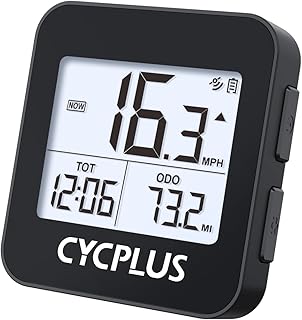
The CYCPLUS GPS bike computer combines GPS positioning with a user-friendly display and backlight. Its higher sensitivity GPS tracking provides route data, ride time, distance, altitude, and clock, along with a longer-term view of mileage. With IPX6 waterproofing and a robust 1200 mAh battery, it supports extended rides in various weather conditions and reduces the need for frequent recharging compared to some non-GPS models.
Considerations include GPS accuracy, screen readability with FSTN backlighting, and overall battery life. This option is well-suited for riders who want route mapping and more precise tracking without paying premium prices for high-end models.
Bike Speedometer GPS Wireless – Auto Start/Stop

This wireless GPS-based unit provides auto start/stop functions and auto backlight for quick visibility in varying light. Its 2.4″ LCD display shows essential metrics such as speed, trip time, and distance, while maintaining a clean handlebar setup with wireless operation. The device emphasizes long battery life and a broad feature set for riders who want GPS data without the bulk or complexity of premium models.
With 28 hours of battery life and 650 mAh-like power capacity described, it targets longer rides and daily training needs. Its combination of auto features and a bright display makes it a practical, budget-friendly pick for riders who want reliable data tracking without premium costs.
Buying Guide
- Power source and installation: Wired vs wireless models affect ease of installation and potential interference. Wired units may offer steadier data in some conditions, while wireless options reduce cable clutter but require battery management.
- Data and metrics: Decide which metrics matter most—current/speed, max speed, average speed, distance, ride time, altitude, or GPS route data. GPS-enabled units deliver route tracking and elevation but can drain the battery faster.
- Display and readability: Look for backlighting and screen size that suits your riding conditions (daylight vs night). Glare resistance and font size influence quick data reads during rides.
- Durability and weather resistance: IP ratings (such as IPX6) suggest dash compatibility with rain. Consider waterproofing and shock resistance for daily commuting or mixed terrain.
- Battery life: Long battery life benefits longer rides and less frequent charging. GPS devices typically consume more power; check real-world hours per charge.
- Ease of use: Auto start/stop, auto wake-up, and automatic backlight reduce manual interactions, which can improve ride experience and data accuracy.
- Budget vs features: Entry-level models provide core metrics at low costs, while GPS-enabled devices add route data and altitude. Determine your primary goals to pick the right balance.