Whether upgrading an aging frame or chasing lighter climbs, a carbon seatpost can reduce weight, improve ride quality, and boost overall efficiency. This guide profiles five top carbon seatposts that suit road, mountain, and hybrid setups, with practical factors to consider before purchasing. Each option emphasizes strength, lightness, and compatibility to help riders choose confidently.
Summary of chosen products:
- TPard Carbon Bike Seatpost — 27.2/31.6, 350mm, ultralight 220g, zero setback
- Litetop Carbon SeatPost — 27.2, 350mm, ~220g, zero setback
- HUALONG Carbon Fiber Seat Post — 31.6, 350mm, offset 20mm, ~184g
- HUALONG Carbon Fiber Seat Post — 27.2, 350mm, offset 20mm, ~170g
- RXL SL MTB Seatpost — 31.6, 350/400mm, ~230g, 3K matte finish
TPard Carbon Bike Seatpost 27.2/31.6 Ultralight 350mm

Material and construction: Full 3K T800 carbon fiber, marketed as ultralight and rust-free. Size options include Φ27.2 × 350mm, with an approximate weight of 220g per post. Total length is 350mm, with a tube length of 325mm and a head length of 25mm. It supports up to 220lbs and features a 0mm setback, enabling straightforward placement on most frames. Installation guidance notes checking internal diameter or original seatpost specs to select the correct size.
Compatibility and performance considerations: The TPard post emphasizes lightness and stiffness typical of high-end carbon components. With zero setback, riders seeking a straightforward look and direct sit can benefit in feel and efficiency. Weight is a key selling point, though riders should confirm seatpost diameter matches their frame to avoid loosening or misalignment. The lack of setback might impact aggressive riding positions or aero-oriented fits, so riders should verify fit with their saddle position preferences.
Who should consider this model: Road riders and cyclists seeking a minimalistic, ultralight seatpost for performance-grade builds, as well as those upgrading from heavier aluminum posts to maximize climbing efficiency.
Litetop Carbon SeatPost 27.2 350mm
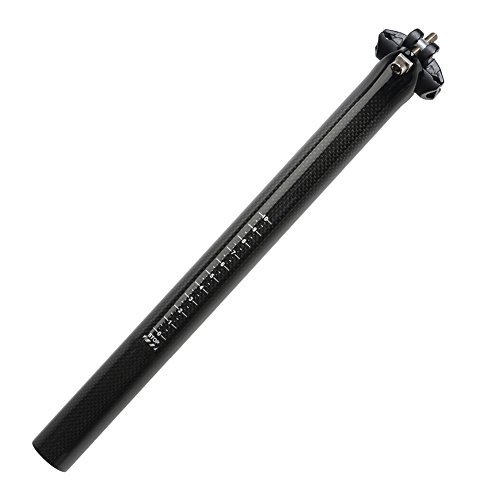
Material and construction: 3K carbon fiber design, noted for light weight and corrosion resistance. Size provided is 27.2 × 350mm, with an approximate weight of 220g per post. Total length 350mm, tube length 325mm, head length 25mm. Stated strength supports up to 580lbs with a 0mm setback. Installation guidance requires matching the seatpost diameter to the frame’s internal diameter.
Compatibility and performance considerations: The Litetop post aims to balance lightness with robust load handling. The 0mm setback suits riders who prefer a more neutral or forward saddle position. Potential considerations include ensuring precise diameter compatibility to avoid slippage and choosing the correct length to avoid excessive insertion depth or saddle tilt.
Who should consider this model: Riders seeking a reliable, lightweight option with straightforward sizing and a zero-setback geometry for consistent handling on climbs and flats alike.
HUAONG Carbon Fiber Seat Post 31.6mm, 20mm Offset

Material and construction: Carbon fiber construction emphasizing lightweight and high strength, with a stated load capacity not exceeding 100 kg. Size is 31.6mm with a 20mm backward offset, total length 350mm, and weight around 184g. The design focuses on shock absorption and a smoother ride across terrain, making it apt for road, mountain, and e-bike applications.
Compatibility and performance considerations: The offset improves riding posture and power transmission, which can enhance handling and reduce fatigue on longer rides. While the carbon fiber construction offers vibration damping benefits, riders should adhere to tightening torque guidance (5 Nm) to avoid over-stressing the post. Ensure saddle rail compatibility with a broad range of saddles.
Who should consider this model: Riders prioritizing comfort, posture, and vibration damping on mixed-terrain rides, including those upgrading to a 31.6mm post for improved stability.
HUAONG Carbon Fiber Seat Post 27.2 20mm Offset
Material and construction: Carbon fiber, lightweight and durable with high strength and fatigue resistance. Size is 27.2mm with a 20mm backward offset, 350mm length, and approximately 170g weight. It features a 20mm offset to adjust rider posture and assist in power transmission, with recommended tightening force of 5 Nm.
Compatibility and performance considerations: The 27.2mm diameter is common for many road frames, but verification is essential for correct frame compatibility. The offset aids in achieving a balanced saddle position for better handling on climbs and flat sections. Ensure you do not overtighten, as carbon posts can be less forgiving than metal counterparts.
Who should consider this model: Riders seeking a lighter 27.2mm post with offset to optimize posture and efficiency on daily commutes or recreational rides.
RXL SL MTB Seatpost 31.6 350/400mm

Material and construction: 3K matte finish carbon seatpost, with diameters including 31.6mm and lengths of 350 or 400mm. Weight approximately 230g, designed to be lightweight and corrosion-free, with a frost-finish and precise workmanship. The post is suitable for both road and mountain bikes, offering straightforward installation.
Compatibility and performance considerations: The RXL SL model emphasizes versatility across terrain types, making it a solid all-around option for mixed-use bikes. The 31.6mm diameter aligns with many modern frames, but confirmation of frame interior diameter remains essential. Consider length to ensure proper saddle clearance and cross-compatibility with saddle rails.
Who should consider this model: Riders wanting a durable, mid-range carbon seatpost that can handle diverse riding styles from road to light MTB duties, with a matte aesthetic.
Buying Guide: Key Purchase Considerations
Purpose and riding style: Determine whether you primarily ride on paved roads, engage in mixed-terrain adventures, or race. Carbon seatposts typically excel in weight reduction and vibration damping, but the geometry (setback and offset) should align with your riding position and saddle fore-aft requirements.
Diameter and length: Check your frame’s internal diameter (common sizes include 27.2mm, 30.9mm, 31.6mm, etc.) and select a length that allows full insertion without compromising saddle height or stability. A longer post can raise seat height but may increase flex under load; ensure the clamp area is compatible with your saddle rails.
Setback and offset: A zero setback seatpost provides a more forward saddle position, while 20mm offsets can improve rider posture and power transfer. Consider your riding posture, pedaling efficiency, and back comfort when choosing offset.
Weight and strength: Carbon fiber posts offer superior weight savings, but ensure the post’s maximum load rating matches your riding weight and style. Ultra-light options may trade some stiffness, so assess ride feel and long-term durability for your terrain.
Durability and maintenance: Carbon posts resist rust and corrosion, but care is needed to avoid over-tightening, impact damage, or creasing the carbon layers. Regularly inspect for cracks or deformation, especially after crashes or heavy training blocks.
Compatibility with saddles: Ensure saddle rails are compatible with the clamp system on the post. Some posts require specific clamps; check compatibility with your saddle’s rail type (e.g., round rails) and the post’s clamp width.
Installation and maintenance tips: Use the correct torque specification for carbon components (often around 5 Nm unless specified otherwise). Clean the seatpost and frame seat tube surfaces before insertion, apply a small amount of carbon-safe lubricant or none if the frame is carbon, and ensure the post is fully inserted and aligned before tightening.
Value and warranty considerations: Higher-end carbon posts can offer better stiffness-to-weight ratios and integration with frames, but assess customer reviews, manufacturer warranty, and compatibility with your frame’s geometry to maximize return on investment.
Compliance and safety: Avoid over-tightening and be mindful of clearance with seat stays, especially on compact frames. Regular checks after rides help detect issues early, maintaining safety and performance.