For riders seeking lightweight performance, stiffness, and precise handling, carbon fiber hardtail mountain bikes are often the top choice. This guide highlights five standout models with 29ers and cross-country geometry, featuring high-modulus carbon frames, reliable Shimano drivetrains, and capable suspension. Explore each option’s design, braking, and travel specs to compare fit for technical climbs, fast descents, and long days on the trail.
| Product | Brand | Key Features |
|---|---|---|
| TRIFOX Carbon Fiber Mountain Bike, 29er | TRIFOX | T800 carbon frame, 130mm front travel, Shimano M6100 Deore 12-speed |
| TRIFOX Carbon Fiber Mountain Bike, 29er (2) | TRIFOX | T800 carbon frame, 130mm front travel, Shimano M6100 Deore 12-speed |
| Canyon Exceed CF 5 | Canyon | Lightweight carbon frame, RockShox Recon RL 100mm, fast XC geometry |
| DHNCBGFZ Carbon Fiber Mountain Bike Frame | DHNCBGFZ | Full carbon frame, 27.5/29er options, internal cable routing, disc brake ready |
| SAVADECK Deck 6.1 Carbon Frame | SAVADECK | Carbon frame, 100mm fork travel, Deore 12-speed gearing |
TRIFOX Carbon Fiber Mountain Bike, 29er (1)
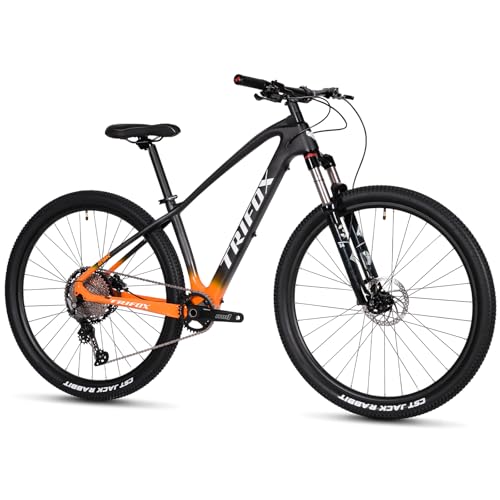
The TRIFOX 29er combines a T800 carbon fiber frame with a 130mm hydraulic front fork, delivering a blend of stiffness and controlled travel for aggressive XC riding. Its fully internal cable routing reduces drag and improves airflow around the frame, while the tapered head tube enhances torsional rigidity for precise steering under load. The Shimano M6100 Deore 12-speed groupset ensures reliable shifts across varied terrain, enabling confident climbs and smooth descents.
Design and ride characteristics
Weight is a key factor in this model, with a total bike weight around 26 pounds, balancing rigidity with manageable mass for climbing. The 130mm front fork travel helps absorb rough sections without sacrificing efficiency, and the internal cable routing maintains a clean look and reduces potential snag points on technical trails. The wheel size and geometry target all-day comfort on cross-country courses while still delivering sprint-ready performance.
Pros and considerations
- Pro: Lightweight carbon frame and high-stiffness chassis support powerful accelerations.
- Con: Full setup and fit tuning may be needed for riders under 5’8″ tall or over 6’2″.
- Pro: Reliable Deore 12-speed drivetrain for versatile gearing options.
TRIFOX Carbon Fiber Mountain Bike, 29er (2)

This second TRIFOX model mirrors the first in frame and suspension philosophy, offering a T800 carbon fiber frame and the same 130mm travel fork for XC and light trail work. The Shimano M6100 Deore 12-speed groupset provides consistent, wide-range gear shifts, supporting aggressive pedaling in varied conditions. Its design emphasizes torsional rigidity and clean airflow, contributing to stable handling across fast sections and technical climbs alike.
Key takeaways
- Pro: Strong value with a well-rounded build for its class.
- Pro: Internal routing enhances reliability and aesthetics.
- Consideration: Seat and handlebar setup may influence overall comfort on longer rides.
Canyon Exceed CF 5, Real Raw

Engineered for speed, the Exceed CF 5 emphasizes a lightweight carbon frame with optimized compliance for long rides and crisp power transfer. The frame is designed to be stiff where it matters most, translating rider input into quick acceleration and efficient pedaling on XC courses. Paired with RockShox Recon RL Remote 100mm fork, the Exceed CF 5 delivers controlled damping and predictable handling through varied terrain.
Performance attributes
- Pro: Premium carbon frame for high stiffness-to-weight ratio.
- Con: XC-focused suspension may require upgrade for rugged trail riders seeking aggressive travel.
- Pro: Remote fork functionality adds convenient on-trail adjustments.
DHNCBGFZ Carbon Fiber Mountain Bike Frame

This DHNCBGFZ frame offers a full carbon construction suitable for 27.5er or 29er wheels, with a choice of 15″, 17″, or 19″ sizes. The design emphasizes disc brake routing and internal cabling for a clean, efficient ride. The frame supports Thru Axle setups and is compatible with 125kg load capacity, aiming at riders who want a solid high-performance base for a custom build or a ready-to-ride complete bike.
Considerations for frame buyers
- Pro: Internal routing reduces drag and protects cables from trail debris.
- Con: As a frame-only option, building costs can be higher when adding components.
- Pro: Multiple wheel sizing options enable adaptability across terrains.
SAVADECK Deck 6.1 Carbon Frame

The SAVADECK Deck 6.1 frame features a carbon build engineered for XC performance with a 100mm fork travel profile, contributing to responsive handling and efficient power transfer on rolling XC courses. The frame is designed to accommodate a Deore M6100 12-speed drivetrain, providing reliable shifts and a broad gearing range for climbing and sprinting. Its decked-out carbon construction aims to balance light weight with durability on mixed terrains.
Frame-focused insights
- Pro: Carbon frame keeps weight low while maintaining stiffness for quick accelerations.
- Con: 100mm travel may be limiting on rougher or more technical trails.
- Pro: Internal routing and disc brake compatibility enhance practicality and stopping power.
Buying Guide: Key Purchase Considerations For Carbon Hardtail Bikes
Audience needs vary, but several core factors consistently influence a smart carbon hardtail purchase. Frame material and construction determine weight, stiffness, and ride feel, while suspension travel and geometry affect handling on climbs, descents, and technical sections.
- Intended riding style: Cross-country racers benefit from lightweight frames and 100–120mm front travel, while trail riders may prefer larger travel for rougher terrain.
- Frame sizing and fit: Carbon frames require precise sizing, so check reach, stack, and seat tube length in addition to overall bike dimensions.
- Drivetrain choices: 12-speed groupsets like Shimano Deore M6100 deliver broad gearing ranges; ensure compatibility with your preferred wheel size and crankset.
- Braking system: Hydraulic discs offer strong, progressive stopping power in varied conditions; verify rotor size and brake compatibility with frame routing.
- Wheel compatibility: Most frames support 27.5″ and 29″ wheels; confirm compatibility with current or intended wheelsets, including thru-axle standards.
- Internal cable routing: Reduces maintenance and improves aerodynamics but may increase servicing difficulty for beginners.
- Future upgrades: Consider whether the frame allows easy upgrades to suspension, cockpit components, or drivetrain as riding needs evolve.
- Budget and build kit: Carbon frames are premium; plan for a complete build cost that balances frame quality with reliable components.
When evaluating options, compare the overall package—frame stiffness, weight, suspension adequacy for your terrain, and drivetrain reliability. For riders prioritizing sprint performance and climb efficiency, a lighter carbon frame with a well-matched 12-speed groupset and 100–120mm front travel generally provides a balanced XC experience. For riders who encounter mixed terrain, a frame offering sound stiffness with versatile geometry and dependable components remains a prudent choice.