Finding the right cadence sensor helps cyclists track pedal revolutions per minute, speed, and distance with precision. The right device integrates smoothly with Garmin, Wahoo, Zwift, Peloton, and other bike computers or apps. Below are five of the best cadence and speed sensor bundles and standalone sensors to fit a variety of bikes and training setups.
| Product | Brand | Type | Connectivity |
|---|---|---|---|
| Garmin Speed Sensor 2 & Cadence Sensor 2 Bundle | Garmin | Sensor Bundle | ANT+, Bluetooth |
| Garmin Wireless Speed Sensor 2 & Cadence Sensor 2 Bundle | Garmin | Sensor Bundle | ANT+, Bluetooth |
| Wahoo RPM Cycling Cadence Sensor | Wahoo Fitness | Cadence Sensor | Bluetooth, ANT+ |
| Garmin Cadence Sensor 2 | Garmin | Cadence Sensor | ANT+, Bluetooth |
| COOSPO Bicycle Cadence & Speed Sensor | CooSpo | Dual Sensor Kit | Bluetooth, ANT+ |
Introduction: This guide focuses on reliable cadence and speed sensing solutions for American riders. Each option emphasizes easy installation, wide compatibility with popular training apps, and robust wireless connectivity. Read on to compare features, installation, and compatibility to pick the best cadence sensor for your bike and training routine.
Garmin Speed Sensor 2 And Cadence Sensor 2 Bundle

The Garmin Speed Sensor 2 attaches to the wheel hub and self-calibrates with compatible Garmin devices for accurate speed and distance readings, even without a dedicated head unit. The Cadence Sensor 2 fastens to any crank arm to measure pedal strokes per minute, supporting stronger training insights. The bundle design simplifies moving sensors between bikes, with no magnets required. Ideal for Edge cycling computers and Garmin Connect users seeking integrated data in one ecosystem.
Garmin Wireless Speed Sensor 2 & Cadence Sensor 2 Bundle

This bundle includes Garmin’s Speed Sensor 2 and Cadence Sensor 2 with wireless operation and automatic calibration that works with ANT+ and Bluetooth low energy. The speed sensor attaches to the hub and delivers accurate speed data to Garmin devices or compatible apps, even when a separate head unit is not used. The cadence sensor clips onto the crank arm and provides reliable RPM data for training and racing analytics. It supports live data streaming to compatible apps and displays for on-the-fly adjustments.
Magene S3+ Outdoor/Indoor speed/cadence Sensor
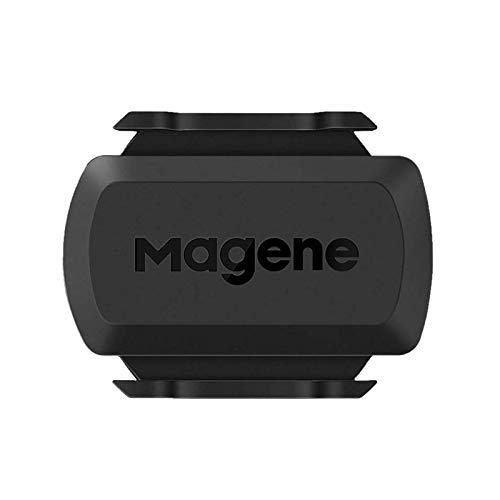
The Magene S3+ offers flexible use for both outdoor and indoor training with Bluetooth and ANT+ compatibility. It supports RPM monitoring and allows selection of mode (Speed or Cadence) per sensor. For complete cadence and speed data, riders should use two sensors if both metrics are needed simultaneously, especially when testing different training apps or devices. This sensor is compatible with common training ecosystems like Zwift and other Bluetooth-enabled platforms.
Wahoo RPM Cycling Cadence Sensor
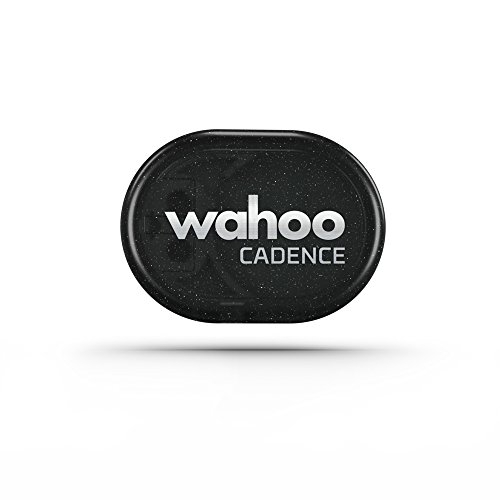
The Wahoo RPM Cadence Sensor provides real-time cadence data through Bluetooth and ANT+ compatibility. It integrates with various training apps, including Wahoo SYSTM, Zwift, and Peloton Digital, to help riders optimize cadence, efficiency, and endurance. The dual-band technology enables connections to smartphones, tablets, and bike computers, facilitating multi-device data streaming for a comprehensive training overview.
Garmin Cadence Sensor 2

The Cadence Sensor 2 attaches to any crank arm size and measures pedal strokes per minute for training insight. It supports ANT+ connectivity and Bluetooth Low Energy, enabling data transmission to Garmin Connect and other compatible apps. This sensor works well with multiple Garmin devices and indoor/outdoor setups, offering dependable cadence data with easy installation and compatibility for serious training analytics.
COOSPO Cadence And Speed Sensor BK467
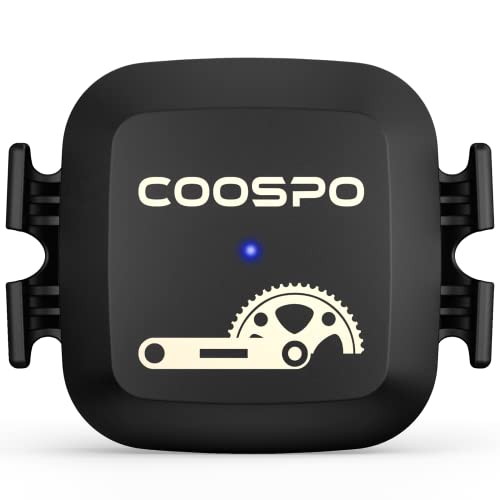
The COOSPO BK467 kit includes both cadence and speed sensors with Bluetooth and ANT+ compatibility. It supports simultaneous data streaming in certain protocols and allows pairing with multiple apps or devices depending on the connection type. The sensors are designed to track cadence and speed data for comprehensive cycling analytics and training programs, making them suitable for multi-device ecosystems and indoor/outdoor training alike.
Buying Guide
Key factors when choosing a cadence sensor include compatibility, connectivity, and installation ease. If you rely on Garmin devices, bundles with Cadence Sensor 2 and Speed Sensor 2 ensure seamless data through ANT+ and Bluetooth. For multi-brand ecosystems or indoor trainers, sensors with Bluetooth and ANT+ now allow broader app compatibility (Zwift, Peloton, Rouvy, Wahoo apps). Consider whether you need one sensor for cadence only or a dual-sensor setup for speed and cadence simultaneously. Battery life, waterproof rating, and the ability to move sensors between bikes are also important.
Sensor placement matters: attach the cadence sensor to the crank arm and the speed sensor to the wheel hub. Some bundles simplify installation by avoiding magnets or alignment requirements, reducing maintenance time. If you ride with multiple bikes, a magnetless design can save setup time. Consider your training environment: indoor trainers may benefit from dual-sensor kits that pair with multiple apps, while outdoor riding may favor robust wireless protocols and long battery life.
Price is a consideration, but reliability often matters more for long-term training data. When comparing models, review data compatibility with your preferred apps and devices, including Garmin Connect, Wahoo Fitness, Zwift, Peloton, and third-party training platforms. Finally, confirm whether the sensor supports live data streaming to both a phone and a bike computer — this flexibility helps when following structured workouts across devices.