Choosing the right BMX bike for a 14-year-old involves balance, durability, and growth potential. The following picks are designed for beginner riders moving into street, park, or trail riding, with sizes and features that support confidence and safety. Each option emphasizes a sturdy Hi-Ten steel or alloy frame, age-appropriate wheel sizes, and brakes that help new riders learn precise control.
Summary of chosen products:
| Product | Brand | Wheel Size | Top Tube / Frame Notes | Key Benefit |
|---|---|---|---|---|
| Freestyle BMX Bike, 18/20 Inch | Cubsala Store | 18″ or 20″ | Hi-Ten steel frame, 19.5″ top tube | Great first BMX with beginner-friendly geometry |
| JOYSTAR Brockway Freestyle BMX | JOYSTAR Store | 20″ | Hi-Ten steel, 19.9″ top tube | Solid entry-level bike with 2 pegs option |
| BMX Style Training Wheels Bike | Vollsch Store | 20″ | High carbon steel frame, safety wheels | Balanced for true beginners with extra stability |
| Freestyle BMX Bike, 18/20 Inch | Cubsala Store | 18″ or 20″ | Hi-Ten steel frame, 17.3″ top tube | Compact option for shorter riders |
| RoyalBaby BMX Bike 20/24 | RoyalBaby Store | 20″ or 24″ | Aluminum or steel frames, adjustable components | Versatile sizes with durable construction |
Freestyle BMX Bike 18/20 Inch For Beginners

The Crossea20 model is designed for beginning riders with an easy-to-maneuver feel on streets, parks, and trails. Aimed at riders roughly 4’0″ to 5’11” tall, the bike uses a Hi-Ten steel frame and a 19.5″ top tube to support stability. The drivetrain includes a 165 mm one-piece crank with a 32T chainring, and both an aluminum U-brake and hand-brake levers to promote precise speed control. This blend suits new riders who want predictable handling as they learn airs, manuals, and basic tricks.
Freestyle BMX Bike, 18/20 Inch For Beginners

This Crossea18 model targets younger or shorter riders with a 17.3″ top tube and a 152 mm one-piece crank. It retains the 32T chainring and dependable braking setup, offering a slightly smaller footprint while maintaining the same beginner-friendly intent as the larger variant. The frame remains Hi-Ten steel, ensuring durability for learning curves on streets, parks, or light trails.
JOYSTAR Brockway Freestyle BMX Bike

Designed for beginner riders, the Brockway offers a 19.9″ top tube on a Hi-Ten steel frame and a single-speed drivetrain with a 165 mm crank and a 36T chainring. Braking includes a rear caliper brake and hand-brake levers for controlled deceleration. This configuration supports riders transitioning from training wheels or basics to more confident street or park sessions, with two pegs included for stunt practice and learning balance.
BMX Style Training Wheels 20″ Kids Bike
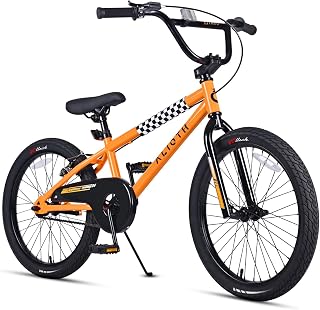
Targeted at novice riders, this 20″ bike adds safety training wheels to aid balance, along with an adjustable seat to grow with your child. The high carbon steel frame emphasizes durability, and the dual-brake system combines coaster and hand brakes for versatile stopping power. A chain guard helps prevent finger injuries, while the 20 x 2.4-inch tires deliver grip and stability as confidence increases on varied surfaces.
RoyalBaby BMX Bike 20/24 Inch

RoyalBaby offers choice between a 20-inch aluminum frame for lighter performance or a sturdy steel frame for added durability, with models ideal for ages 7–14. Both sizes come with adjustable seats and handlebars to grow with the rider, and the bikes ship 95% assembled. The combination of lightweight aluminum and robust steel variants supports continued use as riding skills advance, from basic cruising to more ambitious street or park use.
Buying Guide: Key Purchase Considerations And Comparisons
When selecting a BMX bike for a 14-year-old, consider frame material, wheel size, and growth potential. Aluminum frames are lighter, improving acceleration and handling, but steel frames tend to be more durable and affordable. Wheel sizes around 20 inches are common for teens, yet some riders benefit from slightly smaller 18 or 19-inch top tubes to fit their height and reach comfortably. Braking systems matter for practice—hand brakes offer precise control, while coaster brakes provide simplicity for beginners.
1) Rider size and fit: Ensure the bike fits at least in height and reach terms. Adjustable seats and handlebars help the bike grow with the rider, reducing the need for early replacements. The top tube length influences stance and steering responsiveness; smaller top tubes can be easier for beginners to maneuver but may feel less stable at higher speeds.
2) Durability vs. weight: Hi-Ten steel frames are sturdy and affordable, suitable for students learning tricks and balance. Aluminum frames reduce weight and can improve responsiveness, though they can come at a higher price. For teens who ride on varied terrains, a robust frame with reliable brakes is essential to maintain safety.
3) Brakes and controls: Hand brakes deliver intuitive speed control for city streets and parks, while coaster brakes reduce complexity for absolute beginners. Some models pair both braking systems for flexibility as skills grow. Ensure compatible brake levers and cable routing, and confirm that the braking setup matches rider strength for confident stops.
4) Transmission and gearing: Most beginner BMX bikes use single-speed setups, which simplify learning. A higher gear ratio, like a 36T chainring, can offer quicker acceleration on flat terrain, but may require more pedal effort on hills. For newer riders, a mid-range setup balances control and ease of pedaling.
5) Assembly and warranty: Ease of assembly is a practical consideration; many models claim high pre-assembly, but check the toolkit included and instructions. A warranty on frame materials or components protects against manufacturing defects, offering long-term value for growing riders.
6) Safety features: Look for chain guards to prevent clothing or fingers from getting caught, grip-rich tires that perform well on mixed surfaces, and secure axles that withstand frequent crashes or rough landings. Safety training wheels or stability aids can be beneficial for absolute beginners who are building confidence.
7) Budget and intent: For teens who are just starting or exploring BMX as a hobby, prioritize durable frames, reliable brakes, and growth-capable components over premium accessories. For riders planning frequent park sessions or advanced tricks, consider slightly upgraded components to support progress without frequent upgrades.
8) Age and growth alignment: Even within the “14-year-old” target, variability in height and inseam matters. Prefer bikes with adjustable height ranges and multiple size options to accommodate growth over seasons.
9) Brand and safety standards: Reputable brands frequently offer consistent build quality, good spare-part availability, and clearer sizing guidance. Read product specs and customer reviews to gauge real-world fit and durability for teen riders.
10) Comparative snapshot: For a teen rider, a 20″ bike with a Hi-Ten steel frame and hand brakes delivers reliable beginner performance with room to grow. A lighter aluminum frame may benefit faster learners or riders prioritizing nimbleness, while a 18–19″ top tube variant can better fit shorter teens who are just starting out or transitioning from smaller bikes.