Choosing the right bike or tricycle for a three-year-old involves safety, growth potential, and ease of use. The following selections emphasize stability, adjustable features, and engaging designs to support early riding skills. Each option offers age-appropriate learning modes—from balance bikes to three-wheel trikes—so children can build confidence and coordination as they grow.
| Product | Brand | Ideal Age | Key Feature |
|---|---|---|---|
| SEREED Colorful Lighting Toddler Tricycle | SEREED | 2-5 years | Quick assembly and smooth ride |
| KRIDDO Tricycle (Green) | KRIDDO | 24-48 months | Stable design with enhanced rollover prevention |
| KRIDDO Tricycle (Blue) | KRIDDO | 24-48 months | Stable design with enhanced rollover prevention |
| YGJT 3 in 1 Tricycle | YGJT | 2-5 years | Three riding modes and foldable design |
| Umatoll Tricycle | Umatoll | 2-5 years | Three-position adjustable seat, sturdy frame |
Note: Each product description highlights factors to consider, including adjustability, safety features, and weight distribution for stability on varied surfaces.
SEREED Colorful Lighting Toddler Tricycle

Designed for ages 2 to 5, this tricycle emphasizes a quick assembly process with a spring-loaded snap design, allowing parents to set up the trike in minutes. It features precision bearings and a unique pedal design to provide a smoother ride, helping children develop balance and coordination as they explore their world. Weighing only 6.6 pounds, the trike is lightweight yet sturdy, enabling kids to move it around with ease and confidence.
KRIDDO Tricycle (Green)

KRIDDO’s green tricycle is aimed at toddlers aged 24 to 48 months, helping develop steering skills and coordination early on. Its triangular design provides a wider wheelbase to reduce tipping risks as kids learn to ride, with an emphasis on safety and motor development. The ergonomic seat and comfortable grips support little riders during extended active play and easy carrying between rooms or outdoors.
KRIDDO Tricycle (Blue)

This KRIDDO model echoes the same protective design as its green counterpart, tailored for 24-48 months. It focuses on improved roll-over prevention, a triangular frame for stability, and easy-to-grasp grips. The trike supports early confidence-building in riding, with a comfy seat and smooth edges to ensure secure, enjoyable sessions as children gain balance and independence.
YGJT 3 in 1 Tricycle for Toddlers
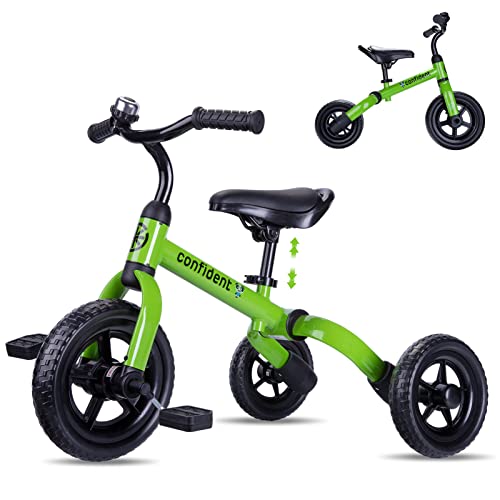
YGJT offers a versatile 3-in-1 tricycle suitable for ages 2 to 5, featuring a foldable design and a three-mode transition: pedal-less balance bike, two-wheel balance bike, and pedal tricycle. The seat is adjustable, and the handlebar is non-slip, making it adaptable as a child grows. The frame uses durable carbon steel with EVA wheels, enabling reliable outdoor use across various terrains while teaching independence and balance.
Umatoll Tricycle for Toddlers

The Umatoll tricycle is built with a sturdy carbon steel frame and reinforced screws for long-lasting use. It features an adjustable seat across three positions to accommodate growing toddlers from ages 2 to 5. The wide wheelbase and extended rear wheels help prevent tipping, offering a stable ride as kids learn to pedal and steer, supported by a secure, comfortable seating design.
Buying Guide
Key purchase considerations
- Age and growth range: Look for adjustable seats and handlebars to accommodate rapid growth in early childhood.
- Stability and safety: Prioritize wide wheelbases, low center of gravity, and features that reduce tipping during initial riding attempts.
- Riding modes and versatility: Consider whether a 3-in-1 or balance-bike-to-trike model will best support progression from balance to pedal riding.
- Weight and portability: Lighter frames are easier for caregivers to move, but must still be sturdy enough to survive outdoor use.
- Maintenance and durability: Durable materials (carbon steel frames, quality bearings) and simple maintenance extend playtime with minimal downtime.
- Adjustability: Check for adjustable seats and handlebars to ensure comfort and proper positioning for posture and leg extension.
Comparison by use-case
- Best for quick setup and travel: Models with snap assembly and lightweight frames.
- Best for progression: 3-in-1 designs that transition from balance to pedal modes as skills develop.
- Best for stability: Designs with extended wheelbases, reinforced frames, and safety features like non-slip grips and wide bases.
Maintenance tips
- Regularly check fasteners and wheel alignment to prevent wobble and ensure a smooth ride.
- Keeping wheels inflated to appropriate pressure (where applicable) extends tire life and ride quality.
- Inspect handlebars and seats for wear, replacing worn components promptly to maintain safety.