The following guide curates five top bike walker–style devices and knee scooters that help adults stay mobile with confidence. Each option emphasizes safety, comfort, and ease of use for everyday activities, whether you need a rollator, a knee scooter, or a seated walking aid. This selection accommodates different injuries, recovery stages, and terrain needs while focusing on durable construction and practical features.
| Product | Brand | Key Benefit |
|---|---|---|
| Drive Medical 10210-1 Folding Walker | Drive Medical | Front-wheel rolling walker with lightweight aluminum frame |
| BlessReach Knee Scooter | BlessReach | Steerable knee walker with 8″ wheels for stability |
| KneeRover Walk Assist | KneeRover | Seated walker alternative that reduces weight on injured leg |
| VOCIC Rollator-Walker With Seat | VOCIC | 2-in-1 rollator and transport chair with backrest |
| VitaSophy All Terrain Knee Scooter | VitaSophy | Steerable knee scooter with disc brakes for all-terrain use |
Drive Medical 10210-1 Folding Walker with Wheels
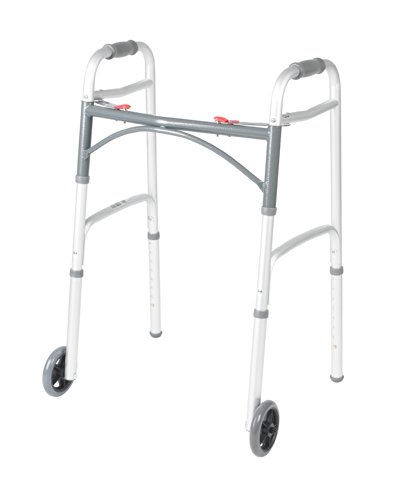
Drive Medical’s wheeled walker combines safety with convenience for adults who need a sturdy, lightweight mobility aid. The aluminum frame offers solid support while remaining easy to maneuver. This model features 5-inch wheels that glide over most surfaces and a vinyl contoured hand grip for comfortable use. Front-wheel design supports smooth pushing, and the rear glide caps help the walker slide across different floor types, making it suitable for indoor and light outdoor use. It is adjustable in height to accommodate different user elevations and weight up to 350 pounds, providing a reliable solution for daily activities.
BlessReach Knee Scooter Deluxe
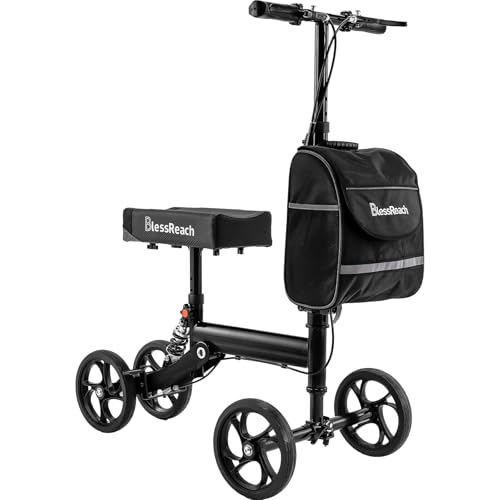
The BlessReach knee scooter is designed for foot injuries and post-surgery recovery, offering a knee-rest platform with 8-inch wheels on both the front and rear for stability and smooth movement. The curved bottom frame improves support, while an ergonomic locking handbrake enhances safety during operation. The contoured knee rest provides added comfort for extended use, and the scooter supports users up to 300 pounds. This option serves as an alternative to crutches, allowing easier mobility while keeping weight off the injured limb.
KneeRover Walk Assist

The KneeRover Walk Assist is a seated walker that enables longer walking distances with less pain by transferring weight away from the injured leg. It claims to reduce the load by up to four times compared with traditional mobility aids, providing more freedom while you recover. The design emphasizes balance and realistic gait expectations; while it benefits many users, proper balance and medical guidance are advised for safe operation. This device is suitable for recovering from leg, ankle, knee, or foot injuries and supports gradual return to normal walking speeds.
VOCIC Rollator-Walker With Seat

The VOCIC 2-in-1 Rollator-Transport Chair combines mobility with seating convenience. It features non-inflatable wheels for reliable traction and a longer backrest to shift the center of gravity when seated, enhancing safety. The one-handed folding mechanism makes storage and transport easier, while adjustable brakes and a locking strap provide security across various environments. With a maximum width of 24 inches, it fits through standard doorways, and its foldable design aids portability without sacrificing comfort.
VitaSophy All Terrain Knee Scooter
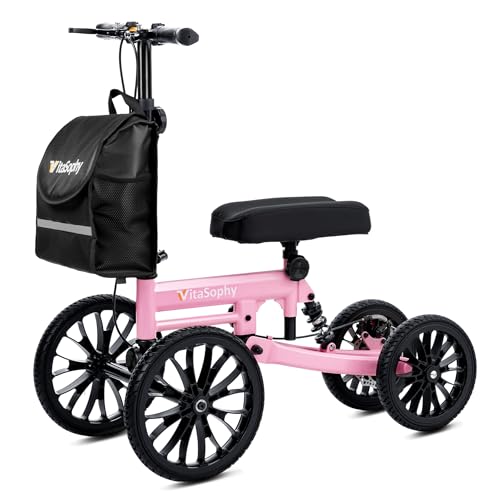
The VitaSophy All Terrain Knee Scooter is designed for varied surfaces, featuring two 12-inch front wheels and two 10-inch rear wheels with disc brakes and locking hand brakes for enhanced control on uneven terrain. It serves as a capable option for individuals recovering from foot, ankle, or lower-leg injuries who still want to move with independence. The steerable knee scooter aims to provide stable navigation across grass, gravel, dirt, and sidewalks, with a focus on durability and safety during outdoor use.
Buying Guide
Key purchase considerations help tailor a choice to individual needs:
- Mobility aid type: Decide between a wheeled walker, knee scooter, or rollator with seat based on injury, recovery stage, and daily activities.
- Weight capacity and frame: Look for aluminum or reinforced frames for portability and sufficient support. Check weight limits that align with user needs.
- Wheels and terrain: Larger wheels and all-terrain capability benefit outdoor use; smaller indoor wheels may suffice for flat surfaces.
- Seat comfort and back support: A supportive backrest or contoured seat improves long-term comfort when resting or sitting during activities.
- Brakes and safety features: Hand brakes, locking mechanisms, and anti-slip grips increase control on slopes and varied surfaces.
- Adjustability: Height adjustments and handlebar or knee rest positioning ensure proper ergonomics and reduced strain.
- Portability and storage: Folding mechanisms and compact dimensions aid transport and storage in vehicles or small living spaces.
- Maintenance: Materials like rust-resistant aluminum and durable wheels minimize upkeep and extend product life.
When choosing between knee scooters versus walkers, consider whether the user needs to bear weight on the injured limb at all times, or if long-distance walking with support is the goal. For outdoor use, prioritize all-terrain wheels and robust brakes. For indoor use, compact designs with smooth-rolling wheels and easy storage are advantageous. Always consult with a medical professional to confirm suitability for your specific recovery plan and mobility requirements.