For cyclists seeking precise performance data and realistic indoor training sessions, a power meter-equipped trainer offers unmatched insights. This guide highlights five top options that blend power measurement with reliable indoor riding experiences, helping you train smarter and monitor progress over time. Each entry provides key specs, installation notes, and how it fits into a complete training setup. Read on to compare accuracy, compatibility, and long-term value across pedal-based and crank-based power meters.
| Product | Type | Power Meter Type | Key Benefit |
|---|---|---|---|
| Magene P715 S Power Meter Pedals | Pedal-based | ±1% | Seamless bike compatibility with long battery life |
| ThinkRider X2Max Smart Bike Trainer | Direct-drive trainer | DEPT power meter | High realism with 18% slope simulation |
| Magene P715 K Power Meter Pedals | Pedal-based | ±1% | Immediate power data with quick setup |
| Magene PES P505/P515 Power Meter Crankset | Crank-based | ±1% | Lightweight, IPX7 waterproof, long ride time |
| Magene PES P505/P515 Power Meter Crankset | Crank-based | ±1% | High durability and stable power readings |
Magene P715 S Power Meter Pedals

The Magene P715 S pedals deliver ±1% power accuracy with a focus on seamless compatibility across bike setups. With a 120-hour battery life, these pedals are designed for extended training without frequent recharges. Installation is described as quick, enabling cyclists to begin recording precise power data in about a minute. The pedals support ANT+ and Bluetooth, ensuring easy pairing with most indoor trainers and cycling apps. Endurance-focused riders can rely on consistent power metrics while riding indoors or on the road.
ThinkRider X2Max Smart Bike Trainer

The ThinkRider X2Max combines a quiet, portable design with robust power measurement capabilities. It supports both ANT+ and BLE, enabling compatibility with major cycling software such as ZWIFT. The trainer uses a DEPT dynamic electromagnetic torque power meter to deliver up to 2000W with a power meter error of ±2%. Its intelligent resistance feature simulates an 18% slope, automatically aligning with the mapped virtual terrain for a realistic indoor ride experience. This model suits riders seeking substantial incline simulation and software integration.
Magene P715 K Power Meter Pedals

The Magene P715 K pedals extend Magene’s power monitoring into a second KEO-compatible option, maintaining ±1% accuracy and a 120-hour battery life. The installation remains user-friendly, enabling riders to switch between bikes quickly and capture precise data during workouts. ANT+ and Bluetooth support ensure reliable connection with popular indoor trainers and cycling apps, making these pedals a practical upgrade for athletes who value consistent data with minimal downtime between bikes.
Magene PES P505/P515 Power Meter Crankset

This crank-based power meter from Magene offers ±1% power accuracy through advanced strain gauges and intelligent temperature compensation. Weighing around 625g, its triple hollow 7075 aluminum crank design emphasizes stiffness and durability for sustained training. With a long battery life—up to about 330 hours in typical use—and IPX7 waterproofing, the P505/P515 series stands out for long indoor sessions in varied conditions, making it a strong choice for riders who want rugged performance and stable readings on the trainer.
Magene PES P505/P515 Power Meter Crankset (Variant)
This variant of Magene’s crankset continues the emphasis on precision and resilience, maintaining ±1% accuracy and the same 625g weight with a 330-hour battery life. The 110BCD interface and ANT+/Bluetooth compatibility ensure broad trainer and software compatibility. For riders who need reliable data from a compact, water-resistant crank system, this option provides a solid balance of accuracy, durability, and ease of use in indoor training contexts.
Magene P715 Dual-Sensing Side Power Meter Pedals
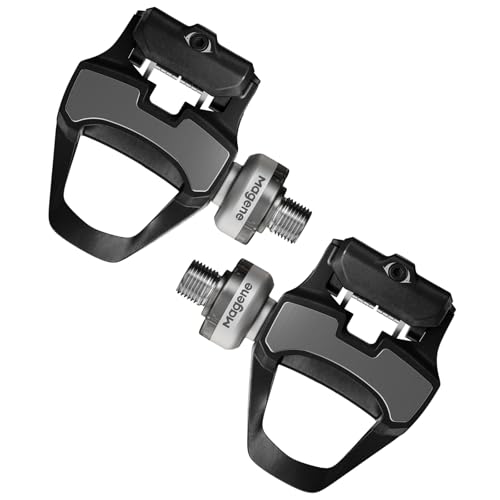
Magene’s P715 Dual-Sensing Side Power Meter pedals offer independent measurement of left and right leg power with ±1% accuracy. SPD-SL compatibility allows upgrading without changing cleats, which is ideal for riders invested in that pedal system. A premium silver finish adds a sleek aesthetic while maintaining robust durability for frequent indoor sessions. Dual-sensing output provides detailed data for balanced training and race-focused analysis.
Buying Guide: Key Purchase Considerations
When choosing a power meter trainer, consider how you train, your bike setup, and software ecosystems. Pedal-based meters are easy to move between bikes and often cheaper to upgrade, but crank-based meters can offer broader torque data and possibly better accuracy under certain conditions. Direct-drive trainers with built-in power meters simplify setup and often deliver more stable readings during heavy wattage efforts. Battery life, water resistance, and software compatibility (Zwift, TrainerRoad, Peloton, etc.) are critical for long-term value.
- Training environment and noise: Direct-drive trainers tend to be quieter and offer smoother drives, beneficial for shared living spaces.
- Power meter type: Pedal-based systems (P715 S, P715 K, dual-sensing pedals) emphasize ease of swap between bikes, while crank-based meters (P505/P515) emphasize integrated data from a fixed crank assembly.
- Accuracy and reliability: Look for ±1% to ±2% power accuracy and consider how temperature and cadence affect measurements. Temperature compensation and calibration routines improve data quality.
- Compatibility: Verify ANT+, BLE, and software support. Ensure your preferred training apps recognize and log data from the chosen power meter system.
- Durability and water resistance: IP ratings and rugged build matter for year-round training, especially if you train outdoors or in unpredictable gym environments.
- Battery life and charging: Long battery life is essential for long sessions or multi-day training camps. Check charging times and how often you’ll need to recharge.
Across pedal and crank options, these products provide robust data streams suitable for structured training plans, FTP testing, and race preparation. The ThinkRider X2Max adds strong tilt-based realism with software synchronization, while Magene’s pedal and crank solutions offer a roadmap to scalable upgrades within their ecosystem. For athletes prioritizing portability and quick bike swaps, pedal-based meters (P715 S and P715 K) are compelling. For cyclists seeking integrated performance in a dedicated trainer setup, crank-based meters (P505/P515) deliver consistent power across sessions.