Indoor bike trainers let mountain bikers train year-round, replicate road and trail conditions, and tailor resistance to goals. The following selected models accommodate 26″ to 29″ wheels (including 700C) and offer features like adjustable resistance, stability on varied floors, and front wheel riser blocks. This guide highlights five popular options, detailing design, compatibility, and performance to help you pick a suitable trainer for off-season rides or structured workouts.
| Product | Brand | Wheel Range | Resistance Type | Key Feature |
|---|---|---|---|---|
| Sportneer | 26″–28″/700C | Magnetic, 6 levels | Stable base with adjustable feet | |
| RAD Cycle Products | Universal for most bikes | Magnetic, 7 levels | Ultra-quiet, foldable for storage | |
| CXWXC | 26″–29″ & 700C | Magnetic, 6 levels | High load capacity, solid stability | |
| Alpcour | Road/MTB wheels | Fluid (drag) | Near-silent operation, progressive resistance | |
| Saris | Road/MTB wheels | Fluid | Made in the USA, compatible with Zwift |
Sportneer Magnetic Bike Trainer For Indoor Riding

The Sportneer magnetic trainer is designed for stability on varied flooring with a wide base and low stance. It includes five adjustable anti-slip feet to level uneven surfaces, helping reduce wobble during intense intervals. Its six resistance levels can be adjusted via a bar-mounted remote, which allows users to simulate a range of terrains from flat road segments to challenging climbs. Noise is minimized by the smooth resistance wheel, though some tire materials may influence volume; road bikes are recommended for quieter operation. This trainer’s setup supports wheel sizes from 26″ to 28″ and 700C, making it suitable for many mountain bikes and cross-country rigs.
Practical notes: a front wheel riser block is included to keep the bike level and stable, enhancing the indoor riding feel. The combination of stability features and a moderate resistance curve makes it a solid entry for winter training, base-building, and routine cardio sessions. For riders seeking a balance of affordability and reliability, this model offers straightforward performance without complex connectivity or power metrics.
RAD Cycle Max Racer Magnetic Trainer

The RAD Cycle Max Racer emphasizes quiet operation and portability. With seven resistance levels provided by an internal magnet, riders can simulate varying road conditions and intensities. The trainer is notably portable, folding down for travel or storage, which is convenient for cyclists who commute or travel with equipment. Stability is highlighted through extra-wide legs and a robust frame, and overall build quality targets serious enthusiasts who want a trainer they can rely on during long indoor sessions.
From a mountain biking perspective, this trainer supports a broad range of bikes and is well-suited for endurance blocks, tempo workouts, and sprint intervals. Its compact footprint helps in smaller spaces, while its sturdy design supports consistent power delivery across workouts. The combination of quiet performance and easy transport makes this an appealing option for garage gyms or shared living spaces.
CXWXC Indoor Bike Trainer Stand
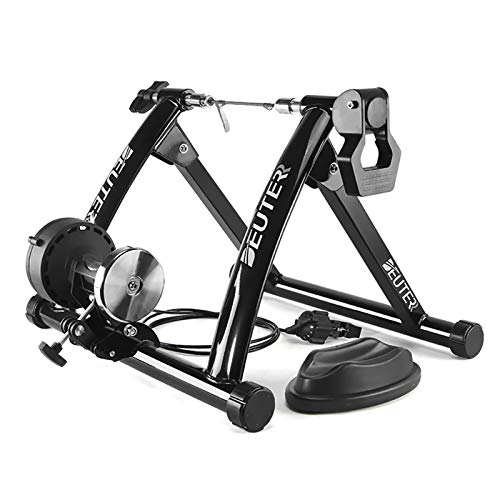
The CXWXC trainer supports wheels from 26″ through 29″ and 700C, making it a flexible option for a range of mountain bikes. It features a strong, stable pyramid-style frame designed to handle up to 330 pounds, which translates to solid support during high-torque efforts. The magnetic resistance is adjustable across six levels via a drive-by-wire device, enabling quick transitions between climbs and recoveries. The setup is designed for home use, with a focus on consistent resistance and straightforward installation, making it a practical choice for winter conditioning, interval sessions, and recovery rides.
In terms of ride feel, a stable frame and reliable magnetic resistance deliver predictable performance. Riders can simulate varied terrain and adjust effort levels without needing frequent calibrations. The trainer’s compatibility with a wide wheel range makes it a versatile pick for mountain bikers who alternate between rugged trail bikes and more compact cross-country rigs.
Alpcour Fluid Bike Trainer Stand

The Alpcour fluid trainer uses a high-quality flywheel mechanism to create drag against the back tire, delivering a near-silent indoor riding experience. The fluid resistance increases as you pedal faster, offering progressive load that closely mimics real road sections and climbs. The design emphasizes quiet operation and smoother feel, reducing noise and wear on components. The system is described as requiring no extensive adjustments once set up, making it appealing for users who want a realistic ride with minimal setup time.
With mountain biking in mind, the Alpcour trainer supports all-season training and interval workouts by providing a broad resistance range that scales with speed. The unit is designed to minimize friction and wear, potentially extending drivetrain life during regular indoor sessions. Its portable, foldable nature also helps with storage in tighter spaces between training blocks.
Saris Fluid2 Indoor Bike Trainer

The Fluid2 trainer is known for its reliability and compatibility with both road and mountain bikes, and it integrates with Zwift and other cycling software platforms. Its fluid resistance provides a smooth ride with natural-feeling load that scales with pedal force. The Tray design is compact, and Saris notes that the unit is Made in the USA, which can be an important consideration for some buyers. The system is aimed at riders seeking immersive virtual training experiences and a stable, consistent indoor ride.
For mountain bikers, the Fluid2 offers realistic resistance curves and a durable build that can handle regular indoor sessions, including structured workouts, tempo rides, and endurance blocks. Zwift compatibility enables virtual group rides and structured training plans, while robust construction helps ensure long-term performance in home gyms.
Buying Guide: Key Purchase Considerations for Mountain Bike Trainers
- Wheel compatibility: Ensure the trainer supports 26″–29″ wheels and 700C where relevant. A wide wheel range reduces the need for wheel adapters and makes it easier to switch bikes.
- Resistance type and levels: Magnetic trainers are common and quiet, with multiple levels. Fluid trainers offer more progressive, road-like feel but can be heavier and pricier. Consider how many resistance levels you need for intervals and climbs.
- Stability and floor compatibility: Look for a wide, low-profile base and anti-slip feet to minimize movement on uneven floors. Consider a front wheel riser block if included, which helps achieve a level riding position.
- Noise and vibration: If you share living spaces, quiet operation is important. Note that tire tread and materials can influence noise; road tires usually yield quieter sessions than aggressive MTB tires.
- Portability and storage: If space is limited or you travel with your bike, folding designs and light weight can be advantageous.
- Software compatibility: For virtual training and structured workouts, consider trainers that work with Zwift and other apps. This enhances interactive and performance-tracking benefits.
- Load capacity and build quality: A trainer should support your weight and bike size, with robust frames and secure clamps for safe high-torque intervals.
- Ease of setup: Quick-release skewers, simple install processes, and clear instructions help you start workouts faster and reduce setup time between sessions.