Finding the right hitch-mounted bike rack can simplify every ride, from weekend getaways to daily commutes. This guide highlights five top-rated options that balance capacity, security, and ease of use for American drivers. Each model supports a range of vehicles and tire sizes, making it easier to transport bikes without removing wheels. Whether you need a compact two-bike setup or a heavier-duty carrier for fat-tire bikes, the selections below cover diverse needs and budgets.
| Product | Brand | Capacity | Notes |
|---|---|---|---|
| MaxxHaul 50025 Hitch Mount 2 Bike Rack | MAXXHAUL Store | Up to 100 lb | 2-bike capacity; versatile hitch compatibility |
| Young Bike Rack Hitch for Car | Young Electric Store | 200 lb total | Tilting design; folds for trunk access |
| CyberRack E2 Hitch 2 | CyberRack | 200 lb | Includes ramp; electric bike capable |
| TANX Bike Rack for Ebikes | TANX Store | 160 lb | Fat-tire capable; anti-wobble system |
| Allen Sports Deluxe 4-Bike Hitch Mount Rack | Allen Store | 4 bikes | Fold-out arms; no-wobble bolt |
MaxxHaul 50025 Hitch Mount 2 Bike Rack

The MaxxHaul 50025 provides robust, everyday practicality for most cars, trucks, and SUVs. It supports standard 1-1/4″ and 2″ hitch receivers, giving broad compatibility across Class I to IV hitches. The rack is designed to securely transport up to two bicycles with enhanced rubber cradles and buckle-type straps, minimizing movement during transit. This model emphasizes straightforward installation and stable travel, which is essential for protecting both bikes and vehicle finishes on longer trips. The built-in hitch adapter allows easy mounting and removal when you’re ready to hit the road again.
Features to note include reinforced durability and versatility in hitch compatibility. The design aims to reduce bike sway and ensure firm support through the ride. The product’s two-bike capacity makes it a practical choice for everyday use, such as weekend getaways or gym-to-park bike runs. When evaluating, consider your vehicle’s hitch class and the total weight you’ll carry, as that determines overall compatibility and safety. This option represents a good balance of capacity and cost for most consumers.
Young Bike Rack Hitch for Car

The Young Electric Store model emphasizes user-friendly operations and secure cycling transport. It offers a two-bike setup with a total capacity of 200 pounds, making it suitable for most standard mountain, road, and hybrid bikes, including some fat-tire configurations. The hitch rack uses soft padded hooks to prevent frame scratches and includes a hitch tightener for a wobble-free fit on a 2-inch receiver. A rear safety reflector improves visibility at night, contributing to safer travel during low-light conditions.
Practical advantages include a foldable design to save space when not in use and a tilt feature that allows trunk access without removing bikes or the rack. Quick-releases and universal tire holders adapt to most wheel sizes from 20 to 29 inches, with wheelbases up to the typical range. When comparing models, assess how often you’ll need trunk access, how you transport tall bikes, and whether you require a tilting mechanism for daily use or occasional trips.
CyberRack E2 Hitch 2

The CyberRack E2 enables convenient loading with an included ramp, supporting up to 200 pounds and accommodating up to two bikes. It’s designed for 2-inch receivers on cars, trucks, SUVs, minivans, and even some RVs. The carrier’s platform-style design aims to spread weight evenly and keep bikes stable during transit. The E2 is positioned as a flexible solution for riders who may switch between e-bikes and conventional bikes, as it’s built to support heavier frames and wider tires. Users should confirm the ramp’s accessibility when mounting bikes, particularly for heavier e-bikes.
Considerations for this model include ensuring a compatible receiver, ramp accessibility, and the possibility of adding lock accessories for theft deterrence. A ramp feature can be a meaningful time-saver for frequent riders or those who prefer hands-free loading. The E2’s emphasis on stability and weight handling makes it a strong candidate for households with diverse bike types, including fat-tire variants.
TANX Bike Rack for Ebikes
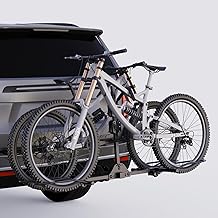
The TANX rack is engineered for heavy use, with a 160-pound total capacity and support for bikes with up to 5-inch tires. It installs on a 2-inch hitch receiver and uses an anti-wobble system along with a locking hitch pin to minimize movement on uneven roads. This model is designed to carry fat-tire and e-bike configurations, making it a compelling option for riders who expand beyond standard bikes. The foldable and tilting features support easy trunk access after mounting, which helps when you’re juggling gear, groceries, and gear bags in a compact vehicle.
Key purchase considerations for this rack include tire width, wheelbase accommodation, and anti-wobble performance. The 5-inch tire tolerance makes it suitable for a growing class of fat-tire bikes, while the rugged alloy steel construction should hold up under regular use. For buyers prioritizing quiet operation and security, the anti-wobble system paired with a locking pin offers valuable peace of mind on longer trips or rough roads.
Allen Sports Deluxe 4-Bike Hitch Mount Rack

The Allen Sports Deluxe 4-Bike Hitch Mount Rack is designed for larger families or groups that need to transport multiple bikes at once. It fits 2-inch receivers and features a patented tie-down cradle system that secures each bicycle individually, helping to prevent frame-to-bike contact and entanglements. The rack arms fold out of the way when not in use, and it tilts back to provide lift-gate access without removing bikes. A no-wobble bolt further stabilizes the rack inside the hitch, reducing movement on the highway or back roads. Minimal assembly is required, and a black powder-coated finish resists the elements for longer life.
In choosing a four-bike carrier, consider overall vehicle clearance, the ease of loading multiple bikes, and how the rack affects visibility. The Allen Deluxe model emphasizes convenience and stability, making it a practical choice for families, clubs, or long-distance travelers who regularly move several bikes at once. If you frequently transport more than two bikes, this option provides a scalable solution with a focus on secure, simple setup.
Buying Guide: Key Purchase Considerations For Bike Tow Hitch Carriers
Capacity and weight: Start by calculating the total weight of all bikes you plan to carry, including possible future additions. Choose a carrier that exceeds that total by a comfortable margin to ensure safe margins on bumps and hills.
Vehicle compatibility: Confirm your vehicle’s hitch class and receiver size (1-1/4″ vs 2″). Some racks support multiple hitch classes, while others are more specialized. Check for compatibility with your vehicle’s tailpipe clearance and spare tire placement if applicable.
Bike securing system: Look for padded cradles, soft straps, and independent tie-downs to minimize frame scratches. A no-wobble design or integrated anti-wobble hardware helps stabilize bikes on rough roads and during braking.
Accessibility: Consider tilting or folding mechanisms that allow trunk or hatch access without removing bikes. This is especially useful for daily use, grocery trips, or quick park-and-ride stops.
Bike compatibility: If you own fat-tire, mountain, or e-bikes, verify tire width tolerance and wheelbase limits. Racks that support 5-inch tires and heavier loads expand your options beyond standard bikes.
Security features: Some racks offer locking hitch pins or add-on locking accessories. Security matters if you park in urban areas or leave your vehicle unattended for extended periods.
Ease of installation and maintenance: Simple installation and minimal maintenance reduce the total cost of ownership. Look for caravans with straightforward assembly, clear instructions, and durable finishes to resist rust and corrosion.
Pricing and warranty: While prices vary, prioritize models with robust warranties and easily available replacement parts. Long-term support can be a deciding factor for frequent travelers or hardcore cyclists.
Final considerations involve evaluating your typical trip length, storage space, and whether you need to transport multiple bikes regularly. The choices above reflect a spectrum from compact two-bike racks to multi-bike platforms, with designs that emphasize stability, quick access, and compatibility across common American vehicles.