Finding a reliable bike seat for young riders aged 2–5 years can expand family cycling, enabling shared adventures while keeping safety as a priority. The options below focus on front mounts and rear mounts, compatibility with common bike styles, and quick setup. Each choice emphasizes sturdy construction, comfort for the child, and secure attachment for peace of mind on rides.
| Product | Type | Age Range | Weight Capacity | Key Benefit |
|---|---|---|---|---|
| Kid’s Bike Seat Front Child Carrier Bike Chair | Front Mount | 2–4 Years | 55 lbs | Padded comfort with armrests and footrests |
| Kids Bike Seat Front Mount Toddler Seat | Front Mount | 2–5 Years | 48 lbs | Safety harness with adjustable fit |
| Front Mounted and Handlebar Guardrail Seat | Front Mount | 2–5 Years | 48 lbs | Durable aluminum frame and protective rubber padding |
| Child Bike Seat, Front Mount | Front Mount | 2–6 Years | 60 lbs | Ultra-light portable design with quick release |
| 2026 Rear Child Bike Seat | Rear Mount | 2–8 Years | Up to 60 lbs | Adjustable space and guardrails for comfort |
Kid’s Bike Seat Front Carrier For 2–4 Years
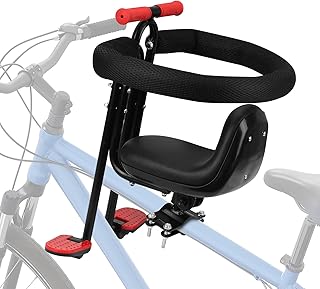
Compatibility is designed for general mountain bikes with crossbars, though cylindrical crossbars and certain diameters may not be suitable. This front seat features a padded backrest and seat, plus armrests and a footrest for added safety. The frame uses a combination of PU leather, sponge cushioning, and stainless steel components to balance comfort and durability. Ensure the bike crossbar diameter falls within the recommended range before purchasing.
Kids Front Mount Toddler Seat For 2–5 Years

Safety features include a harness to secure the child while riding. The seat is adjustable to fit flat or sloping top tubes on most mountain bikes. It is not recommended for e-bikes, road bikes, or older bicycles with exposed top-tube cables. Designed for children 2–5 years old, with support for riders up to 48 pounds.
Front Mounted Toddler Seat With Guardrail

This model emphasizes safety with aluminum alloy framing and reinforced brackets. The leather saddle and padded interior provide comfort, while the non-scratch rubber lining protects the bike. It remains adjustable to fit various flat or sloped top tubes, and is not intended for older bicycles with top-tube cables.
Ultra-Light Front Mount Child Bike Seat
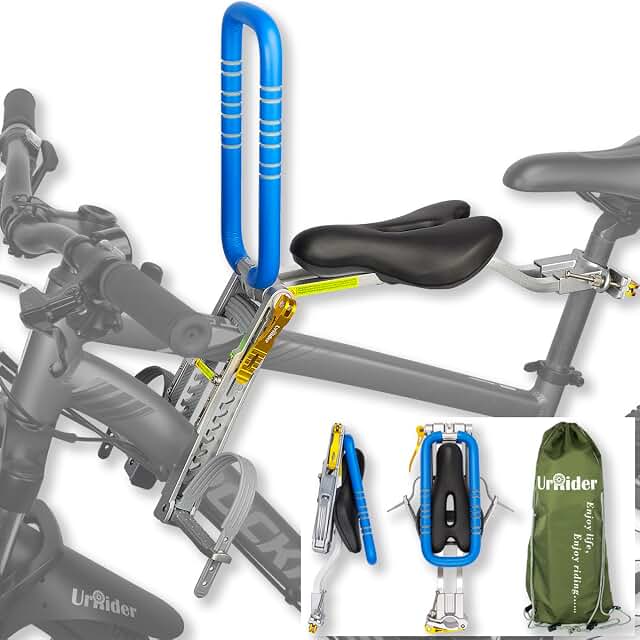
Manufactured by UrRider Store, this seat uses aircraft-grade aluminum alloy and stainless steel, delivering a rust-free, pre-assembled, quick-release solution. It supports ages 2–6 and up to 60 pounds. The design aims for broad compatibility with various adult bikes, including mountain, cruiser, city, and folding varieties. User evaluation of size compatibility with the main figure 5 is advised for best results.
Rear Child Bike Seat For 2–8 Years

Designed for rear mounting, this seat offers a guardrail, backrest, and footrests for comfort on longer rides. The surface uses smooth leather with a thick cushioned interior that is waterproof. The frame employs a thick steel main construction for stability, with a non-slip textured handle for extra security as children climb on and off.
Buying Guide: Key Purchase Considerations
- Mounting type: Front seats keep the child within sight and grant a shared pedal experience, while rear seats often support higher weight limits and may offer more stability on rough terrain.
- Bike compatibility: Check crossbar diameter, top-tube shape (flat vs sloping), and whether the bike is suitable for the seat’s mounting method. Note exclusions for certain bikes like e-bikes or older frames with exposed cables.
- Safety features: Look for padded seating, backrests, footrests, and secure harnesses or guardrails. A sturdy frame (alloy or steel) and protective padding reduce the risk of injury during bumps.
- Weight capacity and age range: Ensure the seat supports your child’s current weight and anticipates continued use within the intended age window (2–6 or 2–8 years).
- Installation and maintenance: Quick-release or tool-free designs simplify swaps between bikes. Confirm cleaning ease of upholstery and the durability of materials such as leather or PU fabric.
- Height and leg clearance: Ensure the child’s legs can bend naturally without striking the frame or wheels. Footrests should be adjustable as the child grows.
- Storage and portability: If you frequently transport the bike or switch bikes, consider a lighter seat with a straightforward removal process.
- Safety standards: While not a replacement for helmets, choose seats that align with recognized safety guidelines and provide tested restraints for secure seating.