Finding the right bike seat when you carry more weight or have a larger build is essential for long, comfortable rides. The following selections focus on extra-wide, noseless or memory-foam designs that reduce pressure, improve stability, and minimize thigh friction. Each option targets comfort, durability, and compatibility with a wide range of bike types—from Peloton and spin bikes to road, mountain, and electric bicycles. The list below highlights five top performers designed for bigger riders without compromising support or safety.
| Product | Brand | Key Benefit |
|---|---|---|
| Noseless Bike Seat Cushion | Twomaples | Ultra-wide, patent-backed design with high load capacity |
| Oversized Bike Seat for Men & Women | CDYWD | Wing-shaped foam for pressure distribution |
| Noseless Oversized Bike Seat | BLUEWIND | 2X wide with backrest option for support |
| Oversized Bike Seat with Backrest | BLUEWIND | Backrest design for spinal relief |
| Comfortable Seat Cushion with Dual Shock Absorbing Balls | LCYMD | Dual shock absorption and memory foam comfort |
The following sections present five carefully chosen models. Each entry includes a concise description, design intent for bigger riders, and practical notes on use, fit, and ride quality. All selections prioritize stability, pressure relief, and compatibility with a variety of bikes and seats.
Twomaples Noseless Seat Cushion Review

Twomaples offers an oversized noseless seat designed for riders with larger hip measurements. The seat features an extra-wide base and a concave shape intended to cradle the hips while reducing pressure on sensitive areas. The design emphasizes a shorter front and a non-slip surface to limit thigh friction and seat movement during intense or long sessions. The base is reinforced to support up to a substantial load, and the seat is described as compatible with a wide range of bikes, including Peloton, exercise bikes, and various e-bikes. This model targets comfort during extended rides where traditional noses or narrow seats contribute to discomfort or numbness.
Key considerations for this seat are its noseless, wide profile and its emphasis on stability. The seat’s non-slip printing aims to prevent shifting, which helps riders maintain a natural pedaling motion. It may require some adapter adjustments on certain rails, so ensuring your bike’s post is compatible is advised. While the cushion’s shell and foam support a higher weight range, riders should verify fit across different bike types and saddle posts to ensure optimal alignment with the sit bones and hips. Ergonomics focus on minimizing pressure points to support longer rides without significant fatigue.
CDYWD Oversized Seat With Wing Design

This oversized seat emphasizes a large footprint and wing-shaped foam to distribute weight evenly. The dimensions (approximately 12 by 14 inches with a 4.7-inch depth) create a generous sitting area designed to accommodate wider hips and reduce pressure on the sit bones. The memory foam and shock-absorbing qualities enhance comfort on uneven terrain, aiming to smooth out bumps and reduce jarring impacts. The ergonomic wing design helps spread pressure away from sensitive areas and minimize tailbone strain during longer rides. Install compatibility and the exact fit will depend on your bike model and seat post configuration, so checking the mounting hardware is prudent.
For riders seeking a balance of softness and support, this seat provides a notable combination of padding and stability. It’s particularly suitable for those who value a wide saddle with effective shock absorption and a design that encourages a natural thigh movement without interference from the nose. As with any large saddle, ensure you have adequate clearance on both sides to avoid contact with inner thighs during pedaling. This model is a straightforward upgrade path for riders stepping into extra-wide seating options.
BLUEWIND Noseless Oversized Seat With Backrest

BLUEWIND’s noseless, oversized seat is designed with a backrest option to add extra upper-body support and postural stability during longer sessions. The cushion size is notably wide, with a 13-inch width and a robust 5-inch thickness, providing substantial surface area for pelvic support. The nose-less design reduces friction between the thighs and the seat, which can lower chafing and discomfort while pedaling. The cover uses durable microfiber-like artificial leather that resists wear and handles daily use and rain. For riders who value both comfort and a sense of security, this model’s backrest can help maintain an upright, comfortable posture on longer rides or on stationary bikes that invite extended sessions.
Consider this option if you appreciate added back support during passive recovery periods or when you need extra stability during more aggressive pedaling. The larger size and backrest can, however, take up more space on both the seat and the bike’s rails, so verify clearance on your particular frame. The lack of a traditional nose may also influence leg clearance in tight confines, so testing fit with your typical riding position is advised.
BLUEWIND Oversized Seat With Backrest Upgrade
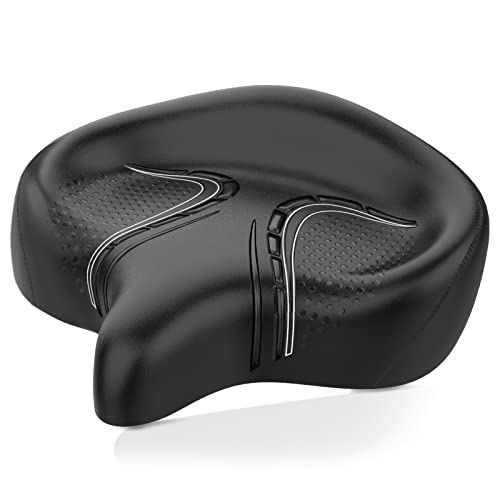
This Bluewind model emphasizes an oversized footprint paired with a backrest, specifically designed to relieve pressure on the back and tailbone during long rides. The seat’s dimensions—roughly 11.8 by 13.8 inches with a 5-inch depth—offer a generous surface for weight distribution. The backrest provides an additional support plane, which can be particularly beneficial for riders who experience fatigue in the lower back or require a more upright seating posture. The cover remains wear-resistant and non-slip, helping to keep the seat in place under varying riding conditions. As with all large-backrest seats, compatibility with your bike’s rails and frame geometry should be checked to ensure optimal alignment and safety during rides.
Benefits of this design include improved spinal comfort and a reduced tendency to slide laterally on the saddle. If your typical ride involves extended periods on a stationary or indoor bike, this seat can help preserve riding posture and reduce fatigue. For outdoor cycling, consider whether the extra backrest interferes with your balance or gear positioning, and confirm that the saddle width will not impede leg movement in tight corners or steep climbs.
LCYMD Dual Shock Absorbing Seat Cushion
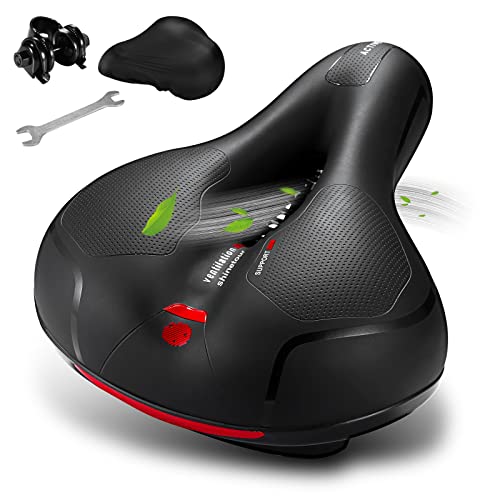
LCYMD presents a dual shock-absorbing bike seat with memory foam and a wide profile designed for comfort over long distances. The seat measures approximately 9.7 by 8 by 3.7 inches, but the wide design and memory foam padding make it feel more generous in practice. The double shock-absorbing balls beneath the saddle are intended to cushion impacts from rough terrain and reduce jarring forces through the pelvis and spine. The design also includes a non-slip, wear-resistant leather surface and an airflow vent in the middle to promote cooling. The package includes a saddle adapter and mounting wrench, streamlining installation for many bike models.
Riders seeking a balance of fair performance on varied terrain and broad seating area will find value in the LCYMD model. It supports a relaxed riding position and helps mitigate pressure on sensitive areas. Ergonomically, the foam density and venting contribute to overall comfort and dryness during longer workouts. When selecting this seat, consider your typical riding terrain and whether the dual-action shock absorption aligns with your bike’s suspension and post dimensions.
VELMIA Memory Foam Bike Seat With Ventilation

VELMIA’s Germany-designed saddle uses memory foam for body-conforming support and a dedicated ventilation slot to improve airflow and reduce heat buildup. The seat emphasizes a universal compatibility and waterproof seams to protect against weather exposure. It offers a broad sitting area and a thoughtfully contoured foam layer intended to minimize pressure on sit bones while accommodating a variety of body shapes. The waterproofing helps maintain comfort and durability in outdoor conditions, and the ergonomic design aims to promote a relaxed ride posture for longer sessions. The combination of memory foam and ventilation is attractive to riders who prioritize both comfort and climate control during rides on BMX, MTB, or road bicycles.
Potential buyers should assess whether the seat’s width and contour fit their pelvic structure and post dimensions. The waterproof features are advantageous for outdoor use, though care should be taken to ensure the cover remains taut and free from rubbing against frame components. This model suits riders who value long-term comfort with a memory-foam core and a design that emphasizes breathability on sweaty days.
HUGEOAKS Width Adjustable Bike Seat

This model stands out for its adjustable width, available in three sizes to accommodate different sit bone distances. The arc-shaped steel hardware provides robust support, while the seat’s curvature is designed to reduce tailbone pressure and promote natural thigh movement. The combination of adjustable width and 304-grade steel springs aims to deliver stability under heavy rider loads or rough terrain. This seat is intended for mountain, road, city, and stationary bikes, making it a versatile option for riders who need a customizable fit without sacrificing support or durability.
When selecting this seat, consider your preferred riding posture and post constraints. The adjustable width can be beneficial for those who experience shifting pressure as weight distribution changes during pedaling. Ensure the chosen width aligns with your sit bones and that the seat’s depth does not interfere with your leg clearance on tight turns or steep climbs. The stability features are designed to hold up under diverse riding environments, from rugged trails to daily commutes.
Xmifer Oversized Seat With Dual Spring Suspension
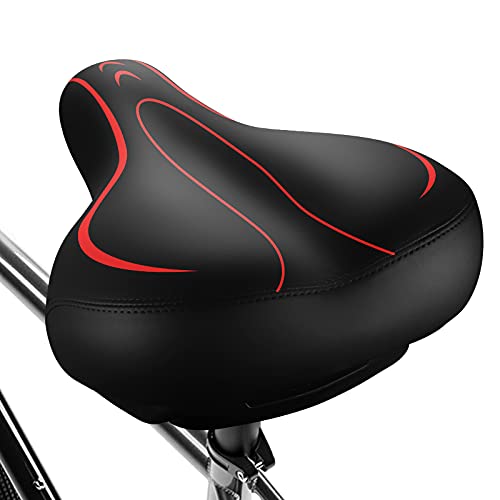
Xmifer’s oversized saddle emphasizes extensive width, a memory-foam core, and dual spring suspension for enhanced shock absorption. The seat measures roughly 10 by 8 by 4 inches and is designed to relieve pressure on the prostate and tailbone. The installation kit includes two mounting tools and an armband for visibility, aiding quick height and angle adjustments. The long, soft nose is described as non-restrictive to thigh movement, which can be a critical factor for safe pedaling and comfortable leg clearance on longer rides. The combination of foam density, springs, and a breathable vent makes this a well-rounded option for riders who seek a forgiving, cushioned experience across different bike types.
Analysts of comfort will note the importance of a stable base and appropriate rail compatibility. The seat’s broader dimensions suggest good contact area for larger riders, reducing focal pressure. For those who value easy installation and a balance of padding with dynamic spring support, Xmifer offers a practical choice that supports extended rides and varied terrain without compromising leg movement.
Buying Guide: Key Purchase Considerations for Extra-Wide Bike Seats
- Seat width and footprint: A wider saddle distributes weight more evenly and reduces sit-bone pressure. Measure your hips and compare to the seat’s stated width and front-to-back depth to avoid pinching or thigh rubbing.
- Noseless vs. traditional noses: Noseless designs minimize thigh friction but may affect fore-aft positioning. Assess whether you prefer more space for leg movement or a traditional nose for forward positioning.
- Padding and foam type: Memory foam and high-density foam provide different balance between softness and support. Look for a model that maintains shape under load and reduces pressure hotspots.
- Backrest options: Seats with backrests can improve posture and spinal comfort on longer rides but may require more space on the bike. Ensure clearance with handlebars and frame geometry.
- Suspension and shock absorption: Dual springs or foam core with venting help dampen rough terrain and reduce pelvic bounce on uneven surfaces.
- Ventilation and moisture management: Airflow channels or slots help prevent excessive sweating and improve comfort in hot conditions.
- Durability and weather resistance: Look for water-resistant covers and reinforced seams if the seat is used outdoors or on all-weather setups.
- Bike compatibility: Verify mounting hardware, post diameter, and rail compatibility with your bike model, particularly on stationary and integrated gym bikes.
- Weight rating: Ensure the seat supports your weight comfortably, particularly for riders near or above typical weight thresholds.
- Ease of installation: Some seats come with adapters and toolkit; others require compatible rails or post replacements. Consider the level of effort needed to install and adjust.