Choosing a reliable bike rack for school environments requires durability, capacity, and ease of use. The following selections are designed to support student and staff commuting, club events, and daily bike storage with secure, weather-resistant builds. Each option suits gyms, hallways, garages, or outdoor lots while helping keep spaces organized and safe. Below is a quick overview of five versatile racks that balance footprint, capacity, and installation simplicity for school settings.
| Product | Brand | Capacity | Key Benefit |
|---|---|---|---|
| GIOTORENT Outdoor Bike Rack | GIOTORENT | Up to 19 bikes | Double-sided, weatherproof durability |
| Retrospec Commercial Grid Bike Rack (20 Bike) | Retrospec | 20 bikes | Heavy-duty, versatile, weather-resistant |
| LEISULIF Commercial Grid Bike Rack (10 Bikes) | LEISULIF | 10 bikes | Compact, space-saving vertical design |
| Global Industrial 10-Bike Grid Rack | Global Industrial | 10 bikes | Double-sided, steel construction |
| Retrospec Grid Bike Rack (5 Bikes) | Retrospec | 5 bikes | Single/double-sided, flexible setup |
GIOTORENT Outdoor Bike Rack Review

The GIOTORENT outdoor rack emphasizes durability and weather resistance, featuring a thickened carbon-steel frame with a high-temperature baked coating. It is designed to endure rain, snow, and corrosion while maintaining structural integrity. The design accommodates up to 19 bikes in a double-sided layout, helping schools maximize space in crowded garages or outdoor parking zones. Two adjustable wheel slots support a range of tire sizes, making it adaptable for diverse bicycle fleets used on campuses. This model is ideal for gymnasiums, maintenance yards, and student settlements needing robust long-term storage.
Retrospec Commercial Grid Bike Rack (20 Bike)

This heavy-duty grid rack stores bicycles upright on both sides, supporting up to 20 bikes. The industrial-grade steel construction and reinforced crossbars deliver strong stability for a fleet of bikes in schools, stores, or universities. A durable powder-coated finish protects against rust, rain, and UV exposure, ensuring longevity in exterior or semi-enclosed spaces. The universal wheel compatibility accommodates a broad range of bike sizes—from mountain to road models—making it suitable for large campus bike fleets and multi-user facilities.
LEISULIF Commercial Grid Bike Rack (10 Bikes)

The LEISULIF rack is a commercial-grade, durable option with a space-saving vertical design that holds up to 10 bikes. Built from powder-coated steel, it resists rust and weather exposure in high-traffic areas such as schools and shops. Its compact footprint helps maximize floor space in corridors or outside entrances, while universal wheel compatibility (12″–29″ wheels, up to 3″ wide tires) supports a wide variety of bikes without frequent rearrangements.
Global Industrial 10-Bike Grid Rack
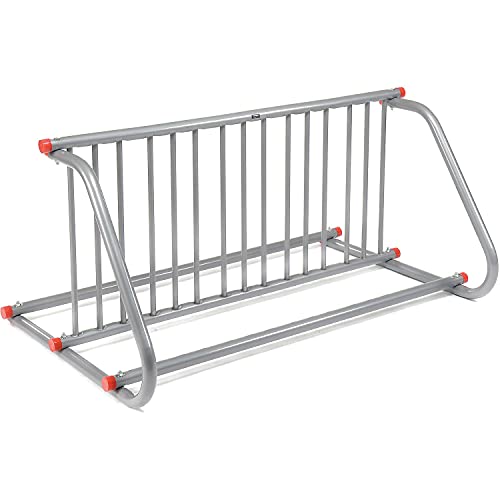
Global Industrial offers a double-sided 10-bike grid rack with powder-coated steel for commercial use. Cross bars help hold wheels in place while the rack anchors to floors or walls, depending on installation preferences. Its sturdy construction makes it suitable for schools, parks, and stores that require reliable bike storage for frequent use by students and staff. The design emphasizes straightforward access and quick loading/unloading with a broad capacity to serve a growing campus bike program.
Retrospec Grid Bike Rack (5 Bikes)
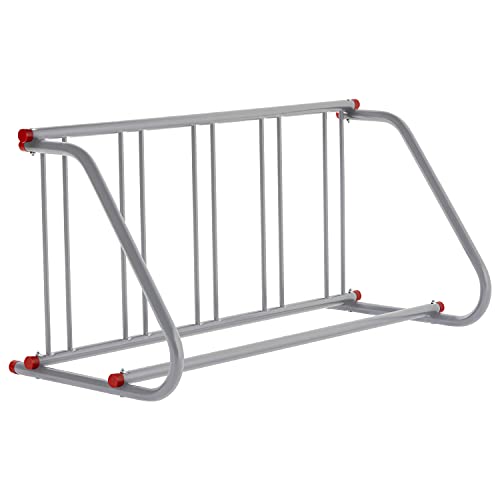
This single/double-sided Retrospec rack supports up to five bikes and uses a heavy-duty steel frame with a weather-resistant coating. Its compact footprint and versatile configuration make it appropriate for smaller school facilities or modular storage rooms. Compatibility spans most standard bikes, including kids’ models, providing a flexible solution for campus bike fleets that vary by season or program.
Buying Guide
Key considerations when selecting a bike rack for school use include capacity needs, space availability, and installation requirements. Schools should evaluate whether a double-sided design maximizes space or a single-sided arrangement fits tighter corridors. Durability and weather resistance are essential for outdoor or semi-exposed locations, while indoor racks must withstand daily handling by students and staff. Flexibility in wheel size compatibility ensures the rack accommodates all bike types in a fleet, from kids’ bikes to road and mountain bikes. Finally, assess installation complexity, required mounting hardware, and whether the rack can be anchored to floors or walls for added stability.
Capacity and space: For large campuses, high-capacity racks (e.g., 19–20 bikes) help minimize space, reduce clutter, and support events. For smaller facilities, 5–10 bike racks offer a practical balance between accessibility and organization. Consider future growth when choosing a fixed or modular system.
Durability and weather exposure: Metal racks with powder coating and rust-resistant finishes perform best outdoors. Indoor models should prioritize robust steel frames and secure wheel slots. Look for anti-theft features, such as integrated straps or anchored designs, to protect bikes.
Wheel compatibility: A broad range of wheel sizes (12″–29″, up to 3″ tires) ensures compatibility with most bicycles in school fleets. Confirm whether the rack accommodates kids’ bikes, mountain bikes, and road bikes without needing adapters or modifications.
Installation and maintenance: Evaluate ease of assembly and whether professional installation is recommended. Check for warranty coverage and availability of replacement parts, such as crossbars and wheel slots, to minimize downtime.