Choosing the right indoor bike trainer can transform your winter workouts or recovery periods into efficient, quiet, and productive sessions. The following selections emphasize stability, adjustable resistance, and ease of use, helping you simulate road riding with multiple resistance levels. Each option supports common wheel sizes and includes practical accessories like front wheel riser blocks and quick-release skewers. Use this guide to compare features, noise considerations, and setup simplicity across popular brands.
style=”display:none;”>Summary Table of Selected Products
| Product | Brand | Wheel Compatibility | Resistance Levels | Notable Feature |
|---|---|---|---|---|
| Sportneer Magnetic Trainer | Sportneer | 26-28″ & 700C | 6 | Quiet, stable base with anti-slip feet |
| Alpcour Bike Trainer Stand | Alpcour | Road & Mountain bikes 26-29″ | 6 | Foldable, quiet magnetic system |
| CXWXC Bike Trainer (Non-Thru Axle) | CXWXC | 26-29″ & 700C | 6 | Strong pyramid frame for stability |
| CXWXC Bike Trainer (Thru Axle) | CXWXC | 26-29″ & 700C | 6 | Includes quick-release skewer and thru-axle adapter |
| Yaheetech Magnetic Trainer | Yaheetech | 26-28″ & 700C | Variable (foldable) | Low-noise operation, space-saving fold |
Sportneer Magnetic Trainer With 6 Resistance Levels

Sportneer’s magnetic trainer provides a stable base and floor-friendly design with five adjustable anti-slip feet to offset uneven surfaces. It uses a smooth resistance wheel to minimize noise and offers six resistance settings to mimic varied riding conditions. A bar-mounted remote controls the resistance, and a front wheel riser block with a rear quick-release lever helps with fast setup. This trainer supports 26-28″ wheels and 700C wheels, making it suitable for most road and hybrid bikes used indoors.
Alpcour Indoor Magnetic Bike Trainer Stand
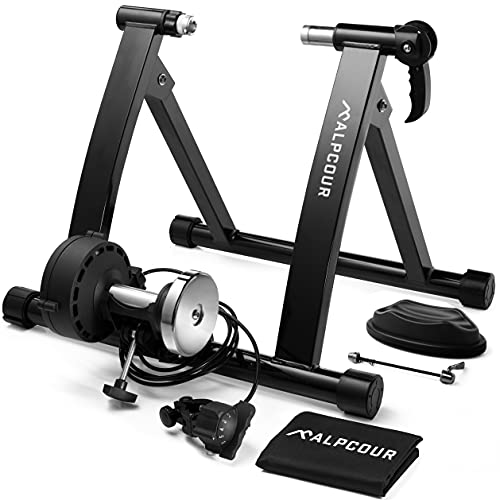
Alpcour’s magnetic trainer is portable and foldable, designed for road and mountain bikes from 26″ to 29″. It emphasizes quiet operation due to a high-quality magnetic flywheel that reproduces real cycling feel with reduced friction. Six fixed resistance levels are controlled via a handlebar-mounted cable controller, enabling intervals and hill simulations. The extra-wide base and low stance maintain balance, especially on home floors with slight irregularities, making it a practical indoor choice for year-round training.
CXWXC Magnetic Bicycle Stand (Non-Thru Axle)
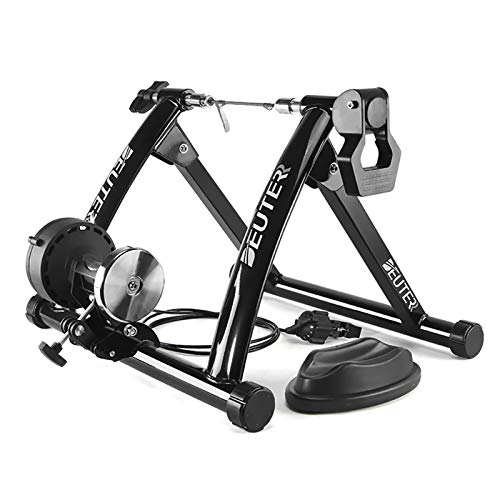
The CXWXC trainer supports 26-29″ wheels including 700C and includes a six-level resistance drive-by-wire system. It emphasizes a pyramid-like structure for enhanced frame stability and a high-load capacity, accommodating bikes up to about 330 pounds. The setup highlights weatherproof indoor training and convenient resistance adjustment from the handlebars, enabling quick changes between flat terrain and steep climbs during workouts.
CXWXC Thru Axle Indoor Bike Trainer

This version adds a thru-axle adapter along with a quick-release skewer, expanding compatibility for more modern frames. It retains the same stability and six-resistance-level operation as the non-thru-axle variant, making it a flexible option for cyclists who own newer wheel layouts. The manual notes emphasize indoor usability during adverse weather and year-round training opportunities, with a strong focus on stability and safe, quiet operation.
Sportneer Fluid Indoor Bike Trainer Stand

Sportneer’s Fluid trainer uses a high-quality resistance wheel designed to deliver quiet, smooth spinning. It supports bikes in the 26-29″ range, including 700C wheels, making it a versatile option for many road and hybrid bikes. The frame is built from durable materials intended for long-term use, offering a balance of stability and motion fidelity for indoor cycling workouts. This model emphasizes minimal noise while delivering realistic resistance for steady endurance sessions.
Buying Guide: Key Considerations And Comparisons
- Wheel compatibility: Most models here support 26-29″ wheels and 700C, but verify your bike’s diameter to ensure a snug fit and stable ride.
- Resistance feel and adjustability: Six resistance levels are common, with some offering drive-by-wire or bar-mounted controls. Decide whether you prefer magnetic or fluid resistance based on noise, feel, and maintenance.
- Stability and footprint: Look for a wide base and low stance to minimize wobble on uneven floors. Foldable designs save space when storage is needed.
- Noise and friction: Magnetic systems tend to be quieter; fluid systems smooth out resistance but may still produce some noise depending on tire type and trainer design. Road bikes usually produce less noise than MTB setups on some trainers.
- Ease of installation: Quick-release skewers and front wheel riser blocks simplify setup, especially for those who switch between indoor and outdoor riding frequently.
- Accessory compatibility: Ensure the trainer includes or accommodates a front wheel riser block and any necessary skewers or adapters for your frame type.
- Build quality and durability: Consider steel or reinforced frames for higher load capacity. A stable trainer reduces energy loss from frame flex during intense intervals.
- Storage and portability: If space is limited, prioritize foldable designs and lighter weight models for easy transport.
- Intended use: For interval training and structured workouts, a trainer with precise resistance controls is beneficial. For casual endurance rides, a quieter or smoother unit may be preferable.
- Warranty and support: Check warranty terms for parts such as the resistance mechanism, flywheel, and frame, and look for brands with responsive customer support.
All selected products aim to provide stable indoor riding experiences with adjustable resistance and practical setup options. When choosing, consider your bike size, preferred resistance feel, space constraints, and how often you anticipate using the trainer for structured workouts versus casual rides. The combinations listed here cover magnetic and fluid designs, including models with and without thru-axle compatibility, to accommodate a broad range of American riders and bikes.