Finding the right bike front fork stand can simplify maintenance, storage, and transport. This guide highlights practical options that fit a range of bikes—from road racers to mountain bikes—and different use cases, including home garages, trucks, and trailers. Each product below is selected for stability, ease of use, and build quality, helping you lift, cradle, or secure a front wheel with confidence.
Summary of selected products
| Product | Brand | Key Benefit | Approx. Fit |
|---|---|---|---|
| Sunlite Fork Mount Bike Block | Sunlite | Compact, versatile mounting for storage or transport | 9x100mm |
| MBP Alloy Quick Release Fork Mount Bike Block | MBP | Lightweight alloy, quick release skewer included | 9x100mm |
| MBP Alloy Quick Release Fat Fork Mount Bike Block | MBP | Sturdy option for fat bikes, flexible mounting | 9x135mm |
| MOTO4U Front Headlift | MOTO4U | Front wheel lift with triple tree pins for easy maintenance | Varies by triple tree pins |
| Thinvik Bike Front Wheel Riser Block | Thinvik | Stability aid for indoor training and stand mounting | Road and mountain tires up to 1.8” |
Sunlite Fork Mount Bike Block

The Sunlite Fork Mount Bike Block is designed for versatile storage and transportation. Its alloy construction emphasizes lightness without sacrificing strength, and it supports both vertical and horizontal mounting. This flexibility makes it suitable for garages, racks, or trailers, allowing you to store or move a bike with a stable fork cradle. It’s a practical, compact option for riders who value ease of use and durability in a single unit.
MBP Alloy Quick Release Fork Mount Bike Block
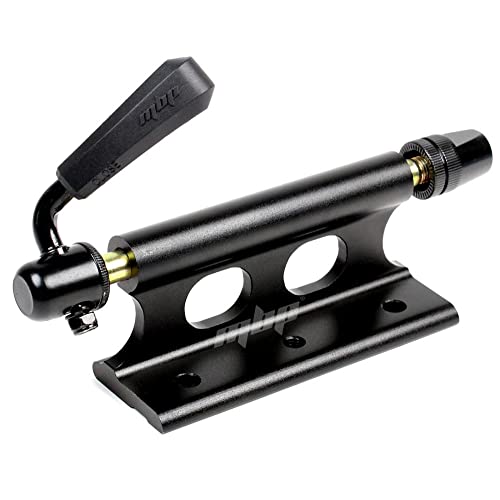
The MBP Quick Release Fork Block emphasizes versatility and convenience. It includes a quick-release skewer for fast setup and transport, with strong, lightweight alloy construction. While it notes that mounting hardware is not included, its design supports efficient storage and frequent cycling between locations such as a garage, truck bed, or trailer. This option suits riders who prioritize speed and simple adjustments.
MBP Alloy Quick Release Fat Fork Mount Bike Block

This fat-tire version from MBP mirrors the quick-release design in a heavier-duty format for 9x135mm forks. It’s ideal for fat bikes used in storage or transport scenarios where broader tires demand sturdier support. Like the standard MBP unit, it emphasizes alloy strength and portability while providing quick access through a release skewer, enhancing cycling workflows that involve frequent bike moves.
MOTO4U Front Headlift Triple Tree

The MOTO4U Front Headlift focuses on lifting the front wheel for repair, maintenance, and storage. Supplied with multiple Triple Tree Pins in various sizes, it enables precise engagement across different fork configurations. The stand includes four wheels to improve stability on different surfaces, offering a practical option for workshops and mobile service setups that require reliable wheel elevation and support.
Thinvik Bike Front Wheel Riser Block

The Thinvik Front Wheel Riser Block provides stability and a level riding position by elevating the front wheel. It’s compatible with most road and mountain tires up to 1.8 inches wide, making it a versatile addition to a home gym, garage, or training area. Its skid-resistant design helps prevent floor damage and keeps the bike secure during use, which is important for frequent training sessions or routine maintenance tasks.
Buying Guide: Key Considerations For Choosing A Front Fork Stand
When evaluating front fork stands, consider stability, compatibility, and intended use. The following points reflect multiple perspectives to help you pick a model that aligns with your bike type, space, and workflow.
- Bike compatibility: Check fork diameter, axle type (narrow 9x100mm vs fat 9x135mm), and front end geometry. Some stands are designed specifically for standard or fat forks, while others offer adjustable heads to cover broader ranges.
- Mounting style: Decide between vertical or horizontal mounting, or a front-wheel cradle. Vertical/horizontal options suit storage or transport, while front-headlift designs support maintenance work in a workshop.
- Weight and portability: Lighter alloy constructions are easier to move but may offer less rigidity under heavy loads. Heavier units provide stability for frequent maintenance or larger bikes.
- Quick-release versus fixed: Quick-release skewers simplify setup and removal, which is beneficial for frequent bike swaps. Fixed mounts may offer more stability for long-term storage.
- Width and rise adjustments: Adjustable fork heads or risers support a wider array of bikes, including road, mountain, and fat bikes. Ensure the range accommodates your typical tire widths and fork spacing.
- Durability and materials: Alloy and stainless steel resist corrosion and wear, especially in garages or outdoors. Look for reinforced joints and secure locking mechanisms.
- Accessory compatibility: Some stands accept additional components like triple-tree heads or spools. Consider whether you may need to integrate other maintenance tools.
- Ease of use: A straightforward setup with minimal tools reduces downtime and enhances efficiency, particularly in busy workshops or mobile service scenarios.
- Storage footprint: If space is limited, prioritize compact designs that can be stored upright or collapsed without sacrificing stability during use.
Across the options reviewed, you can balance weight with rigidity, and portability with compatibility. For frequent transport between home, shop, and vehicle, a quick-release system paired with a robust aluminum build offers practical advantages. For home garages, a sturdy front-headlift with adjustable pins provides reliable support during repairs and wheel alignment tasks. For fat bikes, a heavier-duty block ensures stability on wider tires, reducing wobble during maintenance.